Aura Healing: What the Tradition Actually Teaches About the Body's Energy Field
Aura healing is the practice of working with the energetic field the tradition holds surrounds the physical body, with the stated aim of clearing tears, depletion, and imbalance from that field so a person's vitality and emotional state can settle and stabilize. It is not a recent wellness invention. It descends from centuries of teaching about a subtle body layered around the visible one, and it survives today inside lineages that treat the field as something read and worked on by a trained hand, not merely imagined. To understand what aura healing actually claims, it helps to start with what the tradition means by the aura itself.
What the Tradition Means by the Aura
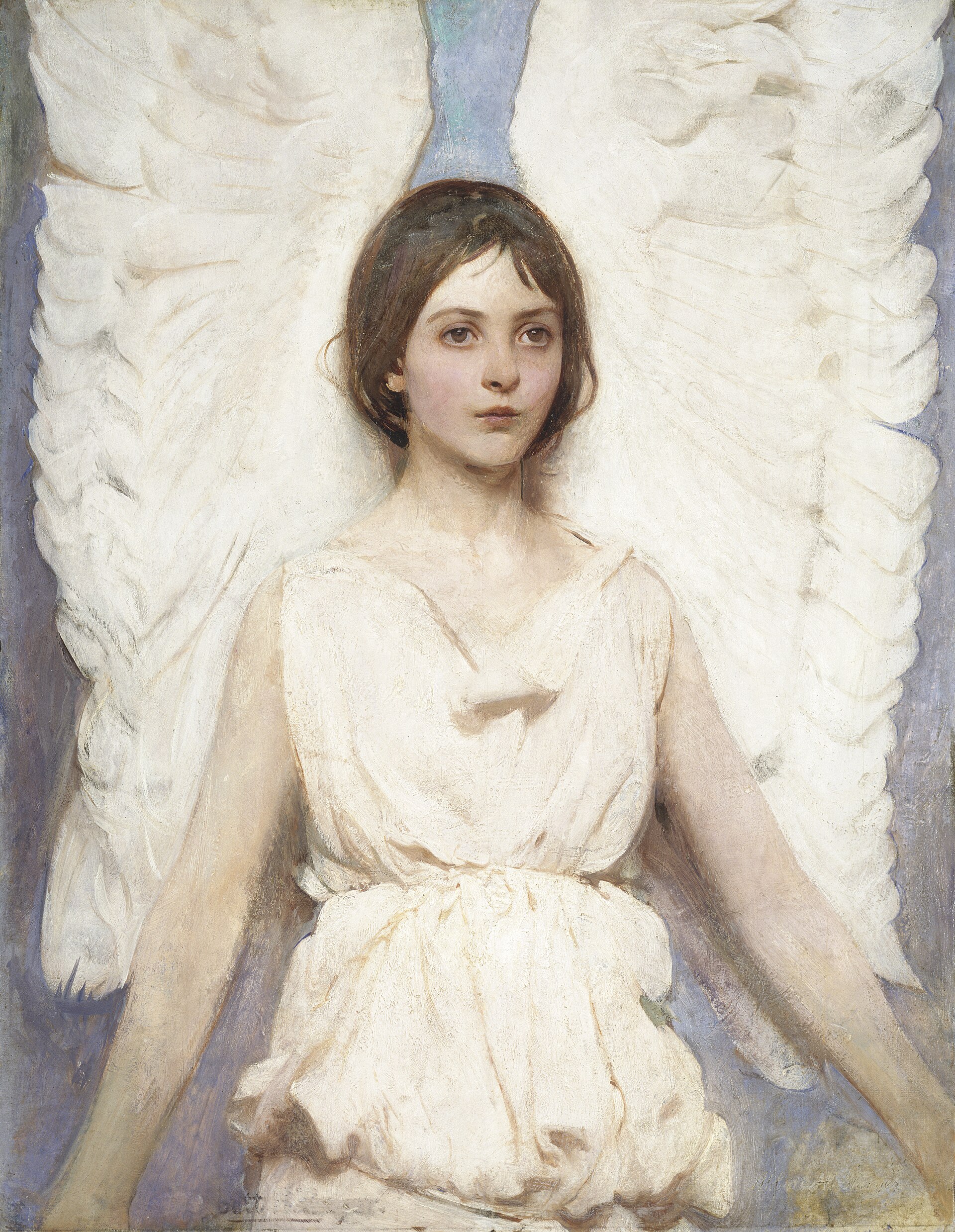
The word aura comes from the Greek aura, meaning breeze or breath, and the underlying idea long predates the word attached to it. Cultures across the ancient world described a subtle radiance around living things — the nimbus painted around saints and holy figures in religious art, the luminous halo carved into statues of emperors and bodhisattvas, the glow ascribed to prophets and healers in text after text. The tradition reads these images as independent testimony to the same claim made in different centuries and different vocabularies: that a field of energy extends beyond the visible edge of the body, and that certain people, in certain states, can perceive it.
Within the mystery school lineage, the aura is described as a layered field carrying information about a person's emotional, mental, and spiritual condition — not a uniform glow but a structure with depth, texture, and, when disturbed, detectable tears or thin patches. It is taught alongside, and as part of the same subtle anatomy as, the body's chakras, with the field understood as the wider atmosphere the chakras generate and the etheric body carries. Where a chakra is a center, the tradition holds, the aura is the weather that center produces.
How the Idea Crossed Into Western Practice
Formal aura theory as it is taught in the West today owes a great deal to late nineteenth- and early twentieth-century Theosophical writers, who drew on Indian and Tibetan sources describing the subtle body and translated that material into a vocabulary a Western audience already primed by Hermetic and Kabbalistic thought could absorb. Those writers proposed that the field held distinct layers — a physical-etheric layer close to the skin, and successive emotional, mental, and spiritual layers extending further out — a structure that still shapes how most modern aura teaching describes the field.
The idea gained an unexpected foothold in the popular imagination in 1939, when Soviet researchers Semyon and Valentina Kirlian developed a high-voltage photographic technique that captured a corona discharge around objects placed on a charged plate, including human fingertips. Kirlian photography was popularized as a picture of the aura itself, though the scientific consensus attributes the effect to moisture, pressure, and electrical conductivity rather than a spiritual field — a caution worth stating plainly, since honest teaching about the aura has never rested its claim on a photograph. What the tradition actually offers is older: a lineage of practitioners trained to perceive and work with the field directly, by hand and trained attention, independent of any instrument.
The Kybalion, the 1908 Hermetic text that set out seven principles said to underlie the older Hermetic tradition, states its Principle of Correspondence this way:
"As above, so below; as below, so above."
Applied to the aura, that axiom does real teaching work: the field is held to correspond to the inner state it surrounds, so that what is unsettled within eventually shows itself in the field around a person, and clearing the field is understood to support, not replace, the inner change it reflects.
How the Mystery Schools Fold Aura Healing Into a Larger Lineage
Inside the modern mystery school tradition, aura healing is rarely presented as a technique a person picks up on its own. It is taught within a certification structure, most often as part of the Healers Academy curriculum that follows a student's first initiation, alongside the life activation session many students receive as their entry point into the wider healing arts. The tradition frames its methods as inherited across roughly three thousand years of transmission traced to King Solomon, and insists that the chain of teachers carrying a technique matters as much as the technique itself — the claim is not that anyone who reads a description of aura work can perform it, but that trained hands, working inside a guarded lineage, reach the field in a way untrained attention does not.
That insistence on guided transmission has old company. Long before aura theory crossed into Western practice, other initiatory schools staked the same wager: certain inner work only unfolds fully under trained guidance, not through information alone. The teaching remains, in the tradition's own words, a matter to be tested by the one who undergoes it, not accepted on description — which is also why serious teachers describe what a session involves without turning that description into instructions a reader could carry out unsupervised.
What an Aura Healing Session Actually Involves
Described at the level the tradition is willing to state publicly, an aura healing session begins with assessment. A trained practitioner reads the state of a client's field — where it appears depleted, torn, or carrying stagnant energy — before working to restore its evenness and strength across the whole field rather than isolating a single point. Sessions are typically conducted one on one, with the practitioner working through trained perception and hands-on or near-body technique rather than any exercise the recipient is asked to perform themselves.
Practitioners describe several recurring aims within this work: repairing what the tradition calls tears or thin places in the field, clearing energetic stagnation that has built up over time, and restoring a stronger felt connection between a person and what the tradition names as higher consciousness. A related skill taught alongside aura healing is energetic protection — building a stronger, steadier field less easily disturbed by outside influence — which practitioners describe less as a defensive trick than as a natural consequence of a field that has already been cleared and strengthened.
This work is taught as a progression, not a single afternoon's lesson. Within the mystery school's healer training, aura healing is introduced as foundational knowledge and then built on at more advanced levels alongside etheric and elemental work, mirroring how chakra healing is taught within the same curriculum. That structure matters to how the tradition talks about itself: aura healing is presented as a skill developed over years under supervision, carried by lineage rather than picked up from a single class.
Aura Healing and the Limits of the Self-Help Marketplace
The word aura now appears on crystals, phone apps, and photo filters promising an instant reading, and it is worth being honest about the distance between that marketplace and what serious lineages actually teach. The tradition's own position is that meaningful aura work goes well beyond a colored overlay or a five-minute scan, and that a practitioner trained for years within a specific lineage is working with more than a general idea of energy — they are working inside a transmitted method they did not invent for themselves.
None of this is presented as clinically proven medicine, and honest teachers do not claim otherwise. The aura has not been identified as a measurable structure by mainstream physics or medicine, and aura healing has not passed through the controlled clinical trials that validate conventional treatment. What the tradition offers instead is an experiential claim, tested across generations of practitioners rather than in a laboratory: that attention to this field, guided by trained hands, changes how people feel in their bodies and carry themselves through their lives. Whether that constitutes proof is a question every serious student is left to weigh for themselves — the tradition asks for engagement with the practice, not blind acceptance of it as settled fact.
What the history does make clear is that aura healing is neither a purely ancient relic nor a purely modern invention. It is a living transmission — ancient in its imagery, Theosophical in its Western framing, and still actively taught inside lineages that trace their own authority back thousands of years. Understood that way, the field around a person is less a wellness accessory than a very old claim about what a human being actually extends into the world beyond the visible body.
Walk the Path of the Initiate
These teachings come alive in The Initiated — Paul Schulz's introduction to the living mystery school tradition.
Get the BookFrequently Asked Questions
What is aura healing?
Aura healing is a practice of working with the energetic field the tradition holds surrounds the physical body, with the aim of clearing tears, depletion, and imbalance from that field. In the mystery school lineage it is taught as a trained practitioner's skill, addressing a person's vitality and emotional state through the field rather than through the body alone.
What exactly is the aura, according to the tradition?
The tradition describes the aura as a layered energetic field surrounding the physical body, carrying information about a person's emotional, mental, and spiritual state. It is presented as part of a wider subtle anatomy that also includes the chakras and the etheric body, all reflecting the same underlying life force from different angles.
How is aura healing different from chakra healing?
Chakra healing works with seven specific centers arranged along the spine, while aura healing addresses the wider field said to surround the whole body. The mystery school tradition treats them as two registers of the same subtle anatomy rather than competing systems, and often teaches both within the same practitioner training.
Can someone heal their own aura?
The tradition holds that a trained practitioner, working within an initiated lineage, reaches and reads the field in ways self-directed attention does not. General practices like rest, calm reflection, and time in nature are widely described as supportive of a person's overall energy, but formal aura healing work is taught only within supervised practitioner training.
Is aura healing supported by science?
The aura has not been identified as a measurable structure by mainstream physics or medicine, and aura healing has not passed through controlled clinical trials. The mystery school tradition presents it as an experiential, lineage-based practice rather than proven medical treatment, and frames its claims as what initiates describe and what the tradition holds, not as settled scientific fact.