Awakening of the Third Eye: What the Ajna Chakra Tradition Actually Teaches
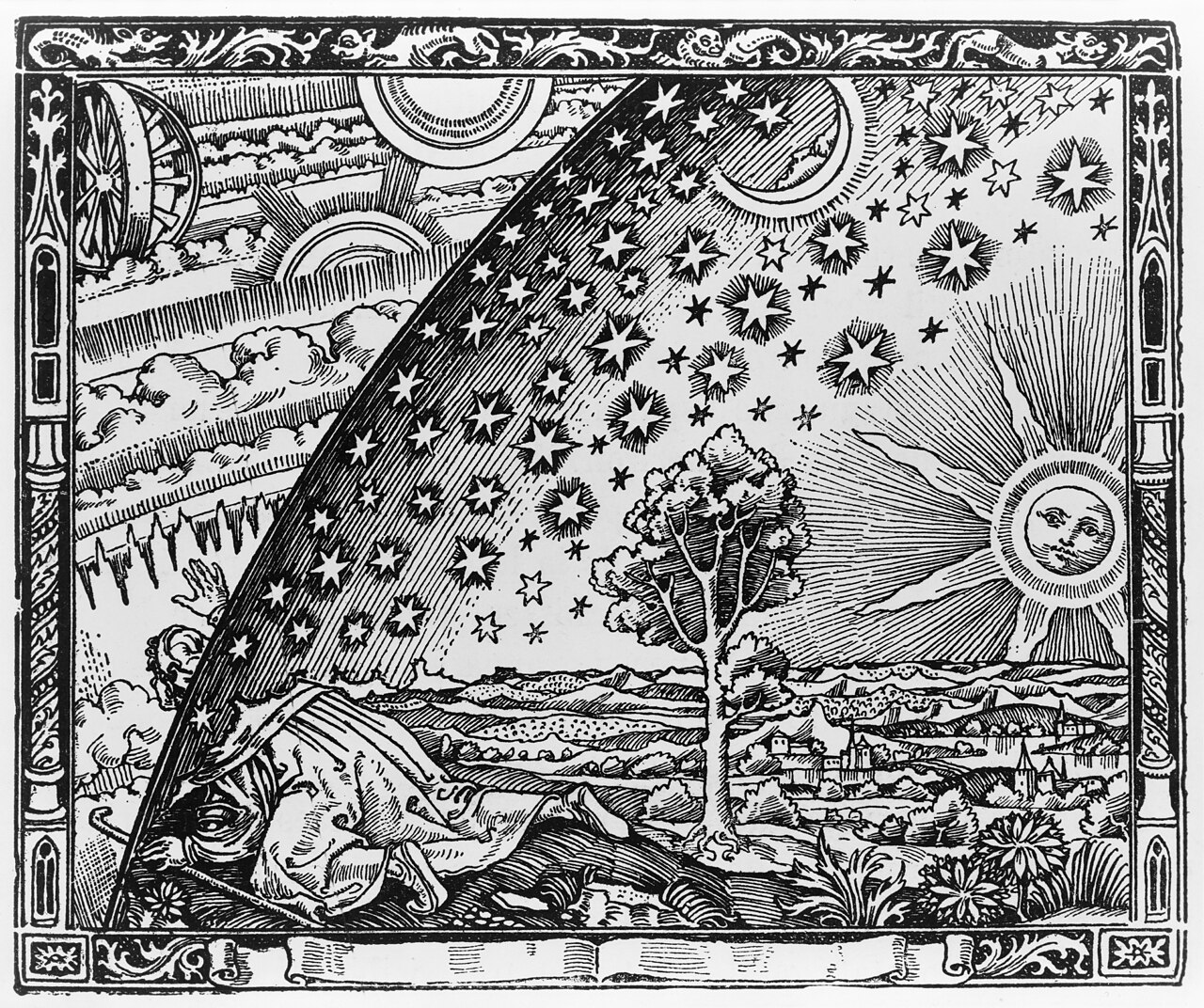
The awakening of the third eye is the traditional term for opening the Ajna chakra, the sixth of the body's seven major energy centers, said to sit at the point between and just above the eyebrows. It does not describe a physical eye at all. In every tradition that teaches it, the third eye names a claimed capacity for inner sight — intuition, insight, and a form of direct knowing that ordinary vision does not reach — and its "awakening" refers to that capacity becoming more accessible through sustained inner work. To understand what serious lineages actually claim, and where the image itself came from, it helps to trace the idea back before it ever reached the West.
Where the Idea of a Third Eye Began
The root teaching comes from Indian tantric and yogic literature, where the Ajna chakra is mapped as the sixth center in a column running from the base of the spine to the crown of the head. Ajna is Sanskrit for "command" or "perceive," and the older texts describe it as the seat where the two channels of subtle energy said to run alongside the spine converge into a single current before rising to the crown. That convergence is the origin of the "single eye" imagery that recurs across so many later traditions: not two currents of ordinary perception, but one unified stream of inner attention.
Long before that Indian teaching crossed into Western vocabulary, other cultures had already reached for images of a hidden, seeing eye. Egyptian religious art placed the wedjat — the Eye of Horus — at the center of protective symbolism, an eye that saw what ordinary sight could not. The image differs from the Ajna teaching in origin, but shares its underlying intuition: an eye set apart from the two physical eyes perceives something the others miss.
A stranger convergence arrived from an unlikely direction. In the seventeenth century, the philosopher René Descartes examined the pineal gland — a small, physical structure near the center of the brain — and named it the seat of the soul, the point where the immaterial mind met the material body. Descartes was doing anatomy and philosophy, not writing about chakras. But centuries later, when Ajna teaching and pineal anatomy were placed side by side, the resemblance was hard to ignore: a single, centrally located structure, named in two separate traditions centuries apart, each treated as the seat of something more than ordinary sensation.
How Theosophy and the West Absorbed the Third Eye
The Ajna chakra reached a Western audience largely through the Theosophical Society, founded in 1875 by Helena P. Blavatsky and Henry Steel Olcott. Blavatsky's own writing, including The Voice of the Silence, framed inner development as a graduated path with guarded stages of its own, and it was within that circle that Indian teachings on the subtle body found readers hungry for a systematic Western vocabulary.
It was Blavatsky's colleague Charles Webster Leadbeater who did the most to fix the chakra system, including Ajna, in the Western esoteric imagination. His study The Chakras, examining what he called the force centers of the etheric body, translated the Indian source material into a framework that Hermetic and Kabbalistic students already primed for talk of vibration and correspondence could absorb without friction. The same Hermetic axiom that shaped how the West received the wider chakra system applies here — "nothing rests; everything moves; everything vibrates," as The Kybalion states it. A center associated with a finer vibration than ordinary sense-perception was, to a reader steeped in that principle, simply the next step up the ladder, not a foreign import.
What Third Eye Awakening Is Said to Involve
Inside the modern mystery school tradition, the Ajna center is addressed as part of a wider study of the seven chakras, folded into the same curriculum that trains chakra balancing more generally. The claim for this particular center is specific: where the lower centers govern survival, creativity, will, love, and expression, Ajna is described as the seat of insight, intuition, and a capacity to perceive beyond the five physical senses. An awakened third eye, in this teaching, does not mean literal clairvoyance in a theatrical sense. It is described as a subtler shift — clearer discernment, a steadier inner compass, and a diminished reliance on the reactive, surface mind.
The tradition is consistent on one point: this work is addressed within trained, supervised practitioner development rather than as information a reader absorbs alone. Just as the wider healing curriculum treats chakra balancing as foundational knowledge that deepens across years of study, the sixth center is presented as requiring the same guided context — an experienced teacher assessing where a student stands, within an initiated lineage, rather than a self-directed shortcut. That insistence on lineage runs through everything the tradition teaches about awakening; the claim is never that information alone produces the shift, but that transmission through a trained line of teachers does what information cannot.
This emphasis on sustained, guided development, rather than a single dramatic breakthrough, runs through how the tradition frames spiritual growth generally — a theme explored in our survey of the texts that actually map spiritual awakening. The third eye teaching is not separate from that larger arc; it is one register within it, one center the tradition holds matures together with the others, not in isolation.
The Christian and Philosophical Echo: the "Single Eye"
Readers who come to the third eye teaching through a Christian upbringing sometimes notice an unexpected echo in scripture. The Gospel of Matthew records:
"The light of the body is the eye: if therefore thine eye be single, thy whole body shall be full of light." — Matthew 6:22, KJV
Scholars debate exactly what "single" meant to a first-century audience, and the mystery school tradition is careful not to claim the verse is a coded reference to the Ajna chakra — that would overstate a resemblance into an identity the historical record does not support. What the tradition does note is the shared structure of the claim: a single, unified faculty of inner sight, distinct from ordinary looking, that determines how much light the rest of a person's experience carries. That structural echo is why "third eye" has proven so portable across traditions that share little else — Vedic India, Ptolemaic Egypt, and a Galilean teacher two thousand years later all reached for some version of the same image.
What the Third Eye Awakening Is Not
The marketplace around "third eye awakening" has grown far beyond what any single lineage teaches. Amethyst jewelry, five-minute breathing videos, and social-media claims of instant clairvoyance treat the sixth center as a novelty to be switched on. Serious teachers of the tradition do not talk this way; they describe Ajna as one center within a much larger system, developed gradually and unevenly, under supervision, over years — not a feature that activates on command.
It is also worth saying plainly what the tradition does not claim as settled fact. No controlled clinical study has measured third eye awakening as a phenomenon, and the pineal gland's role as its physical seat remains an interpretive bridge between two separate traditions rather than an established anatomical finding — a caution that applies just as much to the broader enlightenment literature covered in our look at the texts that actually chart that ascent. What the tradition offers instead is an experiential claim, refined across generations: that attention trained on this center, guided by an initiated teacher, changes the quality of a person's inner discernment. Whether that constitutes proof is a question every student weighs for themselves.
Understood this way, the third eye is neither an ancient relic nor a modern marketing device. It is an old argument, made independently by Vedic sages, Egyptian priests, a French philosopher, and a Galilean teacher, about whether a single inner faculty of sight exists beneath the two eyes everyone can see.
Walk the Path of the Initiate
These teachings come alive in The Initiated — Paul Schulz's introduction to the living mystery school tradition.
Get the BookFrequently Asked Questions
What does the awakening of the third eye actually mean?
The awakening of the third eye is the traditional term for opening the Ajna chakra, the body's sixth energy center, said to sit at the point between and just above the eyebrows. It does not refer to a physical organ. It refers to a claimed heightening of inner sight — intuition, insight, and a form of direct knowing — that the tradition holds becomes more accessible through sustained spiritual development.
Where does the concept of the third eye come from?
The idea descends from the Ajna chakra of Indian tantric and yogic literature, where it was mapped as the sixth of seven major centers running from the base of the spine to the crown. Western esotericism absorbed the concept in the late nineteenth and early twentieth centuries through Theosophical writers, who translated Indian source teachings for a European and American audience already shaped by Hermetic ideas about vibration and correspondence.
Is the third eye the same as the pineal gland?
They are related but not identical claims. The pineal gland is a real, physical structure in the brain that the philosopher René Descartes called the seat of the soul in the seventeenth century, long before the Ajna chakra entered Western vocabulary. Many modern esoteric teachers associate the two, treating the pineal gland as the physical correlate of the energetic third eye, but this is an interpretive bridge between two separate traditions rather than an established anatomical fact.
Does the Bible mention anything like a third eye?
Not by that name, but the Gospel of Matthew contains a passage often read alongside the third eye teaching: "The light of the body is the eye: if therefore thine eye be single, thy whole body shall be full of light" (Matthew 6:22, KJV). Students of comparative mysticism frequently point to this verse as a Western echo of the same claim found in the Ajna teaching — that a single, unified inner sight illuminates the whole of a person's experience.
Can third eye awakening be measured scientifically?
No controlled clinical research has validated third eye awakening as a measurable phenomenon, and the tradition itself does not present it as settled science. It is offered as an experiential and lineage-based teaching, tested across generations of practitioners rather than in a laboratory, and honest teachers frame it that way — as what initiates describe and what the tradition holds, not as proven fact.