Awakening to the Spirit World: What the Mystery Tradition Actually Teaches
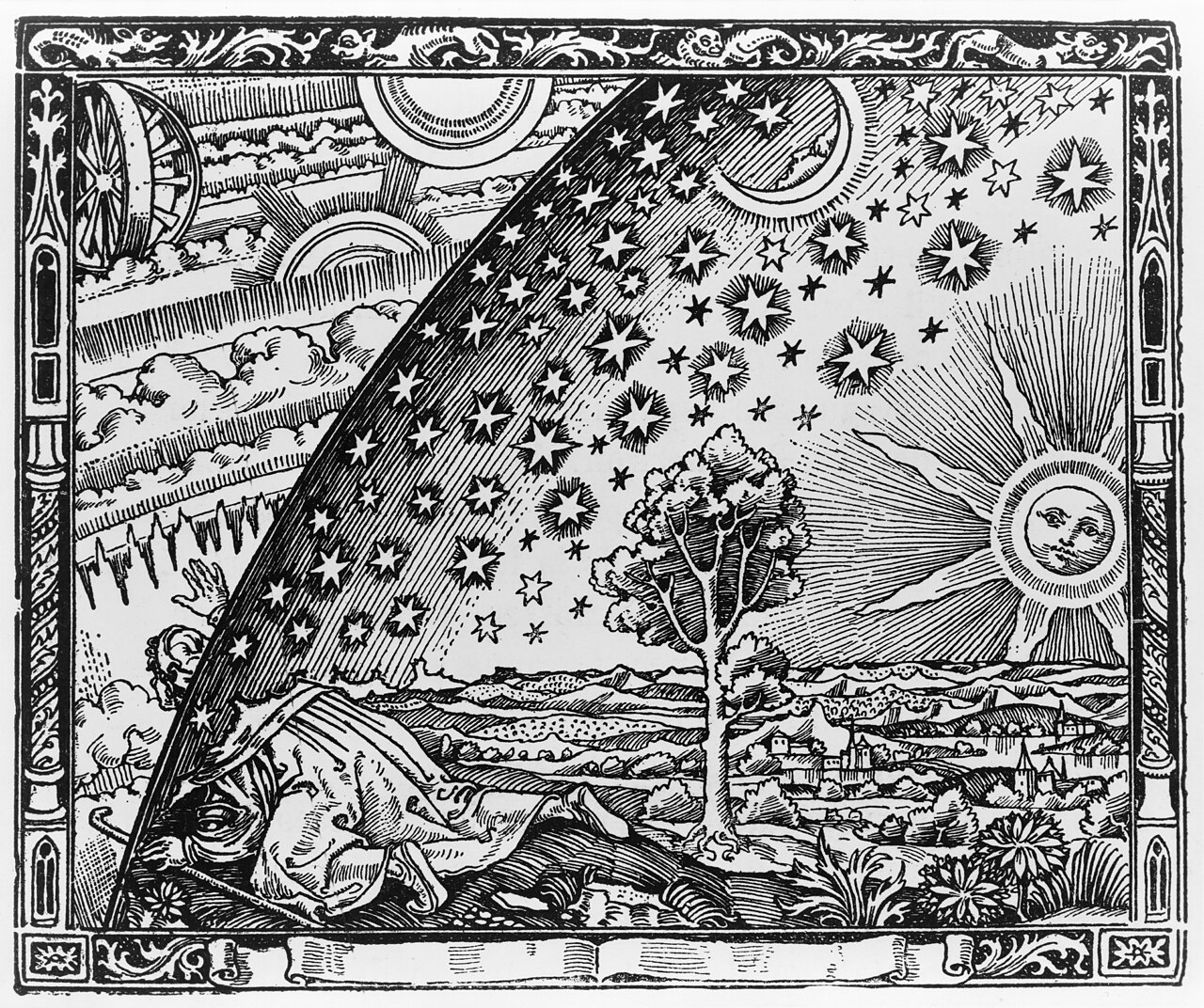
Awakening to the spirit world, in the mystery tradition, means something specific: the thinning of the veil between ordinary waking consciousness and an unseen order that initiates insist has surrounded a person their entire life, unnoticed. It is not a flight away from the physical world, and it is not fantasy laid over reality. It is described as a widening of perception, so that what was always present but unregistered by the five outer senses begins, gradually or suddenly, to register. Traditions as different as Kabbalah, Hermeticism, and the oral lineage of the mystery schools converge on this single claim: consciousness does not stop at the skin, and death is not the edge of it.
What the Tradition Means by "Spirit World"
Modern usage treats "the spirit world" loosely, as a catch-all for ghosts, mediums, and vague otherworldliness. The older initiatory use is more disciplined. In the threefold model the mystery schools teach, a human being is built of three interwoven layers: a physical body, the vehicle for experience in matter; a soul, the seat of feeling and the bridge between the two; and a spirit, described as the eternal, divine essence that never began and cannot end. The spirit world, on this account, is the native country of that third layer — the dimension spirit belongs to even while clothed in a body. Awakening to it is not acquiring a new faculty from nothing. It is the spirit layer becoming conscious of itself, the way someone who has lived for years inside one room of a house finally opens a door they always knew was there.
Kabbalah gives this the same shape through its Four Worlds. Assiah is the physical world the senses register directly. Yetzirah, the formative world, is closer to what people mean by "astral" — the terrain of emotion, dream, and imagination. Briah and Atziluth lie further in, the realms of pure thought and undivided divine consciousness. The tradition treats these less as separate universes stacked on one another than as deepening layers of one reality, each less filtered by the body's senses than the last. To awaken to the spirit world, in this framework, is to perceive further into that stack than ordinary consciousness normally reaches.
The Threshold: How the Tradition Describes the Crossing
The clearest historical account of what this crossing is reported to feel like comes from Rudolf Steiner, writing in 1904 about what he called the Guardian of the Threshold. Steiner, founder of Anthroposophy, described the encounter as a necessary stage for anyone whose inner training had begun to loosen the ordinary fusion of will, thought, and feeling — the glue that normally holds a personality together into one seemingly solid thing. As that fusion loosens, Steiner wrote, the seeker meets a being formed entirely from their own unresolved past: every act, every pattern of thought, every buried motive, given a visible shape of its own. He called it frightening by design. The figure exists, in his account, to ask whether the seeker is ready to take over work that unseen forces had quietly been doing on their behalf — correcting character through fate, consequence by consequence — without being asked whether they wanted that burden.
"This world is only a vestibule before the world to come. Prepare yourself in the vestibule, so that you may enter the banquet hall." — Pirkei Avot (Ethics of the Fathers), 4:21
What makes Steiner's account useful to a modern reader is not that it offers a method — the tradition is explicit that this threshold cannot be forced or shortcut. What it offers instead is a vocabulary: growth toward the spirit world is accompanied by an honest reckoning with one's own unfinished business, and the figure guarding the way is not a hostile outsider but a mirror. Initiates describe the same pattern recurring at smaller scale throughout a person's development — every expansion of awareness arrives bundled with an expansion of responsibility for what one now sees.
Why the Tradition Never Treated Death as the End of the Story
The mystery schools' confidence that awakening to the spirit world is possible rests heavily on how they frame death itself. A teaching passed through the Hermetic lineage offers a simple analogy. Imagine sitting with another person in a room; that person rises, walks into the next room, and closes the door. To the five senses, they have vanished — unseen, unheard, untouched. Yet no one seriously believes they have ceased to exist. Life is built, from infancy, on the quiet certainty that reality continues outside the narrow field the senses can currently reach. The tradition asks why death should be judged by a different standard. It describes the body as the soul's clothing, worn for one incarnation's experience and set aside — not annihilation, but a passage from one room into the next, witnessed falsely as an ending only because the physical form stops moving.
This is why the lineage insists that spirit has never been born and cannot die. The claim is offered as the logical foundation underneath everything the tradition teaches about initiation, karma, and a soul's development across more than one lifetime. If spirit is genuinely eternal, then "awakening to the spirit world" is not a euphemism for dying. It is becoming conscious, while still embodied, of a dimension that will in any case receive a person after death — the difference being whether that meeting happens in ignorance or with eyes already accustomed to the light.
What Initiates Say the Awakening Actually Feels Like
Accounts from within the living mystery school tradition describe the early stages less as dramatic revelation and more as a gradual loosening. A sense of separateness from other people and from the natural world begins to feel less absolute. Old reactive patterns — flashes of anger, fear, or grasping that once seemed like simple facts of personality — lose some of their grip, replaced by the capacity to notice them arising rather than being swept along. Dreams, intuition, and a kind of direct knowing that bypasses deliberate reasoning are reported to sharpen. None of this is described as instantaneous; the tradition is consistent that these shifts accumulate through sustained inner work, guided study, and the energetic transmission said to accompany formal initiation, not through a single technique performed once.
It is worth being honest about what the tradition does not promise. It does not claim the process is comfortable throughout, and it frames the harder passages — including the Guardian encounter — as requiring real preparation rather than curiosity alone. Teachers within the lineage exist precisely because this territory is considered unwise to enter unaccompanied; the oral tradition of teacher to student is held up as the safeguard that has carried the material intact across millennia.
A Tradition, Not a Technique
What distinguishes the mystery school framing of this awakening from a purely personal or improvised spirituality is the claim of unbroken lineage. The written record is traced back more than three thousand years to King Solomon, and the oral tradition further still, to Hermes Trismegistus. Their function within the tradition is clear: they position the spirit world not as a private invention of any single teacher but as a territory mapped, generation after generation, by people who reported walking into it and returning able to describe what they found. Hermeticism's own axiom — "as above, so below" — is the compressed version of the same idea traced above through Kabbalah's four worlds: the visible and the unseen are reflections of a single order, and learning to read one is a way of learning to read the other.
Readers drawn to this material tend to arrive from one of two directions: a philosophical interest in what the wisdom traditions actually claimed, stripped of modern caricature, or a personal brush with something larger than ordinary explanation — a vivid dream, a loss, a moment the self felt thinner than usual. Both paths lead to one teaching: such moments are not interruptions of ordinary life but invitations already extended, waiting on the recognition that makes them visible.
Walk the Path of the Initiate
These teachings come alive in The Initiated — Paul Schulz's introduction to the living mystery school tradition.
Get the BookFrequently Asked Questions
What does "awakening to the spirit world" actually mean?
In the mystery tradition, it means the thinning of the veil between ordinary waking consciousness and the unseen order that initiates say has always surrounded it. It is not escape from the physical world but a widening of perception to include a dimension that was there all along.
Is awakening to the spirit world the same as a near-death experience?
They are related but not identical. A near-death experience is usually sudden and involuntary, forced open by crisis. The tradition's awakening is typically gradual, cultivated over years through study, inner work, and initiation, though the two can produce a similar recognition that consciousness does not end with the body.
What did Rudolf Steiner mean by the "Guardian of the Threshold"?
Writing in 1904, Steiner described the Guardian of the Threshold as a being formed from the seeker's own unresolved character, encountered the moment will, thought, and feeling begin to separate from each other during inner development. He held that everyone meets this figure after physical death regardless, but the initiate meets it consciously, while still alive, and must be prepared for the encounter.
Can anyone awaken to the spirit world, or only the initiated?
The tradition holds that the capacity is latent in everyone, since the spirit is described as humanity's eternal and divine nature. What initiation offers is not access that others lack but a map, a lineage of teachers, and the readiness training that the tradition considers the difference between a glimpse and a stable awakening.
What is the difference between the astral plane and the spirit world in this tradition?
The astral plane is described as the formative layer closest to ordinary consciousness, the realm of emotion, imagination, and dream. The spirit world, in the tradition's fuller cosmology, lies beyond it, in the more abstract and divine strata that Kabbalists call Briah and Atziluth, where a soul's eternal nature is said to be most directly known.
Those drawn further into this subject may also wish to read how the tradition reads a related passage of inner transformation in Dark Night of the Soul Gerald May: What the Psychiatrist Actually Argued, or how a contemporary teacher frames the same eternal energies at work within in Awakening Shakti Sally Kempton: What Her Book Actually Teaches.