Bathsheba Solomon: The Mother Who Made Him King
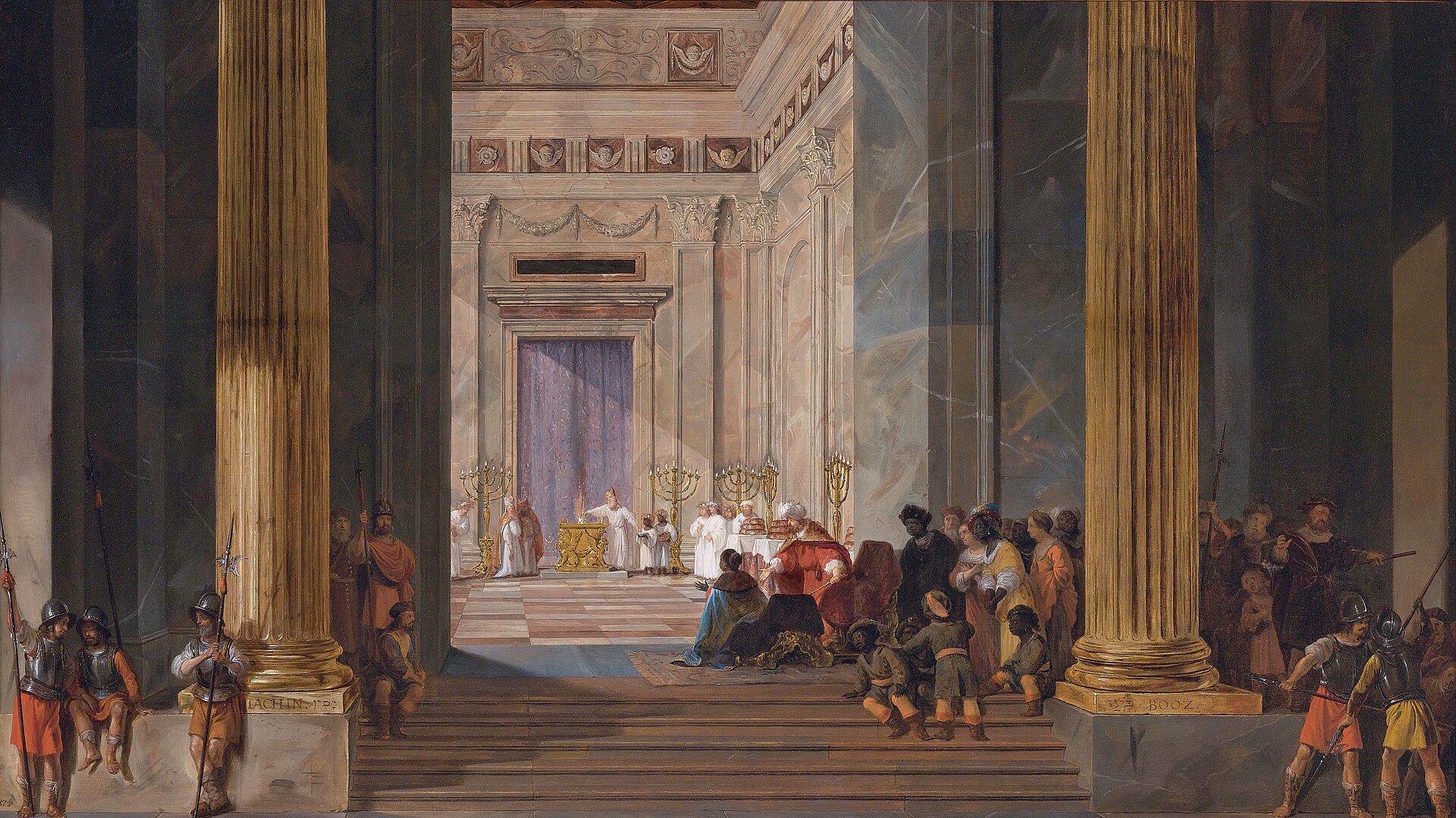
Bathsheba Solomon searches usually want one plain fact first: Bathsheba was Solomon's mother, the wife David took after arranging the death of her first husband, and the woman whose late intervention put her son on the throne instead of an older half-brother. That much is well known. What is less often told is what she became afterward — not a footnote to David's scandal, but the queen mother Solomon publicly bowed to and seated at his own right hand once he ruled in his own name.
Her story runs in two halves that rarely get told together: the young wife caught in a king's affair, and the older woman who held a formal office of real influence at the center of the court her son commanded. Both halves matter for understanding who Solomon actually was, and where the tradition says his wisdom came from.
Bathsheba Solomon: Wife of Uriah, Mother of a King
Before she was anyone's mother, Bathsheba was Uriah the Hittite's wife, and scripture names her father as Eliam, one of David's own elite soldiers. Second Samuel identifies an Eliam as the son of Ahithophel, David's counselor who later joined Absalom's rebellion against him — if it is the same man, Bathsheba was Ahithophel's granddaughter, which would make the entire affair a far closer betrayal within David's own inner circle than a casual reading suggests.
The account in 2 Samuel 11 is direct: David saw her bathing from his rooftop while Uriah was away at war, sent for her, and she conceived. When the attempt to disguise the child's parentage by recalling Uriah from the front failed, David had his commander Joab place Uriah where the fighting was fiercest and withdraw support, ensuring his death. The prophet Nathan confronted David afterward with a parable about a rich man who stole a poor man's only lamb, then delivered the judgment plainly: "Thou art the man." The text gives Bathsheba no voice in the affair itself — she is acted upon throughout, a detail modern readers increasingly weigh when they revisit the episode.
The Death of a Child, and the Birth of a King
Nathan's judgment against David carried a further consequence: the child conceived in the affair would not live. Scripture describes David fasting and pleading for seven days as the infant sickened, then rising, washing, and resuming his duties once the child died — his household startled that he mourned before the death and not after. Bathsheba's own grief goes unrecorded in the text, but David went to comfort her, and scripture states plainly that "the LORD loved him" when Solomon was later born to them. Nathan gave the boy a second name, Jedidiah — "beloved of the LORD" — a detail scripture places right alongside the account of loss, as if to mark that whatever judgment had fallen on the first child, none fell on the second.
How Bathsheba Secured the Throne
Decades later, with David old and Adonijah moving to crown himself without his father's consent, Bathsheba acted decisively. At Nathan's instruction she went to the aging king and reminded him of an earlier promise that Solomon, not an older half-brother, would succeed him — a private oath the text never records David making, only Bathsheba and Nathan invoking it. David responded by having Solomon anointed and enthroned that same day at the Gihon spring, cutting off Adonijah's bid before it could harden into civil war. The fuller mechanics of that crisis belong to the story of how the throne actually passed from David to Solomon, which this piece leaves for that telling. What matters here is what the episode proves about Bathsheba herself: she read a failing court correctly, moved at the right moment, and won.
Gevirah: The Office Bathsheba Held as Queen Mother
What happened next is the part most retellings skip. First Kings 2:19 shows Solomon, newly crowned, rising from his own throne when Bathsheba enters, bowing to her, and having a second throne set at his right hand for her to sit. This was not a private courtesy. Scholars of the period point to a formal office — often rendered Gevirah, "great lady" or queen mother — held by the mother of a reigning king in the Judahite court, distinct from any of his wives and carrying real political weight; later books of Kings routinely name each king's mother alongside his own reign, a pattern that only makes sense if the office itself mattered.
The position was not without its dangers. Soon after the coronation, Adonijah — spared after his failed bid — asked Bathsheba to carry a request to the new king: permission to marry Abishag, the young woman who had attended David in his final illness. Bathsheba brought the request without apparent suspicion. Solomon read it differently, as a renewed claim on the throne through a symbol of his father's household, and had Adonijah executed for it. The episode shows Bathsheba at the height of her formal honor and still, in practice, a conduit others tried to use.
Bathsheba Solomon and the Teaching Attributed to a Mother
One further thread ties Bathsheba directly to Solomon's own words. Proverbs 31 opens: "The words of king Lemuel, the prophecy that his mother taught him." Lemuel appears nowhere else in scripture, and Jewish tradition has long read the name as another title for Solomon himself, making the chapter's instruction — warnings against wine and against giving one's strength to women who would ruin a king, followed by the closing praise of a capable woman managing a household with skill and authority — Bathsheba's own recorded teaching to her son. Whether or not the identification is historically certain, the tradition's persistence says something: readers across centuries have wanted the wisest king in scripture to have learned at least part of his wisdom from his mother, not only from his father's example or his own reputed gift.
Named in the Line: Bathsheba in the Genealogy of Jesus
Bathsheba appears once more, centuries later, without ever being named directly. Matthew's genealogy of Jesus lists "David the king begat Solomon of her that had been the wife of Urias" — identifying her only by the marriage the affair had broken. She is one of just four women named in that genealogy, alongside Tamar, Rahab, and Ruth, and each of the four is remembered for an irregular or scandal-touched entry into the royal line rather than an ordinary marriage. Matthew's choice to include them at all, rather than list only the fathers as ancient genealogies typically did, has struck readers for centuries as deliberate — a line that does not erase its complications but carries them forward openly.
How the Mystery Tradition Reads Bathsheba Solomon's Story
Within the initiatory tradition Paul Schulz teaches, Solomon is remembered as an Initiate whose wisdom the lineage traces back more than three thousand years, transmitted through teachers rather than simply inherited by birth. Bathsheba's own arc fits that pattern: a woman defined early by scandal and loss, later given genuine authority and — by long tradition — entrusted with shaping the wisdom her son became known for. The tradition reads this as evidence that authority earned through trial runs deeper than authority granted only by birth order or title. That same shape — crisis giving way to widened capacity, not one dramatic turn — is what the tradition also traces in how seekers actually reach spiritual enlightenment: rarely all at once, and rarely without cost.
It is worth remembering, too, that Solomon's name was attached to more than one book of wisdom literature scripture never quite settles the authorship of — a pattern examined at greater length in the piece on the Wisdom of Solomon's 1611 Apocrypha text. Read against that backdrop, Proverbs 31's claim of a mother's teaching looks less like an isolated tradition and more like part of a wider habit: wisdom in Solomon's story rarely arrives from one source alone.
Bathsheba's story, taken whole, resists the two flat versions it usually gets reduced to — victim of a king's abuse of power, or scheming mother securing her son's crown. Scripture gives room for both readings and settles on neither. What it does record, consistently, is a woman who survived a scandal not of her making, buried a child, and ended her life seated at the right hand of the king of Israel, remembered by name in the line that Christian tradition would later trace to Jesus himself. Few figures in the Hebrew Bible travel that far from where their story begins.
Walk the Path of the Initiate
These teachings come alive in The Initiated — Paul Schulz's introduction to the living mystery school tradition.
Get the BookFrequently Asked Questions
Who was Bathsheba to Solomon?
Bathsheba was Solomon's mother. She had first been married to Uriah the Hittite, one of David's soldiers; after David took her and arranged Uriah's death in battle, their first child died in infancy, and Solomon was born to the two of them afterward.
Whose daughter was Bathsheba?
Scripture names her father as Eliam, one of David's own elite soldiers, and identifies Eliam in turn as the son of Ahithophel, a trusted royal counselor who later turned against David during Absalom's rebellion. If the two Eliams are the same man, Bathsheba was Ahithophel's granddaughter.
What is a Gevirah, and did Bathsheba hold that title?
Gevirah, usually rendered "queen mother," was the formal position held by the mother of a reigning king in the Judahite court, carrying real influence rather than a ceremonial one. First Kings 2:19 shows Solomon rising from his throne, bowing to Bathsheba, and seating her at his own right hand once he ruled in his own name.
Is Bathsheba named in the genealogy of Jesus?
She appears there without her own name. Matthew 1:6 lists Solomon as born "of her that had been the wife of Urias," one of only four women named in that genealogy, each remembered for an irregular or scandalous entry into the royal line rather than for an ordinary marriage.
Did Bathsheba teach Solomon anything recorded in scripture?
Jewish tradition has long read Proverbs 31, introduced as "the words of king Lemuel, the prophecy that his mother taught him," as Bathsheba's own instruction to Solomon under a second name, covering discernment, self-command, and the praise of a capable woman that closes the chapter.