Biblical Meaning of Solomon: What His Name and Story Actually Signify
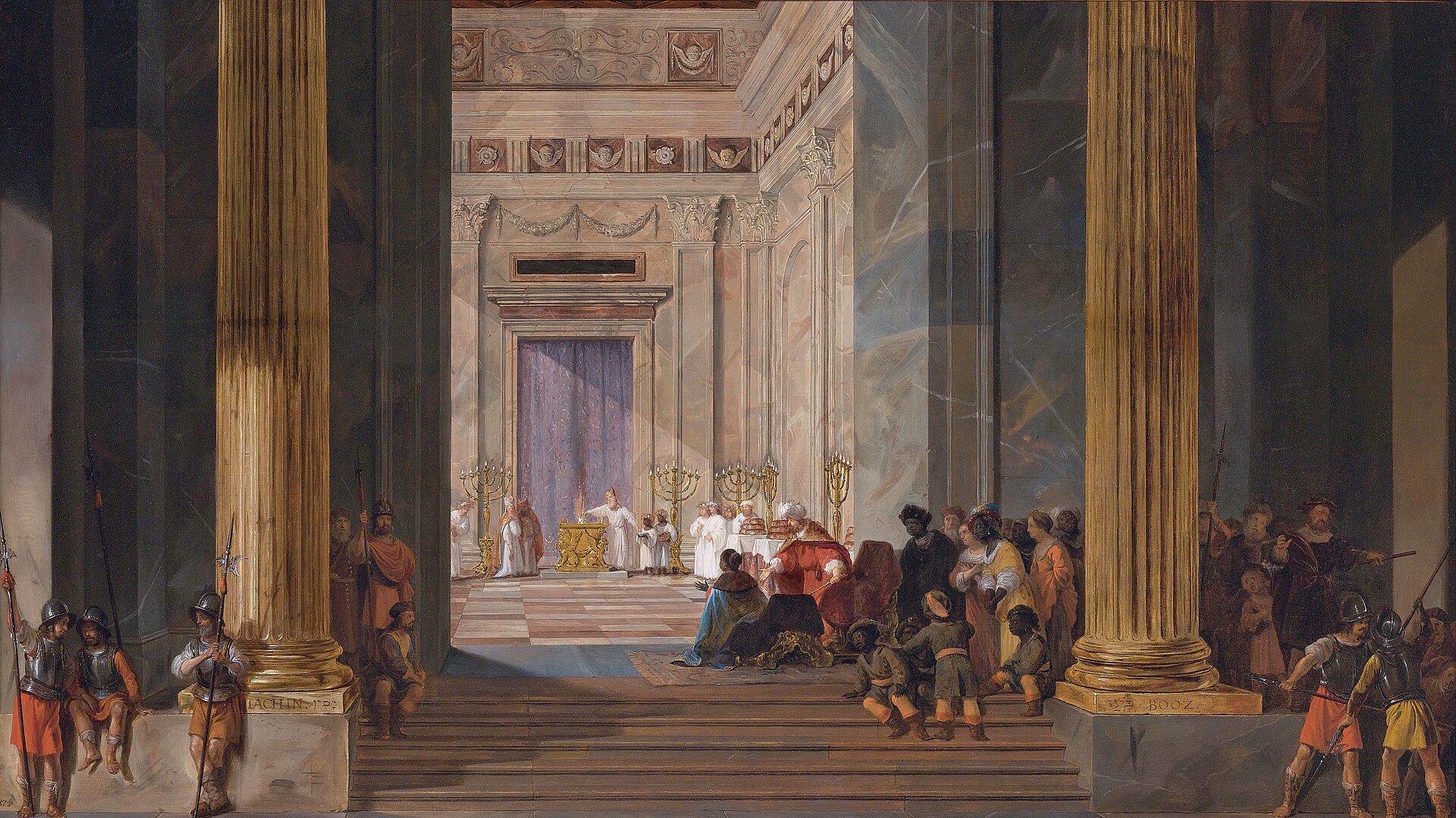
The biblical meaning of Solomon begins with his own name. In Hebrew, Shlomo comes from shalom, meaning peace or wholeness, and scripture ties the connection to history directly: David is told his son will be called Solomon because God will grant Israel peace during his reign. But the text gives him a second name too — Jedidiah, "beloved of the LORD," spoken through the prophet Nathan at his birth — and between those two names sits most of what the Bible wants a reader to take from Solomon's story: a king whose wisdom, whose Temple, and whose eventual failures point past politics toward a larger claim about what peace costs and what it takes to lose it.
Most readers arrive already knowing Solomon built something and said something wise. Fewer know the naming itself is treated as prophecy, that a second, more intimate name exists alongside the throne name, or that tradition reads his entire life as a running commentary on what wisdom is actually worth.
What Solomon's Name Actually Means in Hebrew
Shalom is usually translated "peace," but the word carries more than the absence of conflict — it implies completeness, a state where nothing necessary is missing. First Chronicles has David report a divine message naming the not-yet-born son directly: "his name shall be Solomon, and I will give peace and quietness unto Israel in his days." The name is assigned before the reign begins, functioning less as a wish than as a stated program for the kingdom David would hand over.
That program mattered because David's reign had been defined by war — uniting the tribes, fighting off surrounding kingdoms, suppressing rebellion within his own household. Solomon's forty years, by contrast, are remembered as the one long stretch without a major war on Israelite soil. Whatever else the biblical meaning of Solomon includes, the name sets the terms: this reign was meant to differ from the one before it, and largely did.
Jedidiah: The Name Scripture Gives Him at Birth
Second Samuel adds a detail easy to miss. After the death of the child born from David's affair with Bathsheba, the text says David comforted her, she conceived again, and this second son was Solomon — "and the LORD loved him." The verse continues: God sent word through Nathan that the child should be called Jedidiah, "beloved of the LORD," for the LORD's sake.
"And she bare a son, and he called his name Solomon: and the LORD loved him. And he sent by the hand of Nathan the prophet; and he called his name Jedidiah, because of the LORD." — 2 Samuel 12:24-25 (KJV)
Two names, given by two parties, at the same moment. Solomon is the dynastic name, tied to what his reign will accomplish. Jedidiah is the private name, tied to what God is said to feel about the child before he has accomplished anything. Jewish commentary has long treated the pairing as significant — a reminder that Solomon's later achievements do not explain his early standing; they follow from a favor already declared.
The Biblical Meaning of Solomon as a Symbol of Peace and Wisdom
By the time 1 Kings introduces Solomon as king, the narrative has already made its case: this is the ruler under whom Israel's fortunes consolidate rather than expand by force. His famous request at Gibeon, asking God for "an understanding heart" rather than wealth or long life, reinforces the pattern the name predicted. Wisdom, not conquest, becomes the currency of his reign, and the text credits it with everything that follows — the judgment between two women claiming one infant, the trade agreements with Tyre, the visit of the Queen of Sheba, and above all the building of the First Temple on the site tradition holds his father had once stopped a plague.
That last point carries particular weight for the biblical meaning of Solomon: peace was not simply the condition of his reign, it was the precondition for the Temple's existence. David is told plainly he cannot build God's house because his hands have shed too much blood in war. Solomon can, precisely because his reign was defined by peace. Wisdom, peace, and the Temple are not three separate achievements in the text — they are one achievement, described three ways.
Three Books, Three Meanings: What Solomon's Writings Reveal
Tradition attributes three biblical books to Solomon — Song of Songs, Proverbs, and Ecclesiastes — and Jewish exegesis has long read the trio as a map of a single life rather than three unrelated works. Song of Songs, urgent and sensual, is read as the voice of youth. Proverbs, dense with practical instruction, is read as the voice of maturity. Ecclesiastes, with its famous refrain that everything under the sun is vapor, is read as the voice of old age — a king who built more than any ruler before him, and concluded that none of it, alone, was enough.
Read in that sequence, the three books do more for the biblical meaning of Solomon than any single verse could. They present wisdom not as a static possession received once at Gibeon and kept forever, but as something that changed character as his life did — passionate, then practical, then sobered by the plain limits of wealth, power, and even wisdom itself.
Solomon as a Type of Christ in Christian Reading
Christian interpreters, reading Solomon centuries later, found in his story a pattern they believed pointed forward. A son of David born into a covenant promise, a king whose reign was marked by peace rather than war, a builder of God's house rather than merely its planner, a figure whose wisdom drew visitors from distant nations — each detail became, in typological reading, a shadow of a fuller reality still to come.
The clearest statement of this reading comes from Jesus himself. Addressing a crowd unimpressed by his teaching, he invokes the Queen of Sheba's journey to hear Solomon's wisdom, then adds: "a greater than Solomon is here." The line only carries force because Solomon's greatness was already assumed — by the first century, the biblical meaning of Solomon had become common reference, a fixed measure other claims to wisdom and kingship were set against.
The Biblical Meaning of Solomon in the Mystery Tradition
Within the initiatory tradition Paul Schulz teaches, Solomon's significance is read less as ancient history and more as a living pattern. The Modern Mystery School traces its own lineage back to King Solomon by name — not a claim of biological descent, but a claim about where a transmitted teaching is said to originate. What the tradition draws from his story is less the treasure and sorcery later folklore attached to his name, and more the discipline underneath the text: a king given wisdom, tasked with building an actual structure for the sacred rather than only speaking about it. Readers who want the fuller account of that lineage will find it in the essay on Solomon's succession from David, which traces how that inheritance was actually transferred, testing and all. The same lineage surfaces elsewhere too — the life activation session is described within the school as carrying a transmission traced to this same Solomonic line.
Where Solomon's Story Turns: Wisdom and Its Limits
No honest account of the biblical meaning of Solomon can stop at the Temple's dedication. First Kings 11 records the reign's unraveling: foreign wives, foreign altars raised alongside the Temple, and a divine verdict that the kingdom would be torn from his line, softened only by the promise it would not happen in his lifetime, and that one tribe would remain for David's sake. The king remembered for asking rightly at Gibeon is remembered, decades later, for forgetting the terms of what he had been given.
That turn is not an embarrassment the text hides — it is arguably the point. A name meaning peace, a second name meaning beloved, a reign defined by wisdom and a Temple, followed by a decline attributed to divided loyalty: together they make Solomon one of scripture's clearest studies in how much wisdom can accomplish, and how little it guarantees once its source is forgotten.
Walk the Path of the Initiate
These teachings come alive in The Initiated — Paul Schulz's introduction to the living mystery school tradition.
Get the BookFrequently Asked Questions
What does the name Solomon mean in Hebrew?
Solomon is the English form of the Hebrew Shlomo, built on the root shalom, meaning peace or wholeness. Scripture makes the connection explicit: 1 Chronicles 22 has David told that his son will be named Solomon because God will give Israel peace during his reign, tying the name directly to the era it describes.
What is Solomon's other name in the Bible, and what does it mean?
2 Samuel 12:24-25 records a second name, Jedidiah, meaning "beloved of the LORD," given through the prophet Nathan at Solomon's birth. Jewish and Christian commentators have long read the two names together as marking Solomon from birth as both peace-bringer and specially loved, before he had done anything to earn either title.
Is Solomon treated as a symbol for Christ in the New Testament?
Christian typology has long read Solomon as a forerunner of Christ — a son of David, a king of peace, a builder of God's house, a source of wisdom sought by the nations. Jesus references this directly in Matthew 12:42, telling a crowd that "a greater than Solomon is here," a claim that only carries weight if Solomon's own greatness was already assumed.
What do Solomon's three biblical books say about life's stages?
Jewish tradition has long read Song of Songs, Proverbs, and Ecclesiastes as products of three different seasons in Solomon's life: youthful passion, mature instruction, and aged reflection on the limits of everything he built. Read in that order, the three books trace a single mind moving from desire, to counsel, to a sober accounting of a life nearing its end.
What does Solomon represent in the mystery school tradition?
The Modern Mystery School traces its lineage in name back to King Solomon, treating him less as a distant historical figure than as the fountainhead of a transmitted teaching. In that reading, Solomon's meaning is less about the treasure or magic later legend piled onto his name and more about wisdom applied — a king whose task was to build an actual house for the sacred, not merely to speak about it.