Biblical Solomon: The King Scripture Describes vs. the Legend Built on His Name
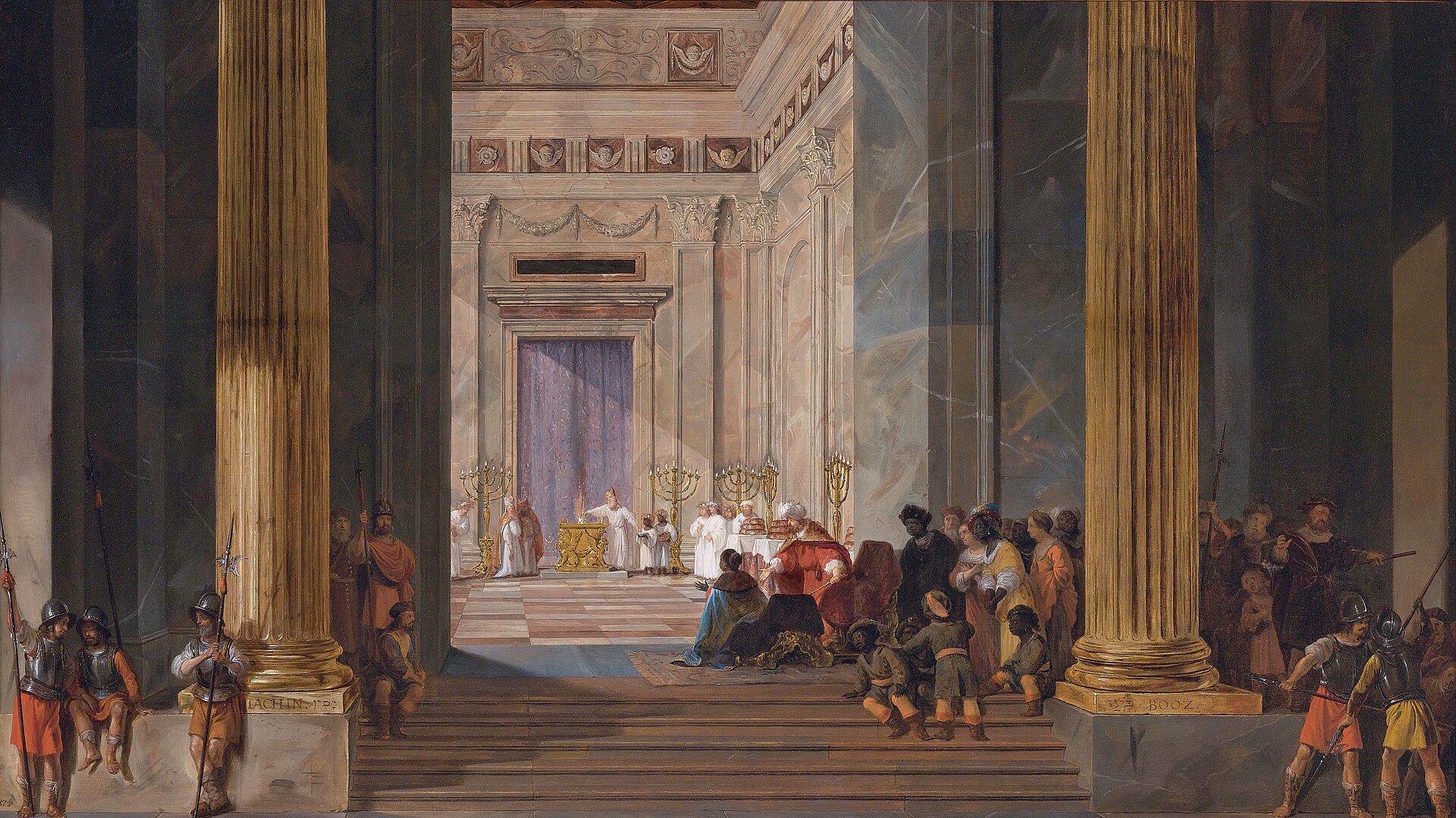
The biblical Solomon is a considerably narrower figure than the wonder-working sorcerer most people picture: he is David and Bathsheba's son, Israel's third king, builder of the Jerusalem Temple, and a ruler whose reputation for wisdom rests on a dream, a judgment, and a body of proverbs — not on a magic ring or a legion of bound demons. That second Solomon, who commands seventy-two spirits and seals them in bronze vessels, comes from texts written centuries after the historical king died. Scripture never mentions him.
The confusion is understandable. Solomon's name has been borrowed by more legend and magical literature than almost any other biblical figure. This essay separates what the Bible actually records about him from what later centuries built on top of it, and looks at why the mystery tradition still holds his name in high regard — for reasons that have nothing to do with rings or demons.
Who Is the Biblical Solomon, According to Scripture?
The biblical Solomon ascends the throne through crisis, not simple succession. As 1 Kings 1 tells it, David lay dying while his elder son Adonijah moved to claim the crown; Bathsheba and the prophet Nathan intervened, and David had Solomon anointed at the Gihon spring while the coup was still in progress. It is a young king installed in a hurry, against a rival's near-success, on the authority of his father's final word.
Once secure, Solomon's reign is defined by two undertakings scripture returns to again and again: building, and judging. 1 Kings 6 devotes a chapter to the seven years spent constructing the Jerusalem Temple, down to the cedar paneling and the cherubim over the ark. And in 1 Kings 3, at a high place in Gibeon, Solomon has the dream that defines his reputation before a single proverb is recorded: offered anything he asks, he requests "an understanding heart to judge thy people, that I may discern between good and bad" — not riches, not long life, not victory over his enemies. The text treats that request as the hinge on which everything else about him turns.
Tradition credits Solomon with Proverbs, Ecclesiastes, and the Song of Songs, and 1 Kings 4 adds that he spoke three thousand proverbs and composed a thousand and five songs, along with detailed knowledge of trees, beasts, birds, and fish — wisdom about the natural order, not power over the spirit world. That same chapter records the diplomatic marriages, the chariot army, and the wealth that made his court proverbial. Scripture is not entirely approving of any of it: 1 Kings 11 closes his story with the multiplication of wives and the worship of foreign gods that followed, a lapse the text frames as the direct cause of the kingdom's split after his death.
The Legendary Solomon the Bible Never Mentions
Outside the Hebrew canon, a second Solomon grew up beside the first — a magician-king who commands spirits rather than merely governing men. The first-century historian Josephus already reports that God gave Solomon skill against demons for healing, and describes witnessing an exorcist use a ring attributed to Solomon to drive a spirit from a possessed man. Centuries later, the pseudepigraphal Testament of Solomon expanded that seed: Solomon binding seventy-two demons with a ring given by the archangel Michael, forcing them to labor on the Temple.
The legend did not stop there. Medieval and early modern magicians attached Solomon's name to a library of grimoires — the Key of Solomon, known in Latin as the Clavicula Salomonis, and the later Lesser Key of Solomon among them — claiming his authority for rituals no historical Solomon performed. The nineteenth-century French occultist Eliphas Levi produced his own edition of the Clavicula Salomonis, keeping the association alive into the modern esoteric revival. None of it — the ring, the bound spirits, the grimoires bearing his signature — appears in the Hebrew Bible. The biblical Solomon never binds a demon. He asks for discernment and receives it.
Where the Legend Actually Comes From
Solomon's name carried unusual authority even in antiquity, and writers across centuries borrowed it the way a modern author might invoke a famous predecessor's endorsement. Pseudepigrapha — texts written under a revered figure's name long after that figure's death — attached themselves to Solomon more than almost anyone else in scripture. The deuterocanonical Wisdom of Solomon, the Psalms of Solomon, and the collection I have written about elsewhere, the Odes of Solomon, all carry his name while being composed centuries after he died, by authors whose own names never survived. The Testament of Solomon belongs to the same pattern: legend accreting around a name already famous enough to make the borrowed authority worth the trouble.
The seed sits inside the canonical text itself. 1 Kings 4:33 already credits Solomon with speaking "of trees, from the cedar tree that is in Lebanon even unto the hyssop that springeth out of the wall," and of beasts, birds, and fish — an encyclopedic command of the natural world that later readers stretched from naturalist wisdom into mastery over the unseen forces believed to animate that world. The distance between understanding a hyssop plant and commanding seventy-two demons is centuries of reinterpretation, not a line of scripture.
What Scripture Itself Says Solomon's Wisdom Actually Looked Like
Set the legend aside, and the wisdom the Bible documents is strikingly practical. The clearest demonstration comes in 1 Kings 3:16–28, the judgment of the two women who both claim the same living infant. Solomon orders the child cut in two — not because he intends it, but because the true mother's horrified refusal exposes her before the court, while the false claimant's silence condemns her. It is a judge's trick, built on reading character under pressure, and it is the scene scripture cites to prove that "the wisdom of God was in him, to do judgment." No ring, no spirit — only a king who understood how people behave when something they love is at stake.
The Queen of Sheba's visit, recorded in 1 Kings 10, tests that same reputation on an international stage. She arrives with hard questions meant to probe whether reports of his wisdom are exaggerated, and scripture says he answered every one, leaving nothing hidden from her. It is an intellectual and administrative wisdom the text describes — the capacity to govern, to judge fairly, to answer whatever a visiting sovereign puts to him. That is the biblical Solomon's actual claim to greatness, centuries before any grimoire attached his name to a bound spirit.
Why the Mystery Tradition Still Traces Its Lineage to Solomon
The living mystery school lineage does not claim descent from the demon-binding sorcerer of the Testament of Solomon. It traces its own written record more than three thousand years back to King Solomon specifically because of the Gibeon episode: a ruler offered anything at all who asks, above every other possibility, for an understanding heart. That single choice is treated within the tradition as a model of right initiation — the recognition that outward power and wealth are worth less than the inner capacity to see clearly and judge rightly.
Read that way, Solomon's request at Gibeon has more in common with what I have described elsewhere as soul awakening than with any grimoire's promise of command over spirits. It is not power granted from outside; it is an inward faculty asked for and then trained, the same faculty the two-women judgment and the Sheba interrogation go on to demonstrate. The tradition's regard for Solomon rests on that request and what followed — a builder-king who asked to see clearly and governed accordingly — not on the seventy-two demons a later text imagined bowing to his ring.
What survives of the biblical Solomon, once the legend is set aside, is arguably the more demanding figure. A magician commanding spirits with a ring makes for better folklore. A king who asks only for discernment, and is held accountable by the same text for the idolatry that discernment eventually failed to prevent, is a harder and more honest portrait — wisdom granted, wisdom used, and still not enough to keep one man from failing the very law he was crowned to uphold.
Walk the Path of the Initiate
These teachings come alive in The Initiated — Paul Schulz's introduction to the living mystery school tradition.
Get the BookFrequently Asked Questions
Was the biblical Solomon a real historical king?
Most historians accept that a Judean king named Solomon reigned in the tenth century BCE, though the scale of his empire described in 1 Kings is debated among archaeologists working the period. The biblical Solomon of the text — third king of the united monarchy, son of David and Bathsheba, builder of the Jerusalem Temple — is the figure scripture presents; how closely the archaeological record matches every detail remains an open scholarly question.
Did the biblical Solomon really have a magic ring that controlled demons?
No. The ring, the seventy-two bound demons, and the archangel Michael all come from the Testament of Solomon, a pseudepigraphal text written centuries after Solomon's death. The Hebrew Bible describes Solomon's wisdom as understanding of nature and skill in judgment, never as command over spirits.
How many wives did the biblical Solomon have?
1 Kings 11:3 counts seven hundred wives of royal rank and three hundred concubines. Scripture presents the number itself as a violation: Deuteronomy 17:17 warned a future king of Israel not to multiply wives, precisely because they would turn his heart, which is the failure 1 Kings says followed.
What books did the biblical Solomon write?
Tradition credits him with Proverbs, Ecclesiastes, and the Song of Songs, all of which open with lines invoking his name or authorship. Two further texts bear his name without appearing in the Hebrew canon: the deuterocanonical Wisdom of Solomon and the pseudepigraphal Psalms of Solomon, both written long after his lifetime by unknown authors working under his authority.
Why is Solomon associated with magic if the Bible never describes it?
The association grew in stages after the biblical text closed. The first-century historian Josephus already credited Solomon with power over demons for healing purposes; Jewish and Christian legend expanded that into full narrative in the Testament of Solomon; and medieval magicians later attached his name to grimoires such as the Key of Solomon, borrowing his reputation for wisdom to lend their own work authority.