Catholic Dark Night of the Soul: What the Church Actually Teaches
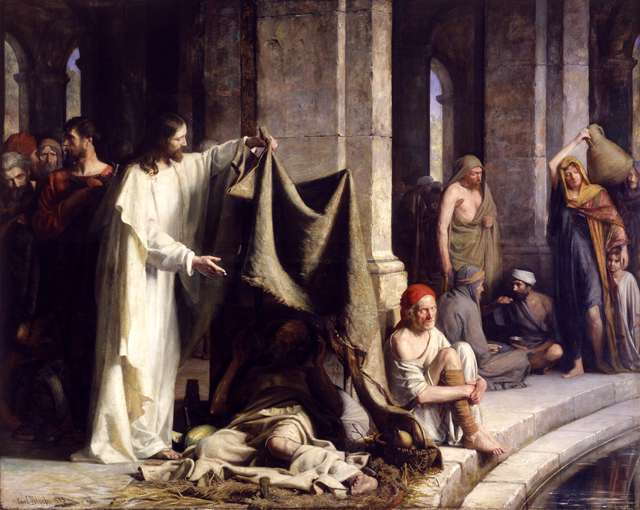
The Catholic dark night of the soul is a specific, named stage within the Church's own mystical theology, not a loose phrase for any hard season of life. It names the period in which God withdraws the felt comfort of prayer — the warmth, the clarity, the sense of being heard — while the soul's actual love for God, stripped of that comfort, is meant to grow stronger and more selfless. The Church did not invent the phrase casually; it absorbed it from a sixteenth-century Carmelite friar, tested it against centuries of pastoral experience, and eventually made it a Doctor of the Church's official teaching. What follows is what Rome actually says this stage is, how it is told apart from ordinary suffering, and what the tradition asks of someone living through it.
The Catholic Dark Night of the Soul in the Church's Own Terms
The phrase comes from St. John of the Cross, a Carmelite friar who wrote two treatises — The Dark Night and The Ascent of Mount Carmel — as commentaries on a poem he composed, by his own account, while imprisoned by his own order's rivals in Toledo. He did not set out to write pastoral psychology; he set out to describe, stage by stage, what happens to a soul that God is drawing toward union with himself. The poem's opening lines read:
"Upon a gloomy night, / With all my cares to loving ardours flushed, / (O venture of delight!) / With nobody in sight / I went abroad when all my house was hushed."
— St. John of the Cross, The Dark Night, trans. David Lewis (1864 translation, public domain)
What the Church later formalized from that poem is a two-part structure: a night of the senses, in which the pleasures of ordinary devotion dry up, and a deeper night of the spirit, in which even the soul's grasp of God's presence seems to vanish. Catholic theology reads both as purifications, not punishments — necessary because a love for God that still depends on feeling comforted by God is not yet a love for God alone. For a fuller account of the poem itself and the prose it generated, see our essay on what the poem actually says.
Why the Church Treats This as Normal, Not as a Breakdown
A striking feature of Catholic teaching on this stage is how unremarkable it considers it to be for anyone serious about prayer. Spiritual directors trained in this tradition are taught to expect it, the way a physician expects certain stages of healing. The Church's pastoral literature draws a careful line here: a person can be undergoing a genuine dark night and still function entirely normally in work, relationships, and daily responsibility, because what has gone dry is the felt sense of God, not the person's general capacity to live. That distinction matters enormously in practice, because it is also exactly where the tradition insists on caution.
Catholic spiritual direction does not treat the dark night as a substitute diagnosis for clinical depression, and good directors are explicitly formed to refer a directee for medical or psychological evaluation when the signs point that way — persistent hopelessness, loss of function, disrupted sleep and appetite, or risk to oneself. The dark night, as the Church describes it, is narrower: it concerns the life of prayer specifically, arises within an otherwise ordinary life, and — however painful — carries with it an undercurrent the tradition calls peace at a level deeper than feeling. Where that undercurrent is simply absent, the Church's own guidance is to look elsewhere for the cause.
The Catholic Dark Night of the Soul and the Three Ways
Catholic mystical theology inherited, long before St. John of the Cross, a map of the spiritual life in three stages: the purgative way, in which the soul is cleansed of attachment to sin; the illuminative way, in which virtue and understanding deepen; and the unitive way, in which the soul rests in God. St. John of the Cross placed his dark nights at the hinge points of this older map — the night of the senses marking the painful passage out of the purgative way, and the deeper night of the spirit marking the harder passage from illumination into union. Read this way, the Catholic dark night of the soul is not a separate crisis bolted onto the spiritual life; it is the Church's name for the precise cost of moving from one stage of that life to the next.
This is also where Catholic teaching and the wider contemplative traditions quietly agree, even though they describe the mechanism in different vocabulary. Our own tradition's account of the dark night of the soul describes the same descent — the dissolution of an identity built on consolation and certainty — as the price of a deeper awakening, and the mystery schools have long taught that nothing is raised up that has not first gone all the way down into darkness. The Church's framework is more precise about doctrine and sacrament; the pattern it is describing is one the initiatory traditions recognize as well.
Other Catholics Who Lived a Dark Night Besides John of the Cross
St. John of the Cross gave the Church its vocabulary, but he is far from the only Catholic mystic the tradition reads this way. St. Teresa of Ávila, his contemporary and fellow reformer of the Carmelite order, wrote of long seasons in which prayer felt like speaking into silence, even as she went on founding convents and writing some of the Church's most practical guidance on the interior life. St. Thérèse of Lisieux, dying of tuberculosis at twenty-four, described a final "night of nothingness" in which even her belief in heaven seemed to dissolve — an account the Church now reads as one of the clearest modern instances of John of the Cross's night of the spirit. In the twentieth century, Mother Teresa's private letters, published only after her death, revealed nearly five decades of what she called an absence of God behind a public life devoted entirely to his service. Each case differs in its particulars, but Catholic theology treats all three as variations on the same pattern St. John of the Cross first mapped.
What Catholic Teaching Asks of Someone Going Through It
The Church's pastoral guidance for this stage is notably restrained. It does not offer a technique for ending the dryness, because ending it is not the point; the whole teaching is that this is a stage to be lived through, not a problem to be solved. What it consistently counsels instead is continuity: remaining in the sacramental life even when it yields no felt comfort, continuing to set aside time for prayer even when prayer feels like silence, and — this is treated as close to non-negotiable — bringing the experience to a confessor or spiritual director rather than carrying it alone. The reasoning is practical as much as spiritual: a trained director can tell the difference between a dark night and a warning sign that something else is wrong, and a person inside the experience usually cannot make that judgment about themselves.
What the Church promises, carefully, is not relief on any schedule but fruit on the far side of it — a love for God the tradition describes as purified of self-interest, and a peace that no longer depends on feeling God close. Whether a reader approaches that promise through the language of Catholic doctrine or through the older initiatory traditions that describe the same descent in different terms, the structure the Church preserved from St. John of the Cross remains one of the most carefully documented accounts anywhere of what it costs, and what it is said to give back.
Walk the Path of the Initiate
These teachings come alive in The Initiated — Paul Schulz's introduction to the living mystery school tradition.
Get the BookFrequently Asked Questions
What does the Catholic Church actually mean by the dark night of the soul?
The Church uses the phrase for a specific stage in mystical theology, drawn from St. John of the Cross: a period in which God withdraws the felt consolations of prayer so that love can mature beyond dependence on feeling. It is not a casual term for any hard season of life.
Is the Catholic dark night of the soul the same thing as depression?
No, and Catholic spiritual directors are trained to distinguish the two. Depression affects a person's whole functioning and responds to medical and psychological care; the dark night, as the tradition describes it, is specific to prayer and the sense of God's presence, and can coexist with an otherwise ordinary, functioning life.
Did the Catholic Church always officially recognize the dark night as doctrine?
St. John of the Cross wrote his account in the 1570s and 1580s, and the Church took over two centuries to fully absorb it: he was canonized in 1726 and named a Doctor of the Church in 1926, after which his framework became the standard reference for how Catholic mystical theology discusses this stage of prayer.
Which other Catholic saints are described as having lived through a dark night?
St. Teresa of Ávila described similar periods of spiritual dryness in her own writing, and St. Thérèse of Lisieux wrote of a "night of nothingness" in her final illness that many theologians read through the same lens. Mother Teresa's decades of felt absence, revealed in letters published after her death, are the most studied modern case.
What does Catholic teaching say a person should do during a dark night?
The consistent counsel across Catholic spiritual direction is continuity, not technique: stay with the sacraments, keep showing up to prayer even when it feels empty, and bring the experience to a confessor or director rather than carrying it alone, so that ordinary spiritual dryness is not mistaken for something it is not.