Dark Night of My Soul: What's Actually Happening When You Say It
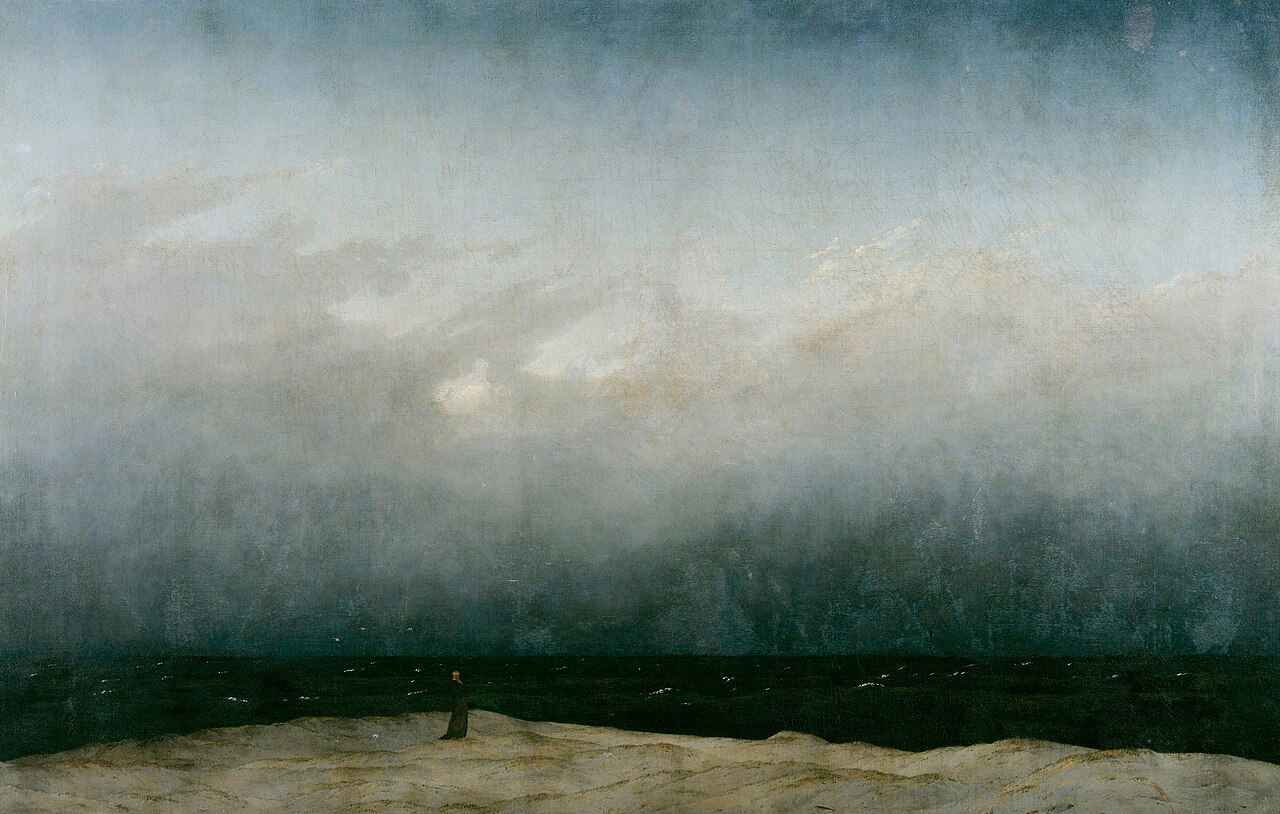
When someone says they are in a dark night of my soul, they almost never mean a bad week. They mean that the things that used to hold life together — a belief, a relationship, a sense of who they were — have gone quiet or collapsed outright, and nothing ordinary is filling the space. Comfort doesn't land. Distraction doesn't work. The phrase borrows its name from a sixteenth-century mystical poem, but the experience it now describes is broader and far more personal: a season in which meaning itself seems to have gone out, with no clear sign of when or whether it returns.
What People Actually Mean by "Dark Night of My Soul"
Search this phrase and you will find two different things tangled together. One is historical: a poem called "Dark Night," written by the Carmelite friar John of the Cross, and the detailed theological commentary he wrote to explain it. The other is colloquial: the way the phrase has drifted into everyday speech as shorthand for any period of profound inner darkness — grief that won't resolve, faith that has gone silent, an identity that no longer fits, a sense that the story you were telling about your life has quietly stopped being true.
Most people typing "dark night of my soul" into a search bar are living the second meaning and have stumbled onto the first. That is not a mistake. John named something real and durable enough that his language outlived his century. But his account was specific — built for monastics pursuing a particular kind of union with God — and the everyday experience is wider than his frame. The tradition that Paul Schulz teaches reads both the historical poem and the modern usage as pointing at the same underlying event: the dismantling of a self-structure that has outgrown its usefulness.
Why "Dark Night of My Soul" Feels So Personal
The possessive matters. People rarely say "a dark night of the soul" when they are living it; they say my soul, because the experience does not feel like a category — it feels like the floor of one's own life giving way. Three features tend to recur across accounts, whatever tradition the person comes from.
First, ordinary meaning stops working. Things that used to matter — achievements, relationships, beliefs — go flat, not because they were false, but because the self that cared about them has started to come apart. Second, there is no clear villain. A dark night rarely has a single identifiable cause the way grief has a death or a layoff has a decision; it can begin for no traceable reason on an unremarkable day. Third, the usual remedies fail. Distraction, reassurance, and willpower, which solve most ordinary low periods, do nothing here, because the problem is not a mood — it is the apparent loss of the frame that used to make moods interpretable at all.
The Older Teaching Behind the Phrase
John of the Cross divided his night into two movements. The night of the senses strips away attachment to comfort and the small rewards the ego runs on. The night of the spirit, which he considered far harder, dissolves attachment to the self's own certainty — including spiritual certainty, the sense of being "a person who has it figured out." His full account is worth reading on its own terms; what matters here is the shape of the claim, not its Carmelite particulars: the night is not punishment, and it is not meaningless. It is purification, read through the Catholic doctrine of his century.
The mystery school tradition reads the same pattern without requiring Catholic theology to hold it. Initiates across lineages describe a recurring structure: the self builds a working identity out of beliefs, roles, and attachments; life eventually confronts that structure with something it cannot absorb; the structure cracks; and only after the cracking does a deeper, steadier ground become available. The teaching calls the willingness to meet that cracking directly, rather than fleeing it, the courage to face the shadow aspects of oneself. It is described as one of the harder steps on any genuine path of transformation — not because the content of the shadow is exotic, but because facing it honestly, without immediately judging or excusing what is found, is simply difficult.
"Solange wir auf Aggression mit Gegenaggression… reagieren, haben wir den Hintergrund der Situation nicht verstanden" — as long as we answer aggression with aggression, we have not understood what the situation is actually showing us. The hermetic teaching on the inner adversary makes the same claim in different language: what confronts us from outside is frequently a mirror of what has not yet been faced within.
How Different Traditions Read the Same Passage
John of the Cross is the best-known source, but he was not describing something unique to Catholic mysticism. The German mystic Jakob Böhme, writing roughly a century later from a very different confessional position, described his own crises of despair as necessary ruptures that preceded a deeper opening — darkness as the condition a new clarity grows out of, not its opposite. Jewish and Sufi contemplatives have their own vocabularies for the same structure: a withdrawal of felt presence that initiates describe as more trustworthy, in the long run, than the comfort it replaces.
What these traditions share is a refusal to treat the darkness as simply an error to be corrected. They treat it as information — evidence that something in the way a person has been organizing their inner life has reached the end of its usefulness. That reframing changes nothing about how hard the night is to live through. It does change what the night means while it is happening.
What Tends to Help, and What Doesn't
There is no instruction manual for ending a dark night on schedule, and anyone who sells you one should be regarded with suspicion; initiates are consistent that the timeline belongs to the process, not to the person undergoing it. What the tradition does offer is a set of honest observations about what tends to make the passage survivable rather than merely endured.
Isolation tends to make it worse. Across every account, companionship from someone who has already been through their own version of the night — real guidance from someone further along the path, not a stranger's slogan — matters more than any single technique. Forcing a resolution tends to make it worse too; the night has its own pace, and pushing against it usually just adds a second layer of suffering on top of the first. And treating the experience as purely psychological, while ignoring any physical or medical dimension, can be its own mistake — a dark night and a depressive episode are not always distinguishable without professional help, and seeking that help is not a failure of faith.
What helps, by every account initiates give, is something closer to staying present without demanding an exit: continuing to show up for ordinary responsibilities, not pretending the darkness isn't there, and trusting — on evidence older than any one person's crisis — that the structure now collapsing was never the whole of who they are.
Walk the Path of the Initiate
These teachings come alive in The Initiated — Paul Schulz's introduction to the living mystery school tradition.
Get the BookFrequently Asked Questions
Is a dark night of the soul the same thing as depression?
They can look identical from the outside, and either one calls for real medical and psychological care. But the tradition draws a distinction: depression is a clinical condition with its own causes and treatments, while a dark night is a crisis of meaning that often appears in people with no clinical history at all — a collapse of the frameworks that used to make sense of life. The two can also coexist. If you are in genuine distress, see a qualified professional first; the spiritual reading is a lens, not a substitute for care.
How long does a dark night of the soul last?
There is no fixed length. Accounts in the literature range from weeks to several years, and the night often arrives in waves rather than as one continuous stretch. What tends to mark its end is not a date but a shift: meaning returns, though rarely in the old shape, and the person who emerges is recognizably changed.
What triggers a dark night of the soul?
Often a loss — of a person, a faith, an identity, a certainty — that was quietly holding the rest of life together. Sometimes nothing external changes at all; the collapse is internal, as if a structure that had been weakening for years finally gives way on an ordinary Tuesday. Initiatory traditions generally hold that the trigger matters less than what the night is clearing room for.
Is a dark night of the soul the same as a spiritual awakening?
They are usually two phases of one process rather than two separate events. The dark night is the dismantling; the awakening, when it comes, is what follows once the old self-structure has finished coming apart. Not every dark night resolves into an awakening on any predictable timeline, but the tradition holds that the darkness is rarely the whole story.
Where does the phrase "dark night of the soul" come from?
It comes from a short poem by the sixteenth-century Spanish friar John of the Cross, later expanded in his own prose commentary of the same name. He used it with great theological precision; the phrase has since broadened into a general name for any period of inner collapse, which is usually what someone typing "dark night of my soul" is actually describing.