Hermeticism: The Seven Principles of Hermetic Philosophy
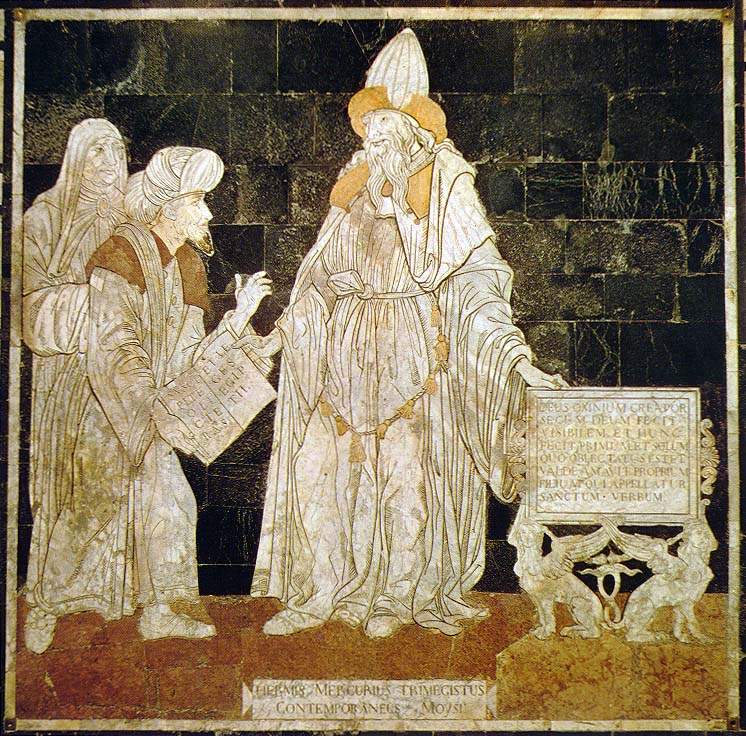
Hermeticism is an ancient wisdom tradition attributed to Hermes Trismegistus, a legendary figure revered across multiple cultures as the embodiment of divine intelligence and esoteric knowledge. At its core, hermeticism teaches that universal principles govern all existence—from the grandest cosmic order to the innermost workings of human consciousness. The study of hermeticism reveals an elegant, coherent cosmos where the same laws operate at every scale, and where understanding these laws becomes the gateway to genuine transformation.
The philosophy of hermeticism has shaped spiritual and intellectual traditions for millennia. Unlike dogmatic belief systems, hermeticism invites investigation and direct experience. It asks: What are the laws governing mind, matter, energy, and spirit? How do we align ourselves with these laws rather than fighting against them? What becomes possible when we understand the true nature of reality? These questions remain as vital today as they were when Hermes Trismegistus—or the ancient wisdom keepers who preserved his teachings—first articulated them.
Origins: The Emerald Tablet and the Corpus Hermeticum
The origins of hermeticism reach back into pre-Christian antiquity, woven through Egyptian, Greek, and Mediterranean wisdom traditions. The name "Hermes Trismegistus"—meaning "Hermes the Thrice-Great"—refers to a synthesis of the Greek god Hermes (messenger of the gods, lord of writing and alchemy) and the Egyptian deity Thoth (god of wisdom and keeper of sacred knowledge). Ancient initiates recognized a unified wisdom across cultures and saw in Hermes Trismegistus an archetype of the enlightened being who bridges the divine and human realms.
The most famous hermetic text is the Emerald Tablet, a concise yet profound document that distills hermetic principles into crystal language. Its opening line—"That which is below is like that which is above, and that which is above is like that which is below"—expresses the cornerstone principle upon which all hermeticism rests. Though the tablet's physical origins are debated by scholars, its intellectual heritage is unmistakable: it appears in Arabic alchemical texts by the 8th century and has influenced Western esotericism ever since.
The Corpus Hermeticum, a collection of sacred texts attributed to Hermes Trismegistus, provides the philosophical foundation. These dialogues explore the nature of God (or the Divine), the creation of the world, the human soul, and the path of enlightenment. Recovered during the Renaissance, the Corpus Hermeticum reignited Western interest in hermetic philosophy and influenced philosophers, alchemists, and mystics for centuries. Within the lineage of King Solomon and the Modern Mystery School, hermetic principles form the bedrock of all teachings—the universal language underlying initiation, healing, sacred geometry, and the quest for self-knowledge.
The Seven Hermetic Principles
The hermetic tradition articulates seven universal principles that govern all manifestation and consciousness. These are not abstract theories but living laws observable in nature, psychology, and spiritual practice. Understanding them transforms not merely how we think, but how we exist in the world.
The Principle of Mentalism: All is Mind; the universe is mental in nature. This does not mean that reality is illusory, but rather that consciousness and intelligence pervade all existence. The physical universe arises from and is sustained by universal mind. Our individual minds are expressions of this greater intelligence. As we master our own minds through discipline and awareness, we align with the creative force underlying all things.
The Principle of Correspondence: "As above, so below; as below, so above." What occurs in the macrocosm mirrors the microcosm, and vice versa. The laws governing the solar system operate in the atom. The patterns of the cosmos appear in human relationships, in the cycles of seasons, in the structure of a single cell. This principle reveals that we need not travel far to understand the universe—we can study ourselves and perceive the infinite reflected in the finite.
The Principle of Vibration: Everything vibrates; nothing rests in absolute stillness. Solidity is an illusion born of speed. The material world, thought, emotion, and spirit all vibrate at different frequencies. Raising one's vibration through meditation, conscious practice, and spiritual work elevates consciousness and attracts experiences of higher frequency. Conversely, lower vibrations attract lower experiences. This principle explains why transformation requires genuine inner work—we must literally change our vibrational rate.
The Principle of Polarity: Everything has poles; opposites are identical in nature but different only in degree. Hot and cold are different degrees of temperature. Love and hate are different degrees of the same emotion. Health and illness exist on a spectrum. This principle liberates us from rigid thinking and reveals that we can move along any spectrum through conscious choice and practice. Opposites, properly understood, are complementary forces in a unified whole.
The Principle of Rhythm: Everything flows in and out; everything has seasons and cycles. Day follows night; growth follows dormancy. Energy expands and contracts. Emotions rise and fall. Understanding rhythm teaches patience—difficult seasons pass, and favorable ones return. By aligning with natural rhythms rather than resisting them, we navigate life with greater grace and effectiveness.
The Principle of Cause and Effect: Every cause has an effect; every effect has a cause. Nothing occurs by chance; all events have antecedent causes. This principle is the foundation of karma and personal responsibility. Our thoughts, words, and actions are causes that generate effects, often in ways we do not immediately perceive. Mastery comes through understanding cause and effect, and through deliberately choosing our causes.
The Principle of Gender: Gender is in everything; everything possesses masculine and feminine principles. These are not biological but archetypal—the masculine principle is active, generative, projective; the feminine is receptive, nurturing, integrative. All creation requires both. Psychological wholeness involves balancing these principles within oneself, regardless of biological sex. Health, creativity, and spiritual power flow from their proper integration.
Hermeticism as Living Practice
The true power of hermeticism lies not in intellectual understanding alone but in embodied practice. To know these principles mentally while living them unconsciously defeats the purpose. Hermeticism is an invitation to become what you know.
Living hermeticism means observing the seven principles in operation throughout your day. Notice how your thoughts shape your circumstances. Watch the rhythm in your body, your energy, your emotions. Recognize polarity in every conflict and see how opposites serve a greater whole. Practice mental discipline—control your inner chatter, master your attention, direct your consciousness deliberately. Study yourself as a microcosm and perceive the infinite cosmos reflected there.
This path naturally intersects with the work of healing and transformation. The dark night of the soul becomes understandable through the principle of rhythm—difficult passages are part of the cycle, not permanent states. The principle of cause and effect clarifies karma and shows us that healing our past patterns creates liberation. The principle of polarity teaches that shadow and light coexist, and that integration—not rejection—brings wholeness.
Transmission Through Mystery Schools
For over three millennia, hermetic wisdom has been preserved and transmitted through mystery schools—formal institutions of initiation where authentic teachings pass directly from teacher to student. The Egyptians had their temples. The Greeks had their mysteries at Eleusis. The Jewish Kabbalah wove hermetic principles into its own framework. The Rosicrucians and other orders carried hermetic wisdom through medieval and early modern Europe.
Why this emphasis on lineage and initiation? Because true transformation requires more than information. Information can be read in a book. But the living transmission of hermetic principles—the direct energetic and conscious attunement from master to student—activates dormant capacities within the initiate. Knowledge becomes wisdom. Theory becomes lived reality.
Within the Modern Mystery School, grounded in the King Solomon lineage stretching back over three thousand years, the hermetic principles form the foundation of all work. They underlie sacred geometry, where mathematical ratios embody hermetic laws. They guide Kabbalah, where the Tree of Life maps the principles across levels of consciousness. They inform healing work, where understanding energy and vibration allows practitioners to facilitate genuine transformation. They illuminate the path of initiation itself—each level representing a deeper integration of hermetic truth.
Hermeticism Today
Hermetic wisdom is not ancient history relegated to dusty books. It is alive in contemporary esoteric practice, in quantum physics (which confirms that observation affects reality), in psychology (which validates the power of thought and belief), and in the lived experience of anyone genuinely engaged in spiritual transformation.
The invitation hermeticism extends is timeless: Look at reality as it actually is, not as you have been conditioned to see it. Develop your mind and consciousness. Practice the principles until they become your second nature. Seek authentic teaching and genuine initiation. And know yourself—for in that profound self-knowledge lie the keys to transformation, healing, and ultimately, world peace.
Walk the Path of the Initiate
These teachings come alive in The Initiated — Paul Schulz's introduction to the living mystery school tradition.
Get the BookFrequently Asked Questions
What are the seven principles of hermeticism?
The seven hermetic principles are: mentalism (all is mind), correspondence (as above so below), vibration (everything vibrates), polarity (opposites are identical in nature but different in degree), rhythm (everything flows in and out), cause and effect (every cause has an effect), and gender (masculine and feminine principles in all things). These principles form the foundation of hermetic philosophy and apply universally across all aspects of existence.
Is hermeticism a religion?
Hermeticism is not a religion, though it has influenced many spiritual traditions. It is a philosophical and esoteric tradition focused on understanding universal principles and the nature of reality and consciousness. Hermeticism can be compatible with various religious beliefs, and many mystery schools—including the Modern Mystery School—integrate hermetic principles into their teachings without requiring adherence to any specific religious doctrine.
What is the Kybalion?
The Kybalion is a book published in 1908 that presents the seven hermetic principles in modern Western terms. Written anonymously, it draws from the Corpus Hermeticum and earlier hermetic texts. The Kybalion served as a bridge between classical hermetic wisdom and contemporary esoteric students, and remains widely studied as an accessible introduction to hermeticism and its practical applications.
How do I start practicing hermeticism?
Begin by studying the seven principles and observing them in your daily life—notice how opposites exist at different degrees, how everything vibrates and moves in cycles, how your thoughts shape your experience. Practice meditation to strengthen mental discipline and self-awareness. Study the tradition through authentic sources and teachers within established lineages. Many find that formal initiation into a mystery school, grounded in genuine transmission from teacher to student, accelerates the practical application and realization of hermetic principles.