Hermeticism Magic: What the Tradition Actually Teaches About the Occult Arts
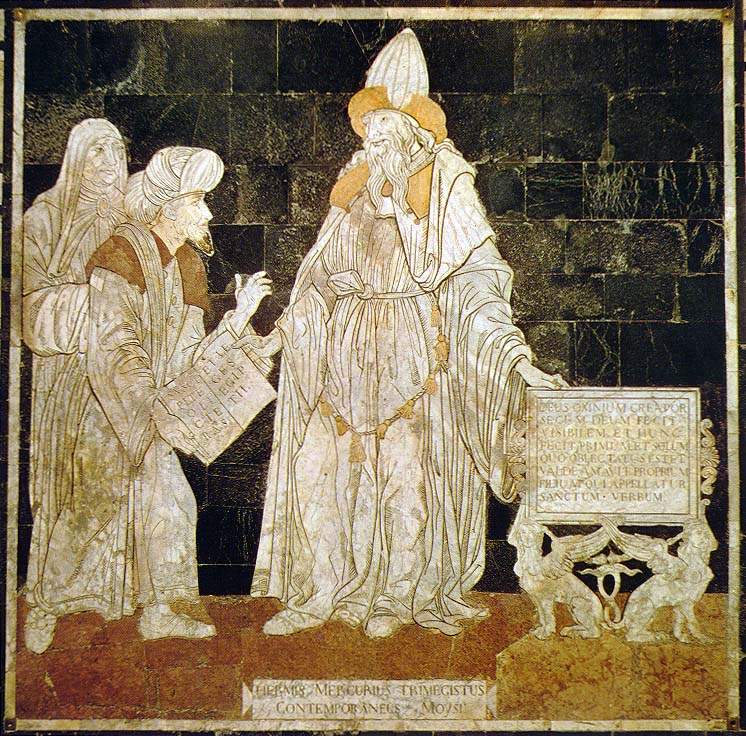
Hermeticism magic is a real historical pairing, but the two words point to different things depending on which century is asking. In antiquity, and again in the Renaissance, "Hermeticism" named two distinct bodies of writing gathered under one legendary author: a philosophical stream concerned with the mind's kinship with the divine, and a technical stream — astrological, alchemical, and ritual — that later ages simply called magic. The tradition itself has never claimed these two currents teach identical things. Making sense of hermeticism magic means understanding why they were bound together under the name of Hermes Trismegistus in the first place, and what the line between them still means for anyone who studies this material seriously today.
Hermeticism Magic in the Ancient World: Two Kinds of Text, One Name
The scholarly convention is to split the ancient Hermetic writings into two families. The first, called the philosophical Hermetica, is the material modern readers usually mean by "Hermeticism": the Corpus Hermeticum and the Asclepius, dialogues composed in Egypt in the early centuries of our era, teaching that the cosmos is a mental creation and that the human mind, rightly purified, can know its divine source. The second family, the technical Hermetica, is older in spirit and far more practical in tone — astrological handbooks, alchemical recipes, and collections of ritual and astral lore, all likewise carried under the name of Hermes Trismegistus.
Both families trace to the same fusion of figures. The Greeks settled in Egypt identified their god Hermes, messenger and guide of souls, with Thoth, the Egyptian scribe-god credited with writing, measurement, and the secret knowledge of the temples. A composite Hermes Trismegistus — "thrice-great" — emerged as patron of both contemplative wisdom and practical technique, so a scroll of astrological correspondences and a dialogue on the nature of God could sit on the same shelf under the same name without anyone finding that strange. That double inheritance is the root of hermeticism magic as a phrase: it was never one clean doctrine, but a family resemblance among writings that shared an author-legend rather than a single method.
Hermeticism Magic in the Renaissance: Ficino, Pico, and the Occult Philosophy
The pairing resurfaced with force in fifteenth-century Florence. When Marsilio Ficino translated the Corpus Hermeticum into Latin for Cosimo de' Medici in 1463, he read Hermes Trismegistus as a prophet who had glimpsed Christian truth centuries before Christ, and he paired that philosophical reading with a theory of natural magic: the idea that stones, plants, colors, and the arrangement of the heavens carry sympathetic correspondences with one another, so that a wise physician-philosopher could draw beneficial planetary influence into daily life by understanding, rather than commanding, those correspondences. Giovanni Pico della Mirandola pushed the synthesis further, arguing in his famous nine hundred theses that Hermetic philosophy and Jewish Kabbalah, read together, actually proved the divinity of Christ — a claim daring enough that Rome briefly condemned some of his propositions.
The most systematic statement of this Renaissance current came from Heinrich Cornelius Agrippa von Nettesheim, trained in his youth by the Benedictine abbot Johannes Trithemius and later so associated with forbidden learning that legend paired him with the historical Doctor Faustus and inspired Goethe's telling of that story. Agrippa's De Occulta Philosophia organized natural, celestial, and ceremonial magic into a single Hermetic and Kabbalistic system, presenting the occult arts not as superstition but as a legitimate branch of natural philosophy — the working half of the same cosmos the Corpus Hermeticum described in purely contemplative terms.
Theurgy, Not Sorcery: How the Tradition Draws Its Own Line
Renaissance magicians were careful, at least in their own self-description, to separate what they were doing from sorcery. The distinction borrows from the late antique Neoplatonist Iamblichus, who defended theurgy — literally "divine working" — as a discipline aimed at the soul's return to its source, cooperating with higher causes rather than compelling lower spirits into service for worldly ends. Ficino and Agrippa both framed their natural magic in theurgic terms: a contemplative use of correspondence, continuous with prayer and philosophy, not a shortcut around either one.
That self-framing matters because popular legend kept pulling in the opposite direction, turning wisdom figures into wonder-workers by reputation alone. King Solomon is the clearest case: a king remembered in scripture chiefly for judgment and administration became, in texts like the Testament of Solomon and later grimoires bearing his name, a legendary master of spirits and seals. The mystery tradition's own reading of that transformation is worth sitting with — see Solomon spiritual meaning for how the tradition separates the wisdom the biblical text actually credits him with from the sorcery later centuries attached to his name. Hermeticism magic runs through the same pattern: a philosophical current gets a folkloric shadow, and distinguishing the two takes real historical care rather than assumption in either direction.
Hermeticism Magic Inside the Mystery Schools Today
Living initiatory lineages that carry this material forward tend to avoid the word magic for their own practice, and the reason is not squeamishness but precision. What these schools teach is closer to what this blog elsewhere calls awakening consciousness — an ongoing widening of awareness through disciplined study, not any operative technique aimed at the external world. Where Renaissance writers spoke of drawing planetary influence into a talisman or a room, a modern teacher in this lineage is more likely to speak of recognizing correspondence already present in experience and learning to work with it consciously, the same shift Ficino himself made when he insisted natural magic was philosophy applied, not power seized.
This is why serious teachers resist collapsing hermeticism magic into either extreme — neither dismissing the historical magical current as embarrassing baggage, nor treating it as a manual to be reproduced. The philosophical Hermetica and the technical Hermetica grew from the same root and answer to the same underlying claim, that mind and cosmos are of one substance. What differs is what a student is meant to do with that claim: contemplate it, as the dialogues ask, or apply it, as the astrological and alchemical texts attempted. Understanding that distinction, more than any single technique, is the actual first lesson hermeticism magic has to teach a new student of the tradition.
Walk the Path of the Initiate
These teachings come alive in The Initiated — Paul Schulz's introduction to the living mystery school tradition.
Get the BookFrequently Asked Questions
Is Hermeticism a form of magic?
Not on its own terms. Hermeticism proper is a philosophy of mind and cosmos, built on texts like the Corpus Hermeticum. Magic is a separate, technical body of writing that later centuries bundled under the same legendary author, Hermes Trismegistus. The two currents share a source name but not a single method.
What is the difference between Hermeticism and hermetic magic?
Hermeticism asks what mind and reality are and how they relate; hermetic magic is the applied, ritual side of that same intellectual world, concerned with drawing on planetary and elemental correspondences. Scholars call the philosophical texts the "philosophical Hermetica" and the applied material the "technical Hermetica" to keep the distinction clear.
Did Hermes Trismegistus actually practice magic?
Hermes Trismegistus is a legendary, composite figure rather than a single verified historical person, built from the Greek god Hermes and the Egyptian scribe-god Thoth. Ancient and Renaissance writers attributed both philosophical dialogues and magical treatises to him, but no single biography of an actual practicing magician sits behind the name.
What is Renaissance occult philosophy?
Renaissance occult philosophy is the 15th- and 16th-century revival of Hermetic, Kabbalistic, and astrological ideas by figures such as Marsilio Ficino, Pico della Mirandola, and Heinrich Cornelius Agrippa, who tried to fit natural magic and correspondence theory into a Christian philosophical framework rather than treat it as folk superstition.
Do modern mystery schools teach magic?
Contemporary initiatory lineages in this tradition generally avoid the word "magic" for their own work, preferring to call it simply the Work: sustained study of correspondence and disciplined inner transformation, rather than any operative technique performed on the outside world.