King Solomon Wisdom: The Dream, the Judgment, and the Books That Carry His Name
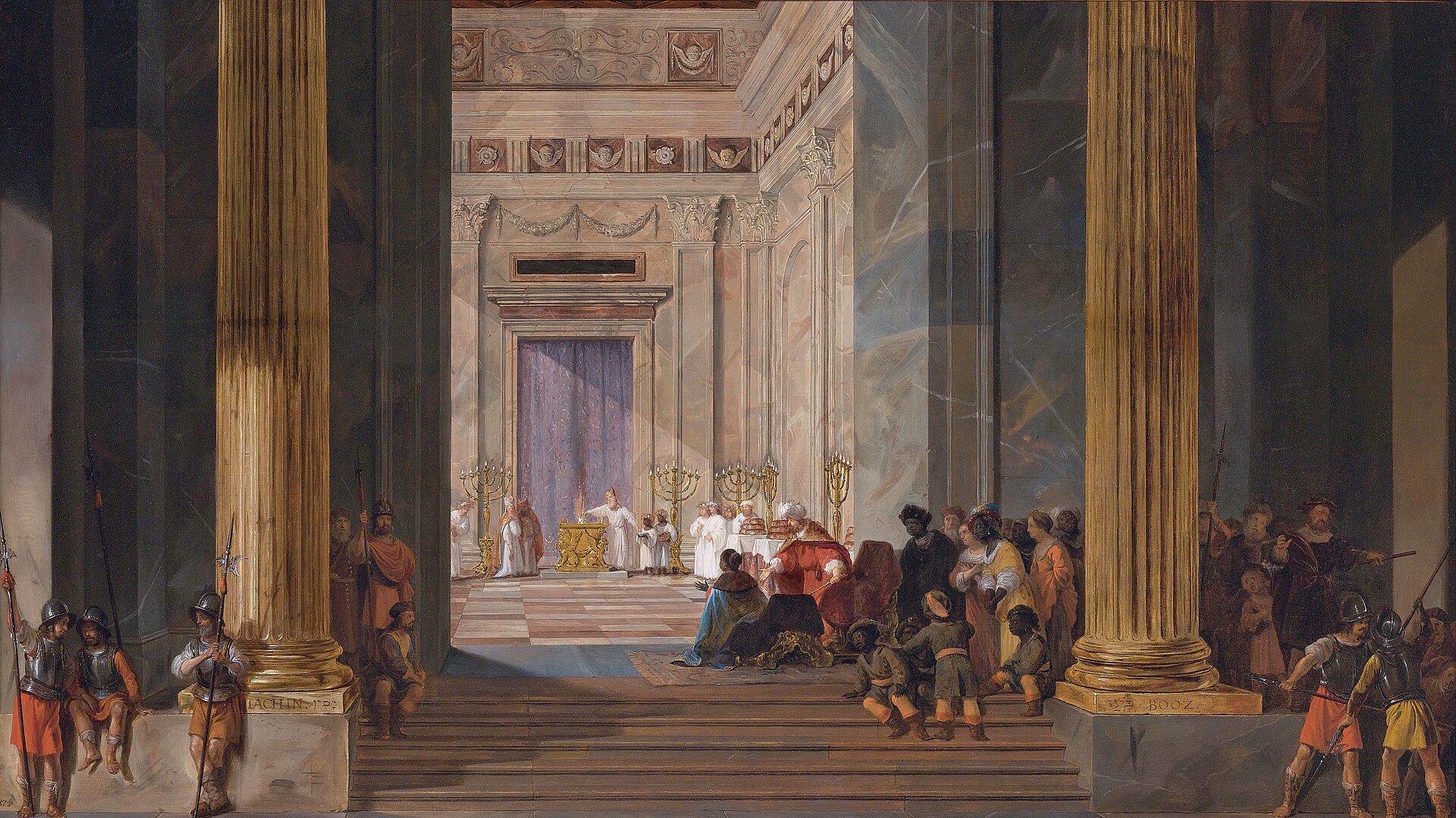
King Solomon wisdom begins at a specific place and moment: Gibeon, early in his reign, when God appears to him in a dream and asks what he wants. Solomon does not ask for wealth, a long life, or victory over his enemies. He asks for "an understanding heart to judge your people, that I may discern between good and evil" (1 Kings 3:9), and the text says the request is granted on the spot — along with riches and honor he never requested, because he had asked for something else first. That is the whole claim, stated once, in the same chapter that goes on to prove it. This was never presented as general brilliance. It was a specific, given capacity for judgment, and scripture spends the rest of Solomon's story showing what that capacity looked like in practice.
The Gift Solomon Asked For, and What It Actually Was
The Hebrew phrase behind "understanding heart" is lev shomea — literally a "hearing heart." The gift Solomon requested was not omniscience or a store of facts; it was a receptive faculty, an ability to listen accurately to a case and perceive what was actually true inside it. The biblical writers had a word for raw cleverness and did not use it here. What they describe is closer to what a mystery tradition would call discernment: the capacity to see past a surface claim to the reality underneath it.
This distinction shapes everything that follows. A king who asked for cleverness might have built a reputation for clever answers. A king who asked for a hearing heart built one, instead, for verdicts that felt inevitable once given — the sense, reported again and again in the text, that he had simply perceived what was already true and stated it plainly.
The Judgment of the Two Mothers — Wisdom Tested in Public
1 Kings 3 does not let the claim sit untested. Two women living in the same house each bore a son within days of each other. One child died in the night; each woman insisted the living child was hers. There were no witnesses, no records, nothing but two competing claims and one infant, and the dispute reached the king because no lower court could resolve it.
Solomon's response is famous for a reason: he called for a sword and ordered the living child divided in two, one half to each woman. One of the women accepted the terms. The other begged him to give the whole child to her rival rather than see it killed. That single reaction was the evidence Solomon had actually been listening for — no genealogical record could have settled the case, but a mother's willingness to lose her claim rather than lose her child could. He gave the boy to the woman who begged for his life. Scripture reports that "all Israel heard of the judgment which the king had judged; and they feared the king: for they saw that the wisdom of God was in him" (1 Kings 3:28). The test was not designed to display cleverness. It was designed to reveal which of two liars was telling the truth, and it did so by reading character rather than evidence.
Wisdom Recognized Beyond Israel — the Visit of Sheba
By 1 Kings 10, Solomon's reputation has traveled far enough that a foreign monarch, the Queen of Sheba, arrives specifically to test it. She comes "to prove him with hard questions" — a deliberate examination, not a diplomatic courtesy. The verdict, once she has put her questions to him, is unambiguous: "there was not any thing hid from the king, which he told her not." She leaves declaring that the reports she had heard in her own country had understated what she found.
The episode matters because it moves Solomon's wisdom out of Israel's own court and into an account of outside verification. A foreign queen with no reason to flatter him confirms the claim independently, through direct interrogation rather than reputation. Wisdom that survives a skeptical foreign examiner is wisdom the writers wanted their readers to trust.
The Books That Carry His Name
Tradition attributes three books of the Hebrew Bible to Solomon, and each shows a different face of the same gift. Proverbs is instructional wisdom — short, practical counsel for daily conduct, the kind a father might hand to a son. Ecclesiastes is wisdom's underside: a king who has tried wealth, building, pleasure, and power, and concludes that all of it is "vanity of vanities" without a grounding beyond itself. The Song of Songs is neither instruction nor disillusionment but love poetry, wisdom applied to desire rather than governance. Read together, the three suggest a tradition that understood wisdom as something operating across a whole life, not as a single fixed skill.
Proverbs states its own purpose directly, and the line is worth quoting because it names what the whole tradition was reaching for:
"The fear of the LORD is the beginning of knowledge: but fools despise wisdom and instruction." (Proverbs 1:7, KJV)
Two further books carry Solomon's name without belonging to the Hebrew canon: the deuterocanonical Wisdom of Solomon, a Greek meditation on wisdom as a divine attribute, and the pseudepigraphal Psalms of Solomon, eighteen poems written centuries later under his authority. Neither claims to be his own composition; both testify to how long his name stayed attached to wisdom itself.
How the Mystery Tradition Reads Solomon's Wisdom
The mystery school tradition does not treat Solomon primarily as a historical curiosity. It holds him as a marker in its own written lineage, tracing recorded transmission back more than three thousand years to his era, with an oral tradition initiates describe as reaching further still, to Hermes Trismegistus. In that reading, the Gibeon story is not simply a piece of ancient literature — it is an early record of a pattern the tradition still teaches: wisdom as something received rather than accumulated, granted through a specific opening rather than built up gradually through study alone.
This is also where Solomon's wisdom connects to the wider literature this school points readers toward. The texts gathered in spiritual awakening books return again and again to this same claim — that certain moments crack a person open to a capacity that was already latent, waiting on the right conditions to surface. Solomon's dream at Gibeon reads, in that light, as one of the oldest documented cases of the pattern. The deeper literature gathered under spiritual enlightenment books makes the harder case — that wisdom sustained over decades, not merely granted in a moment, is the rarer achievement, and Solomon's own later failure shows exactly why.
Initiates describe this kind of wisdom as inseparable from lineage: not private property invented by one gifted mind, but something carried forward, teacher to student, tested against real cases rather than abstract theory — the two proofs 1 Kings offers, a courtroom verdict and a foreign monarch's cross-examination.
A Gift That Did Not Protect Him From Himself
Scripture is unwilling to let the story end as pure triumph. 1 Kings 11 reports that in his old age, Solomon's many foreign wives "turned away his heart after other gods," and the text frames the failure using the very organ it had praised earlier — the heart that once discerned truth in a contested case is the same heart that later drifted. The tradition reads this not as a contradiction that undoes everything before it, but as the honest second half of the same claim: a hearing heart has to keep listening. Wisdom granted once was never presented as a permanent fixture. It was a capacity, given at a moment, that still had to be exercised — or protected — every day after.
That closing detail is, in its own way, the most instructive part of the whole account. A tradition that wanted only to flatter its wisest king would have stopped the story at Sheba's visit. Instead it kept going, and let the ending complicate the beginning. What survives is not a claim that wisdom makes a person immune to failure, but a record of what wisdom looked like when it was working — a hearing heart, tested in a courtroom, confirmed by a skeptical visitor, and carried forward, imperfectly, across the length of one long reign.
Walk the Path of the Initiate
These teachings come alive in The Initiated — Paul Schulz's introduction to the living mystery school tradition.
Get the BookFrequently Asked Questions
What did Solomon actually ask for at Gibeon?
He asked for an understanding heart to judge the people and discern good from evil — the capacity to govern well, not wealth, victory over enemies, or a long life. 1 Kings 3 says God granted the request and, because he had not asked for riches or honor, gave him those as well.
What is the judgment of Solomon story about two mothers?
Two women, both claiming the same living infant as their own after one child died in the night, brought their dispute before the king. Solomon ordered the living child cut in half and divided between them. One woman agreed; the other begged him to give the baby to her rival rather than see it killed, and Solomon gave the child to her, since her plea proved which of the two was the true mother.
Which biblical books are attributed to Solomon's wisdom?
Tradition credits him with Proverbs, Ecclesiastes, and the Song of Songs, each opening with a line invoking his name. Two further works bear his name outside the Hebrew canon: the deuterocanonical Wisdom of Solomon and the pseudepigraphal Psalms of Solomon, both composed centuries after his death by writers working under his authority.
Did Solomon's wisdom last for his entire reign?
Scripture says no. 1 Kings 11 reports that in his old age his many foreign wives turned his heart toward their gods, and the text frames this directly as a failure of the same heart that had once been praised as wise — a fall the tradition reads as a caution rather than a contradiction.
How does the mystery school tradition understand Solomon's wisdom?
The tradition holds Solomon as a central figure in its written lineage, tracing recorded transmission back more than three thousand years to his era. Wisdom in this reading is not treated as raw intellect but as a capacity received and then carried forward, teacher to student, across an unbroken line — the same pattern initiates describe in their own training today.