King Solomon Years: How Long He Actually Reigned, and What the Number Meant
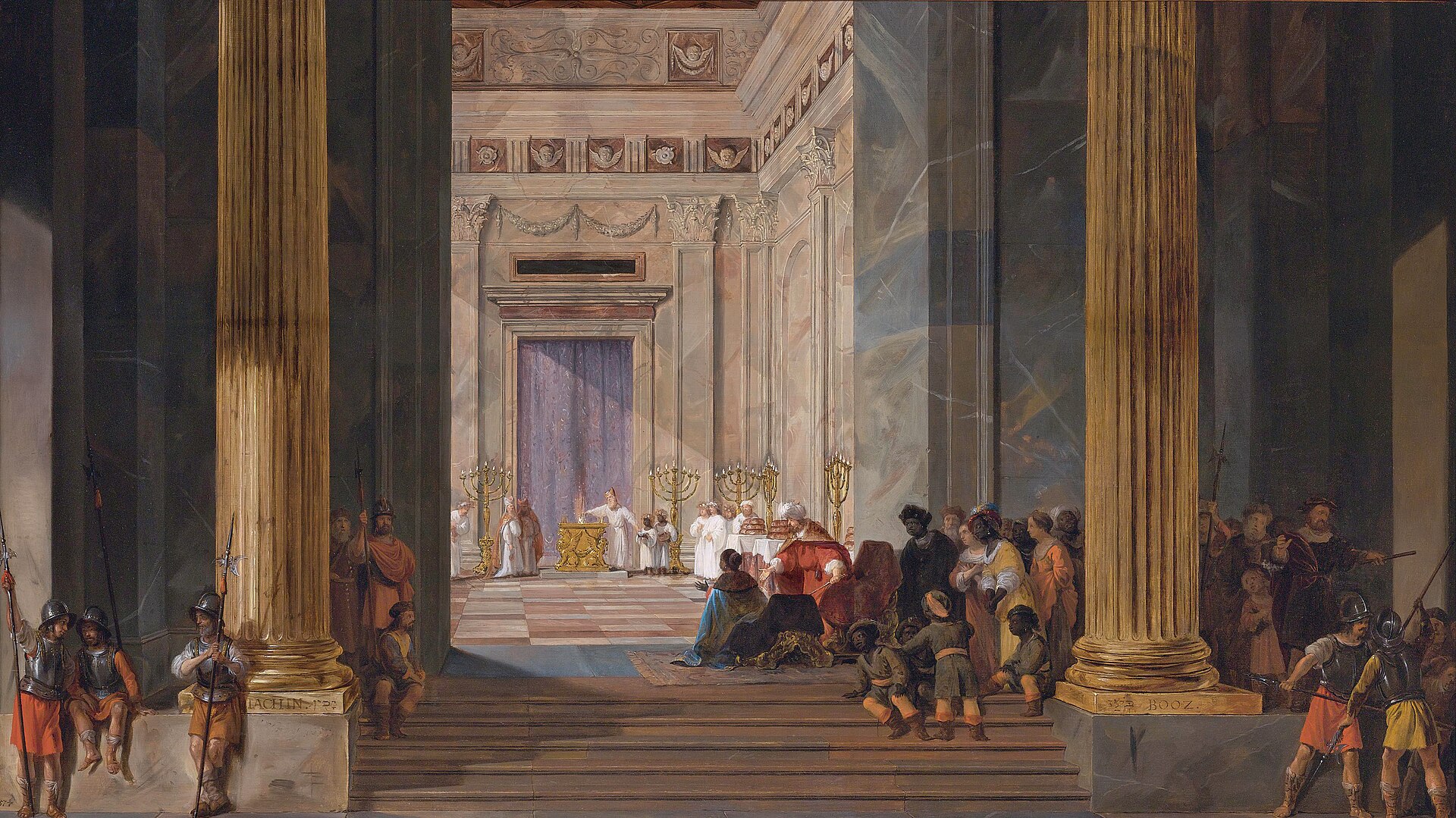
The king solomon years question has one firm answer in scripture: forty. First Kings 11:42 and 2 Chronicles 9:30 agree without qualification that Solomon reigned over Israel for forty years, from his accession beside his dying father David to the moment his son Rehoboam inherited a throne that split in two within the same chapter that records his death. That round number is where most summaries stop. It is also where the more interesting questions begin — when those forty years actually fell on a calendar, how old Solomon was at either end of them, and why the Bible keeps reaching for that exact figure whenever it needs to describe a completed era.
None of those follow-on questions has as clean an answer as the headline number does. Scripture is precise about the length of the reign and almost silent about the dates and the man's age within it, which is exactly where chronology, tradition, and honest historical uncertainty start to pull in different directions.
The Biblical Count Behind the King Solomon Years Number
The forty-year figure is stated twice, in nearly identical language, by two different biblical books written centuries apart. Kings closes its account of the reign bluntly: "And Solomon reigned in Jerusalem over all Israel forty years." Chronicles, retelling the same history from a priestly vantage point generations later, repeats the figure without adjustment. Two independent biblical traditions landing on the same round number is itself notable — it suggests the forty-year count was already a fixed, settled fact of Israel's historical memory by the time either book reached its final form, not a figure one author invented.
"And Solomon reigned in Jerusalem over all Israel forty years." — 1 Kings 11:42, KJV
The figure also sits inside a pattern that makes it look less like an isolated detail and more like a structural feature of the text. David, Solomon's father, is given the identical span in 2 Samuel 5:4: seven years ruling from Hebron, then thirty-three more from Jerusalem, forty years in total. The reign that produced Solomon's forty years began the moment his father's own forty ended, a continuity the text itself treats as seamless rather than coincidental — one completed era handing directly to the next.
Dating the King Solomon Years: Where Forty Years Falls on a Calendar
Scripture states the length of the reign but not a single calendar date for it. Historians reconstruct the dates backward from later, more securely fixed events — chiefly the campaign of the Egyptian pharaoh Shishak against Solomon's son Rehoboam, a king whose reign can be cross-checked against Egyptian chronology. Working back from that anchor point, most conservative and mainstream biblical chronologies place Solomon's reign at roughly 970 to 931 BCE, squarely in the tenth century before the common era.
That dating is a reconstruction, not a biblical statement, and it is not universally accepted. A minority of archaeologists, associated with what is sometimes called the "low chronology," argue that the monumental building projects scripture credits to Solomon's era actually date later, and that the united kingdom described in Kings and Chronicles was smaller and less centralized than the text implies. The disagreement is about the scale and material evidence of the kingdom, not about whether the biblical forty-year figure itself is internally consistent — on that narrower point, the text never wavers.
What Filled Those Four Decades
The forty years were not spent idly. By the text's own internal clock, Solomon began building the Jerusalem Temple in the fourth year of his reign, a project that took seven years to complete — meaning the Temple stood finished with roughly three-quarters of his reign still ahead of him. He then spent thirteen more years on his own palace complex, a detail the text records with what reads almost like deliberate contrast: longer on his own house than on the house he built for worship.
The years after that construction phase were filled with the activity later tradition remembers best — trade and building partnerships with Hiram of Tyre, the diplomatic visit of the Queen of Sheba, a reorganization of the kingdom into twelve administrative districts, and a court famous enough that its wealth became proverbial. The empire those middle years actually built, and the structural reasons it did not survive his death, is a longer story than the building projects alone can tell. The final years of the reign, by the text's own account, were also when foreign political marriages and the religious compromises that came with them began drawing the king's loyalty away from the exclusive worship the earlier chapters describe — a shift Kings presents as the seed of the kingdom's fracture under Rehoboam.
How Old Was Solomon When the Count Began and Ended
Here the record goes quiet. Scripture never gives Solomon's age at his accession, only that he described himself, in his prayer at Gibeon, as young and inexperienced for the task. A later rabbinic tradition, recorded in the Seder Olam Rabbah, proposes an age of around twelve — a figure most historians treat as a traditional estimate rather than a preserved fact, not least because it creates a genuine chronological problem elsewhere in the text.
That problem is Rehoboam. First Kings 14:21 states he was forty-one years old when he began to reign, immediately after Solomon's forty-year reign ends. Simple arithmetic means Rehoboam would have had to be born before Solomon's own reign started at all if Solomon took the throne as young as twelve — which would require Solomon to have fathered a son while still a child himself. Because of that tension, a good number of historians read Solomon as considerably older at his accession than the traditional estimate suggests, likely somewhere in his late teens or twenties, even though the text itself never states a number. If Solomon began his reign in his late teens and held it for the full forty years scripture credits him, he would have died somewhere in his late fifties to early sixties — itself an estimate built on other estimates, not a recorded figure.
Why Forty Recurs Across the Biblical Record
Solomon's forty years are not an isolated figure in the text; they belong to a recognizable pattern. Moses leads Israel through forty years in the wilderness. Several of the judges who governed Israel before the monarchy are given tenures described in forty-year terms. David's reign, as already noted, totals forty years exactly. The repetition is dense enough that scholars of Hebrew narrative generally treat forty as something closer to an idiom than a literal headcount — a traditional way of marking off one complete, generation-length span of testing or settled rule before a new era begins, used with more interest in its symbolic shape than in a precise tally of days.
Reading the number that way does not make it meaningless. If anything, it sharpens what the text is actually claiming about Solomon: not simply that a king sat on a throne for a measurable stretch of time, but that his reign counted, in the Bible's own accounting language, as one full and complete era in Israel's story — bounded, finished, and handed on.
What the Mystery Tradition Reads Into Solomon's Years
The lineage I teach names Solomon as a founding Initiate, not merely a historical king whose reign happened to last a notable length of time. Read inside that frame, the insistence on forty — the same figure given to his father, to Moses, to the wilderness generation — is not treated as an accident of record-keeping. The tradition holds that a reign long enough to be called complete has to be lived in full: the Temple raised, the kingdom organized, the wealth gathered, and finally the compromises and the costs that came with holding power that long, all inside the same counted span. Initiates describe the number less as a measurement than as a verdict — that what Solomon built and what he lost both belonged to one finished story, not two separate ones.
Walk the Path of the Initiate
These teachings come alive in The Initiated — Paul Schulz's introduction to the living mystery school tradition.
Get the BookFrequently Asked Questions
How many years did King Solomon reign?
Forty years. Both 1 Kings 11:42 and 2 Chronicles 9:30 give the same figure: Solomon reigned over all Israel from Jerusalem for forty years, from his accession beside his dying father David until his death, when his son Rehoboam inherited the throne.
What years BCE did King Solomon reign?
Most biblical chronologies place his reign roughly between 970 and 931 BCE, worked out backward from later, more securely dated events such as Pharaoh Shishak's campaign under Rehoboam. The dates are a scholarly reconstruction rather than a figure scripture itself states, so some historians propose ranges several years earlier or later.
How old was King Solomon when he became king?
Scripture never gives his exact age. A later Jewish tradition recorded in the Seder Olam Rabbah proposes around twelve, but the recorded age of his son Rehoboam at his own accession creates a chronological tension with that low estimate, leading many historians to suspect Solomon was closer to his late teens or twenties when he took the throne.
Why does the Bible give Solomon exactly forty years?
Forty recurs across the biblical record far too often to be coincidence: Moses in the wilderness, Israel under several judges, and David's own reign are all also counted in forty-year spans. Scholars of Hebrew idiom generally read the number less as a precise headcount than as a traditional way of marking off one complete, generation-length era before the next one begins.
Is King Solomon's forty-year reign confirmed outside the Bible?
No inscription from Egypt, Assyria, or anywhere else independently states how long Solomon reigned; the figure comes from the biblical text alone. That absence of outside confirmation is a real part of why the length, and even the scale, of his kingdom remains debated among historians rather than settled fact.