Proverbs of Solomon: What the Book Actually Contains and Teaches
The Proverbs of Solomon is the traditional name for the Old Testament's Book of Proverbs — a collection of roughly nine hundred short, memorable sayings on discernment, speech, work, wealth, and character, opening with a line that credits Solomon as author but later naming two further sages, Agur and Lemuel, whose material fills its closing chapters. It is not a narrative or systematic argument, but a curated library of one-line judgments, arranged so reading a few at a time trains a way of seeing before it asks for agreement on doctrine.
What Are the Proverbs of Solomon, Exactly?
Proverbs 1:1 opens the book plainly: "The proverbs of Solomon the son of David, king of Israel." That single verse sets the book's genre — mashal in Hebrew, a word covering proverb, parable, and comparison alike — and stakes a claim to royal Solomonic authority for everything that follows, even material later chapters attribute to other names entirely.
A proverb, here, is not a vague inspirational phrase. It is a compressed observation meant to be tested against experience and confirmed or refined by it. "A soft answer turneth away wrath, but grievous words stir up anger" (Proverbs 15:1) is a claim about how conversations behave, offered for the reader to verify. That testability separates a proverb from a slogan, and is why the collection has outlasted the specific political world — the kingdom of Solomon, its twelve districts, its court — in which it was first assembled.
Who Actually Wrote the Book of Proverbs?
The book names Solomon twice more as a section heading — at 10:1, opening the first great block of short sayings, and again at 25:1, introducing a second block said to have been "copied out by the men of Hezekiah king of Judah." That detail tells you the book was compiled, not dictated in one sitting: material attributed to a king who reigned centuries earlier was still being collected by royal scribes generations after his death.
The rest of the attributions are just as specific. 22:17 introduces a section as "the words of the wise," unnamed. 30:1 opens with "the words of Agur the son of Jakeh," a sage otherwise unknown to history. 31:1 gives the closing chapter to "the words of king Lemuel," including the famous acrostic poem describing a woman of noble character. Scholars generally read Proverbs as an anthology shaped over centuries, with the earliest, largest layer tied to Solomon's court and later editors adding material under his name. That such a storied king — the same figure whose treasure filled the record with gold and ivory — should be remembered as patron of a book warning against wealth's dangers is one of the collection's quieter ironies.
How the Book Is Organized: From Poetry to Two-Line Sayings
Readers expecting uniform, aphoristic one-liners from the first page are often surprised. Chapters 1 through 9 are nothing like the terse couplets people associate with the book; they are extended poetic instruction, framed largely as a father's counsel to a son, building toward Wisdom's own speeches. Only at chapter 10 does the book shift into the form most readers picture: short, two-line sayings, often parallel or contrasting, with little connection between one and the next.
Chapters 1–9: extended instruction and Wisdom's own speeches. Chapters 10:1–22:16: the first Solomonic collection of short sayings. Chapters 22:17–24:34: "the words of the wise." Chapters 25–29: a second Solomonic collection, copied by Hezekiah's scribes. Chapter 30: the sayings of Agur. Chapter 31: the words of King Lemuel and the closing acrostic poem.
Reading the book in blocks rather than expecting continuous argument changes the experience. Chapters 1–9 build a worldview; the middle chapters apply it, saying by saying, to family life, work, speech, and pride; the closing chapters hand the same authority to other voices, as if demonstrating that wisdom does not stay locked inside one royal name.
The Fear of the Lord: Proverbs' Central Claim
Twice, in near-identical language, the book states its own thesis. "The fear of the Lord is the beginning of knowledge" (1:7) opens the instruction section; "the fear of the Lord is the beginning of wisdom" (9:10) closes it, framing everything between. In both cases, "fear" translates a word closer to reverent awe than dread — recognition that reality has a moral shape a person did not invent and cannot safely ignore.
This is structural, not pious flourish. Every proverb that follows — on honest scales, patient speech, disciplined children, diligent hands — depends on the prior claim that the universe rewards and punishes certain patterns of living by the ordinary mechanics of cause into effect. Strip the fear of the Lord out and the rest reads as folk advice with no reason to be true; leave it in, and the sayings become case studies inside one coherent claim about how a moral universe behaves.
Wisdom Herself: The Woman Who Speaks in Proverbs 8
The book's most striking passage is also its strangest. In chapter 8, Wisdom stops being an abstract virtue and becomes a speaker in her own right, crying out in the streets and at the city gates, addressing "the simple" and "the scorner" directly. What she claims about her own origin is remarkable:
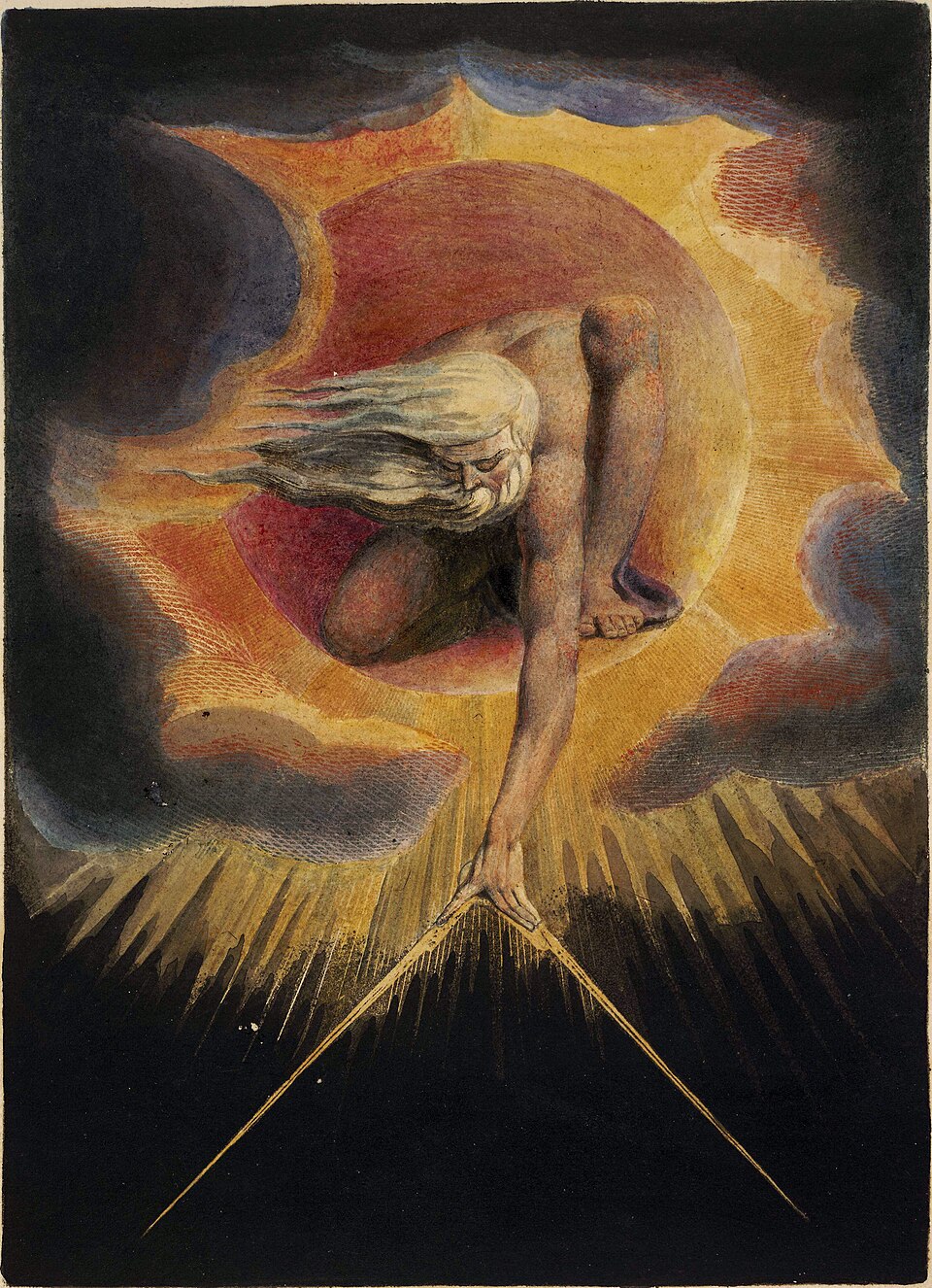
"The Lord possessed me in the beginning of his way, before his works of old. I was set up from everlasting, from the beginning, or ever the earth was... when he prepared the heavens, I was there: when he set a compass upon the face of the depth... Then I was by him, as one brought up with him: and I was daily his delight, rejoicing always before him." — Proverbs 8:22–23, 27, 30
Wisdom does not claim to be a human trait acquired through study. She claims to predate the physical world and to have been present, delighting, as it was formed. Jewish and Christian interpreters alike found this passage impossible to read as mere poetic ornament — a figure with God at creation, distinct enough to speak in the first person, yet clearly not a rival to God's own sovereignty.
Within the mystery school lineage, this passage is read as one of the clearest biblical statements of an older principle: mind precedes matter, and what looks like blind physical order is patterned by an intelligence present before the pattern existed. It is the same claim hermetic philosophy makes in holding the cosmos fundamentally mental rather than material — Proverbs 8 states it in Hebrew narrative form, centuries before the Hermetica did so in Greek.
Proverbs of Solomon in the Mystery Tradition
The mystery school lineage does not treat Proverbs primarily as a manual of etiquette, though it functions as one. It treats the book as evidence of a transmission: a king remembered as an initiate, passing down testable observations about how consciousness, speech, and action shape a life, rather than abstract theology. That the sayings are short enough to memorize and plain enough to apply immediately is, in this reading, deliberate design — wisdom meant to be carried and used, not merely admired.
Initiates describe studying Proverbs less as reading a rulebook and more as testing claims against their own experience, one saying at a time — the discipline the book itself invites by presenting its material as observations rather than commands. A proverb that proves true under scrutiny earns its place in a person's working understanding of the world; one that does not is set aside rather than accepted on authority alone.
Reading the Proverbs of Solomon Today
Approached this way, the Proverbs of Solomon reward slow, repeated reading over a single cover-to-cover pass. A chapter a day, read as testable claims rather than devotional obligation, lets the book's thesis — that reverence for a moral order is the beginning, not the end, of discernment — accumulate evidence across weeks. That is what separates the Proverbs of Solomon from ordinary folk wisdom: it invites the reader to test its claims the way a builder tests a foundation, by standing on it.
Walk the Path of the Initiate
These teachings come alive in The Initiated — Paul Schulz's introduction to the living mystery school tradition.
Get the BookFrequently Asked Questions
What are the Proverbs of Solomon?
The Proverbs of Solomon is the traditional name for the Book of Proverbs, an Old Testament collection of short, memorable sayings about wisdom, discernment, speech, work, and character. Its opening verse names Solomon as author, though the book itself later credits two other named sages, Agur and Lemuel, with entire sections.
Did Solomon really write all of the Book of Proverbs?
No. Proverbs 1:1 attributes the book to Solomon, and 10:1 and 25:1 head two large collections with his name specifically, but 22:17 introduces sayings from unnamed "wise men," 30:1 names Agur son of Jakeh, and 31:1 names King Lemuel. Most scholars read Proverbs as an anthology assembled and edited over centuries, with the Solomonic material forming its core.
What does "the fear of the Lord is the beginning of wisdom" mean?
In Proverbs 1:7 and 9:10, "fear" does not mean terror; it means a right-sized reverence that keeps a person oriented toward reality rather than self-importance. The claim is structural, not merely pious: every proverb that follows assumes a universe with a built-in moral order, and reverence for that order is what makes the rest of the book's advice make sense rather than reading as mere convention.
Who is the woman Wisdom in Proverbs 8?
Proverbs 8 personifies Wisdom as a woman who speaks in her own voice, calling out in public places and describing herself as present with God "before his works of old," set up "from everlasting," and beside him as creation itself unfolded. She is not a metaphor for cleverness but a figure who claims to have existed prior to the physical world and to have delighted in it as it was made.
How is the Book of Proverbs organized?
Proverbs falls into recognizable blocks: chapters 1-9 are extended poetic instruction, largely addressed from a father to a son, including Wisdom's own speeches; chapters 10-22:16 and 25-29 are two large collections of short, two-line sayings attributed to Solomon; 22:17-24:34 gathers sayings of unnamed wise men; chapter 30 belongs to Agur; and chapter 31 closes with King Lemuel's teaching and the well-known poem about a woman of noble character.