Solomon Kabbalah: What the Legendary Connection Actually Rests On
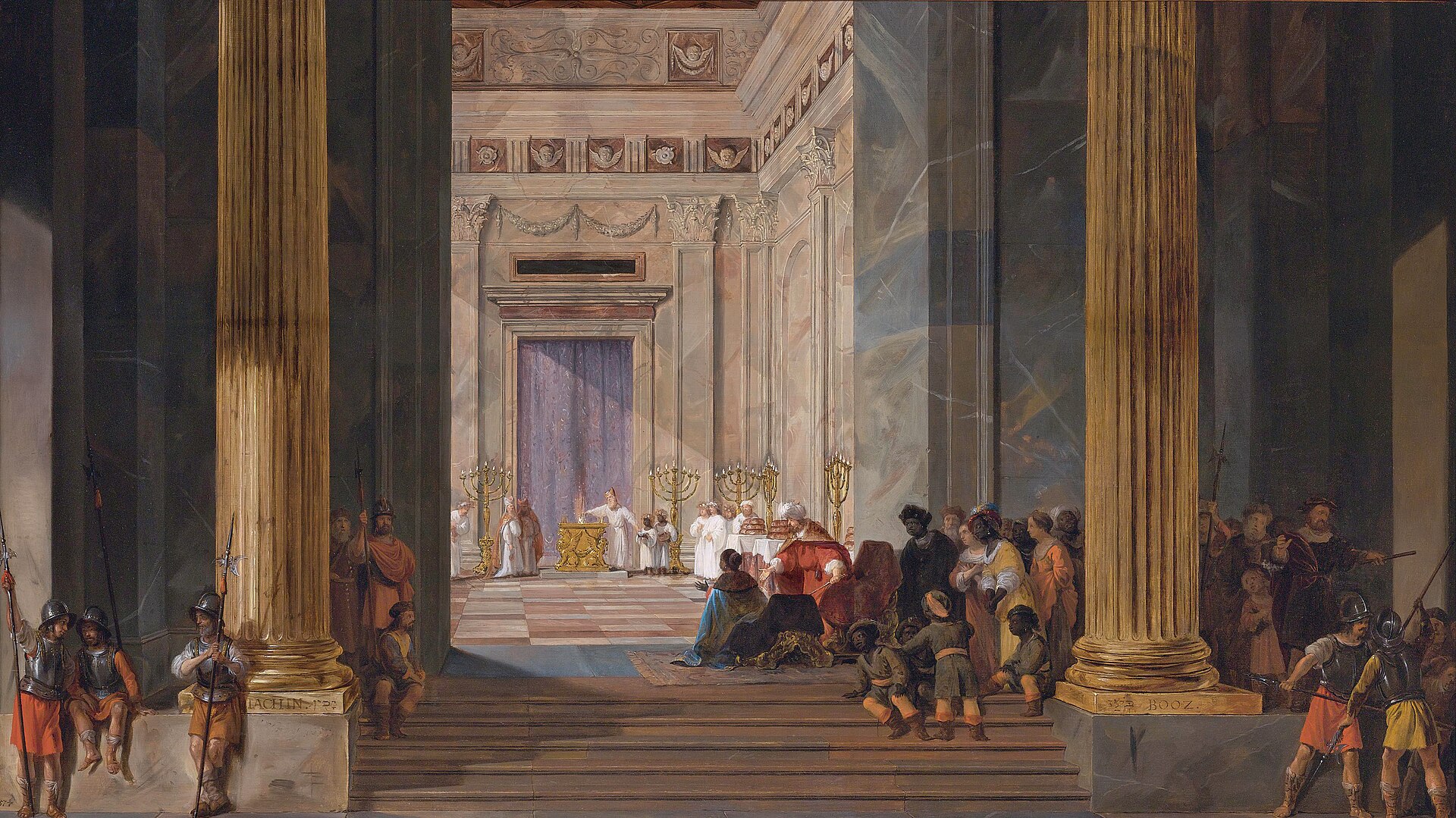
Solomon Kabbalah is the phrase people search when they sense a connection between the biblically wise King Solomon and the Jewish mystical tradition of Kabbalah, without being quite sure what that connection actually is. The honest answer is that Solomon never wrote a Kabbalistic text, and the Kabbalah as a structured system did not exist during his reign. What exists instead is centuries of later tradition that looked back at Solomon's reputation for wisdom and folded it into a lineage the Kabbalists themselves claimed stretched back long before their own written sources. Here is what the link is actually built from, and where legend took over from history.
Why Solomon Is Linked to Kabbalah at All
The starting point is biblical, not esoteric. First Kings records that Solomon, newly crowned, asked God not for riches or long life but for "an understanding heart to judge thy people" — and that the request was granted so thoroughly that his wisdom became proverbial across the ancient world, drawing visitors like the Queen of Sheba to test it in person. Nothing in that account mentions the Tree of Life, the Sephiroth, or anything resembling the Kabbalistic system that would not take written shape for roughly two thousand years. The mystery school tradition Paul Schulz writes from holds Solomon in a related but older light: among the lineage's historical initiates, he is remembered as a king who received divine wisdom directly through transmission rather than through ordinary study, and as a founding figure the later mystery tradition traces its descent through, alongside his father David and the Queen of Sheba herself.
That reputation, once established in scripture, became a magnet. Ancient and medieval writers across several traditions had a habit of attaching new work to whichever historical figure already carried unimpeachable authority on a subject, and no one in the Hebrew Bible carried more authority on wisdom than Solomon. When the Kabbalah began to take written form in medieval Spain and Provence — most famously in the Zohar, compiled or revealed in the thirteenth century CE and traditionally attributed to the second-century sage Shimon bar Yochai — its proponents described themselves as recovering an oral transmission reaching back through the patriarchs, not inventing something new. Solomon, already the Bible's definitive wise man, was a natural figure for that older lineage to run through, whether or not anything he actually said or wrote resembled the system that eventually bore his name in the popular imagination.
Solomon's Ring and the Key That Took His Name
Much of what people now call "Solomon Kabbalah" is really a separate strand of legend that has nothing to do with the Sephiroth at all. The Testament of Solomon, a Hellenistic-era text standing well outside any biblical canon, tells of Solomon receiving a ring from the archangel Michael and using its power to command a long procession of spirits into service building his Temple. That story belongs to folklore layered onto his reign centuries after the fact, not to the historical record scripture itself preserves.
Out of that same folklore grew the medieval grimoire tradition known as the Key of Solomon, or Clavicula Salomonis — European magical manuscripts, compiled mainly between the fourteenth and seventeenth centuries, that circulated under his name the way wisdom literature once had. These texts catalog angelic and planetary names, describe protective diagrams the manuscripts call pentacles, and lay out elaborate conditions under which various spirits were believed to answer a practitioner's demands. They are a fascinating artifact of Renaissance ceremonial magic, and they are worth knowing about for exactly that reason — as history, not as a system to work with. They are also, importantly, a different tradition entirely from Kabbalah proper. The Key of Solomon concerns itself with compelling spirits; the Kabbalah concerns itself with mapping the structure of divine emanation and the soul's ascent through it. The two got tangled together in the popular imagination mostly because they share a famous name, not because they share a method or a source.
What the Tree of Life Kabbalah Actually Teaches
The Kabbalah that initiates actually study bears little resemblance to grimoire magic. Its central symbol is the Tree of Life: ten spheres, called Sephiroth, connected by twenty-two paths, laid out as a single diagram of how the infinite reduces itself, stage by stage, into the finite world a person actually lives in. Kether, the Crown, sits at the top as the first point of emanation from the unmanifest — what the tradition sometimes calls the Ancient of Days. Beneath it unfold Chokmah and Binah, the wisdom and understanding that give that first point direction and form; then Chesed and Geburah, mercy and severity in creative tension; then Tiphareth at the center, the seat of balanced selfhood; then Netzach and Hod, emotion and intellect; then Yesod, the foundation nearest the physical; and finally Malkuth, the Kingdom — the material world itself, the Temple built from everything above it.
Initiates describe climbing this Tree not as abstract study but as a lived process: each Sephirah corresponds to recognizable territory in an ordinary life, from unresolved fear and desire up through clearer will and finally toward what the tradition calls union with the Divine. That climb runs on the same current discussed at length in the essay on the universal laws of awakening, since the Kabbalah was absorbed early into the Hermetic current and now sits alongside the seven hermetic principles as one of the core frameworks the Western mystery tradition draws on. Both describe the same underlying claim from different angles: that reality unfolds in ordered stages, and that a person can trace those stages backward, inwardly, toward their source.
Solomon's Temple as a Kabbalistic Mirror
Where Solomon re-enters this picture is through his most famous building rather than through anything he is recorded as having taught. First Kings describes his Temple in careful architectural detail, down to two freestanding bronze pillars at its entrance named Jachin and Boaz. Scripture itself gives no esoteric meaning to those names, but later esoteric and Masonic commentators — reading backward from the developed Kabbalah centuries after the Temple was built and long after it had been destroyed — came to treat the two pillars as earthly echoes of the Tree of Life's own paired columns of mercy and severity. Whether that reading reflects anything Solomon's own builders intended is impossible to know; what can be said is that the association is centuries younger than the structure itself, projected backward onto Solomon's Temple by readers already steeped in the Tree of Life.
The same backward projection colors how the tradition reads the Queen of Sheba's visit, recorded in 1 Kings 10 as a diplomatic exchange of riddles and gifts that left her declaring his wisdom exceeded even his reputation. Later mystics folded that episode into the same symbolic register as the Temple itself: the meeting of two sovereign wisdoms, read as a human echo of Malkuth meeting the higher Sephiroth above it, the Kingdom recognizing the source it descends from. None of this requires treating the episode as anything other than what the biblical text presents — a royal visit — but it shows how thoroughly later Kabbalistic reading reshaped the way Solomon's whole story gets told. This is the same pattern of inward recognition explored in the essay on awakening within: a structure built outwardly, in stone or in scripture, becomes legible as a map of something inward only once a reader already has the inward map to project onto it.
What survives of the real connection, once the grimoires and the later symbolism are set aside, is narrower and more interesting than the popular phrase suggests. Solomon did not write the Kabbalah, command demons with a magic ring, or leave behind a secret system later generations merely transcribed. What he left was a reputation for wisdom so large that it became, across two and a half thousand years, one of the standing surfaces onto which an entire civilization's mystical imagination kept projecting itself — the Zohar's authors reaching backward for lineage, Renaissance magicians reaching backward for authority, and the mystery school tradition today still naming him among its earliest initiates. The Kabbalah's real architecture, the Tree of Life and its ten Sephiroth, stands on its own without needing Solomon's name attached to it at all. That it acquired his name anyway says less about Solomon than about how durable a reputation for wisdom can be once a tradition decides it needs an ancestor.
Walk the Path of the Initiate
These teachings come alive in The Initiated — Paul Schulz's introduction to the living mystery school tradition.
Get the BookFrequently Asked Questions
Was King Solomon actually a Kabbalist?
Not in the technical sense. Kabbalah as a textual system did not exist in his lifetime; it emerged centuries later in medieval Jewish mysticism. Solomon's link to Kabbalah is historical and symbolic rather than literal: later tradition treated his biblical reputation for wisdom as the seedbed the Kabbalah eventually grew from.
What is the Key of Solomon, and is it part of Kabbalah?
The Key of Solomon, or Clavicula Salomonis, is a medieval European grimoire attributed to Solomon's name long after his death. It belongs to the separate tradition of Solomonic magical literature, not to the Kabbalistic Tree of Life system, though the two are often confused by casual readers.
Why do the Sephiroth matter to Solomon's story?
They don't appear in his biblical story directly. The connection is that esoteric commentators, centuries after the biblical account, read Solomon's Temple and his reputation for wisdom through the symbolic lens the Tree of Life later provided, treating the structure of the Temple as a mirror of the Sephiroth.
Did Solomon write anything about Kabbalah himself?
No surviving text shows Solomon writing about Kabbalah directly. What he is credited with, in 1 Kings, is wisdom literature such as Proverbs, Ecclesiastes, and the Song of Songs. Kabbalists of later centuries treated the Song of Songs in particular as carrying a mystical reading beneath its plain text.
What's the real difference between Solomon's Temple and the Tree of Life?
Solomon's Temple was a physical building in Jerusalem, described in 1 Kings with specific architectural details. The Tree of Life is a symbolic diagram of ten Sephiroth used in Kabbalah to map consciousness and divine emanation. The two are connected only by centuries of esoteric interpretation, not by any shared origin.