Solomon Scripture: What He Actually Wrote, and What Tradition Added
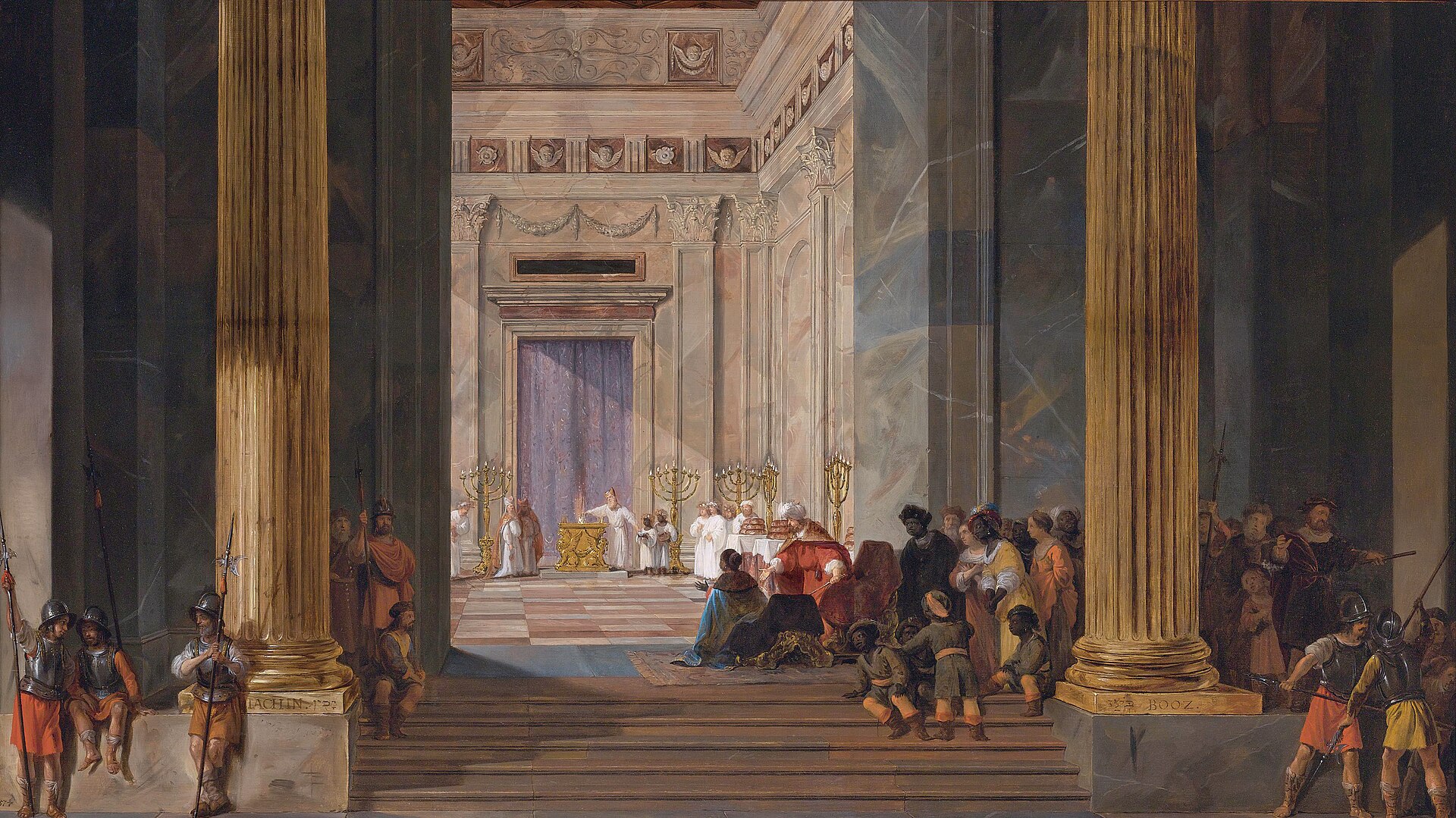
Solomon scripture, strictly speaking, is smaller than his reputation suggests. Three canonical books carry his name as author — Proverbs, Ecclesiastes, and Song of Songs — and two psalms bear it in their opening line. But the Bible's own record claims he produced far more than that: a king whose complete literary output scripture names, then mostly fails to preserve. What survives under his name in the biblical canon is a fraction of what he is said to have written, and the centuries after his death filled that gap with an entire shelf of writing attributed to him that never made it into any Bible at all. This is an account of what is actually his, what the Bible says he produced beyond it, and why his name kept attracting new scripture long after he was gone.
How Much Solomon Scripture Does the Bible Actually Preserve?
The claim comes from 1 Kings 4:32, tucked into a short passage describing Solomon's wisdom near the start of the account of his reign: "And he spake three thousand proverbs: and his songs were a thousand and five." Read on its own, that single verse credits him with an output larger than most ancient authors ever produced — three thousand proverbs and over a thousand songs, composed within the forty years scripture credits to his reign. Read against what the canon actually contains, the claim becomes startling. The book of Proverbs runs to roughly nine hundred and fifteen verses, not three thousand sayings, and large portions of it are explicitly attributed to other collectors and sages rather than to Solomon directly. Of the thousand and five songs, exactly one survives under his name as a complete work: the Song of Songs.
Scripture never explains the discrepancy. It does not claim the rest was lost or deliberately excluded; it simply states the total output in one verse and moves on. The gap has invited centuries of speculation — that the missing proverbs were absorbed anonymously into the wider wisdom tradition, that the songs beyond the Song of Songs went unwritten like most ancient court poetry, or that the number was simply a stylized way of saying "immense." What is certain is that the Bible credits Solomon with a body of work several times larger than the Solomon scripture actually in front of readers today.
The Three Books That Carry His Name
Proverbs is the most straightforward of the three: practical instruction organized around cause and consequence, diligence rewarded and folly punished, wisdom personified as a figure calling out in the streets for anyone willing to listen. It reads like the confident teaching of a ruler who believes the world can be understood and managed by right conduct, and large sections of it are framed as a father's direct address to a son, "my son, hear the instruction of thy father."
Ecclesiastes stands at the opposite end of the same life. Its narrator, called Qoheleth or "the Preacher," tests wealth, pleasure, labor, and wisdom itself against the certainty of death and finds each one wanting — "vanity of vanities; all is vanity." Tradition places the book in Solomon's later years, after the confidence of Proverbs had been tested by lived experience, and read in that order the two books trace an arc rather than repeating the same lesson twice: mastery first, then the discovery of mastery's limits.
Song of Songs is unlike either. It is an extended love poem, unusually sensual for a canonical text, built around the voices of a bride and groom rather than a teacher and a student. Jewish and Christian interpreters have long read it as allegory layered over its plain romantic surface — devotion between the soul and the divine, rather than only a celebration of human love. The full text and what the King James rendering of it actually says, chapter by chapter, is covered at length in Solomon KJV: What the Song of Solomon Actually Says in the King James Bible, for readers who want that book treated on its own rather than as one piece of a larger pattern.
Solomon Scripture in the Psalms
Two psalms carry his name in their superscriptions, and both read as fitting bookends to a reign remembered for its building projects and its concern for justice. Psalm 72 is a prayer for a righteous king — that he judge the poor rightly, that his reign fall "like rain upon the mown grass" — read by some as Solomon's own petition for the kind of rule he hoped to give, and by others as David's prayer written for the son who would inherit his throne. Psalm 127 opens with a line that has long outlived its original setting: "Except the Lord build the house, they labour in vain that build it," a fitting sentiment from the man scripture credits with seven years spent building a single Temple, whichever hand actually set the words down first.
Why the Amount of Solomon Scripture Multiplied After His Death
If 1 Kings 4:32 left a gap between claimed and surviving output, later centuries did not leave that gap alone. Ascribing wisdom writing to a famously wise king was common in the ancient world, and no figure in Jewish and early Christian tradition attracted the practice more than Solomon. The Wisdom of Solomon, a Greek work composed likely in Alexandria centuries after his death, argues for the immortality of the righteous soul and sits in Catholic and Eastern Orthodox Bibles as deuterocanonical scripture, while Protestant and Jewish Bibles classify it as Apocrypha — read historically, never as his actual writing. The Psalms of Solomon, a separate collection of eighteen Jewish psalms from roughly the first century BCE, never entered any canon but survived in Greek and Syriac manuscripts, voicing hope for a coming righteous ruler in David's line. The Odes of Solomon, an early Christian hymn collection, carries his name for reasons scholars still debate, since its content reads as devotional poetry with little connection to his biblical story.
The furthest extension of his name belongs to the Testament of Solomon, a Hellenistic-era text standing well outside any canon, which portrays Solomon receiving a ring from the archangel Michael and using it to compel a long succession of demons into forced labor on the Temple's construction. The text belongs to later legend rather than history — a story tradition told about Solomon's reputed dominion over spirits, not an episode scripture itself records. Taken together, these four works show the same pattern from four different centuries: each generation that inherited Solomon's reputation for wisdom found it easier to write a new book under his name than to let the gap in 1 Kings 4:32 stay unfilled.
Reading Solomon Scripture as One Continuous Wisdom Tradition
What emerges from the canonical books, the two psalms, and the long tail of apocryphal writing is not one settled body of "Solomon scripture" but a tradition still being written centuries after the man who inspired it had died. The tradition Paul Schulz writes from reads that pattern as consistent with how a true wisdom lineage behaves: it does not freeze into a closed text the moment its source is gone, but keeps generating new expressions of the same teaching across widely separated centuries. The canonical books carry the authority of inclusion; the apocryphal ones carry the evidence of how far one reputation for wisdom could travel once released into a culture hungry for more of it.
For readers who want the surrounding history rather than only the literary record — how long his reign actually lasted, and what the Bible's own chronology says about the years behind these books — that account is traced separately in King Solomon Years: How Long He Actually Reigned, and What the Number Meant. Read against that timeline, the scope of Solomon scripture becomes a little less surprising: a reign remembered as uniquely long and uniquely prosperous left behind a uniquely large body of writing claiming his name, both the portion scripture actually preserved and the much larger portion later centuries felt compelled to supply themselves.
Walk the Path of the Initiate
These teachings come alive in The Initiated — Paul Schulz's introduction to the living mystery school tradition.
Get the BookFrequently Asked Questions
What books of the Bible did Solomon write?
Scripture carries Solomon's name as author or traditional attribution on three books: Proverbs, Ecclesiastes, and Song of Songs. Two psalms, 72 and 127, also bear his name in their superscriptions. Modern scholarship debates how much of this material Solomon personally composed versus how much was attributed to him later by convention, since crediting wisdom writing to a famously wise king was a common ancient practice.
Is the Wisdom of Solomon part of scripture?
It depends on which Bible you mean. Catholic and Eastern Orthodox Bibles include the Wisdom of Solomon among the deuterocanonical wisdom books. Protestant and Jewish Bibles exclude it, treating it as Apocrypha — read historically, not as scripture. It was written in Greek centuries after Solomon's death and credits him by literary convention rather than actual authorship.
How many proverbs and songs did Solomon actually write?
1 Kings 4:32 credits him with three thousand proverbs and one thousand and five songs. The book of Proverbs, by contrast, runs to roughly nine hundred and fifteen verses, and only one song carries his name as its title, the Song of Songs. The gap between the claimed output and the surviving text is one of the largest in scripture, and the Bible itself never explains what became of the rest.
What is the Testament of Solomon?
The Testament of Solomon is a Hellenistic-era pseudepigraphal text, not part of any biblical canon, that portrays Solomon receiving a ring from an archangel and using it to compel a succession of demons into forced labor on the Temple. It belongs to a broader body of later legend built on his reputation for wisdom and dominion rather than to the historical record scripture itself preserves.
Did Solomon write Psalm 72 and Psalm 127?
Both psalms carry his name in their opening line, but tradition reads the attribution two ways. Psalm 72, a prayer for a righteous king's reign, is read by some as Solomon's own petition and by others as David's prayer written for his son. Psalm 127, which opens with the well-known line about the Lord building the house, is more often read as Solomon's own reflection on his building projects.