Spiritual Ascension: What the Tree of Life Tradition Actually Teaches
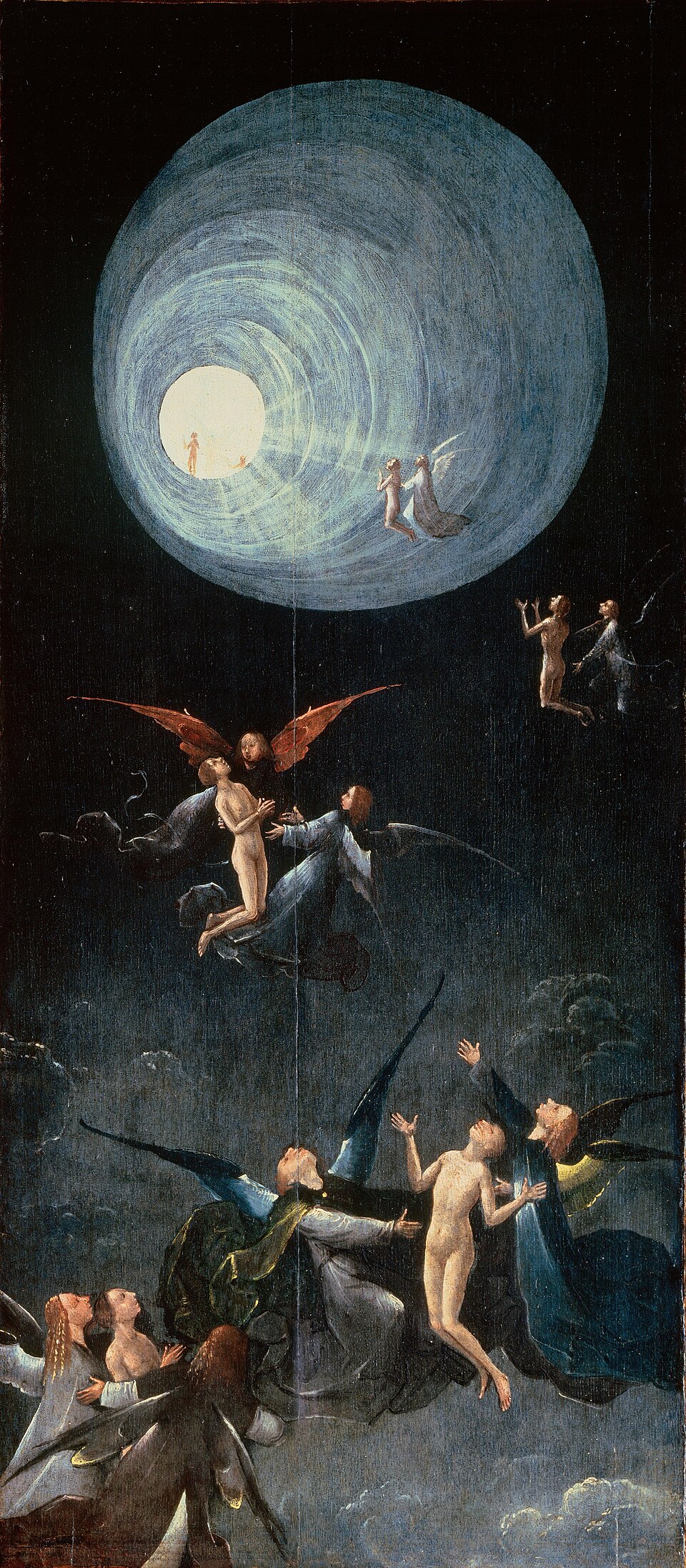
Spiritual ascension is the deliberate raising of consciousness through a sequence of defined stages, not a single sudden shift. Where an awakening is usually described as one opening moment, ascension names the structured climb that follows it: a mapped progression, level by level, toward a more complete relationship with the divine. The oldest and most precise map for that climb comes from Kabbalah, where ascension means rising through the ten spheres of the Tree of Life, and the tradition that still teaches it traces its lineage back through King Solomon to Hermes Trismegistus himself.
The word gets used loosely today, often as a synonym for any positive shift in mood or outlook. The tradition uses it more exactly. To ascend is to move upward through a known structure, in a known order, each level building on the one before it. That structure is what separates ascension from awakening, and what gives the idea its staying power across three millennia of initiates.
Ascension Is Not the Same as Awakening or Enlightenment
The three words get treated as interchangeable in most popular writing, but the mystery tradition draws real distinctions between them. A spiritual enlightenment is described as a sustained state, union with divine consciousness held over time rather than glimpsed once. An awakening is the doorway into that pursuit, the moment ordinary waking consciousness first recognizes something beyond itself. Ascension is neither the doorway nor the destination. It is the climb between them, the deliberate, staged work of rising through recognizable levels of awareness.
This matters because it changes what a person should expect. Someone hoping for one transformative experience that ends the search will be disappointed by ascension as the tradition teaches it. Someone willing to treat spiritual development as a long apprenticeship, with real structure and real stages, finds in ascension a framework that an awakening alone cannot offer. The lineage holds that awakening opens the door; ascension is what a person actually does once they have walked through it.
The Tree of Life as a Map for Ascension
Kabbalah supplies the clearest version of this map. Its central symbol, the Tree of Life, consists of ten spheres called Sephiroth, connected by twenty-two paths. Initiates describe climbing this tree as the literal shape of ascension: beginning at Malkuth, the sphere of the physical world and grounded manifestation, and rising through Yesod, Hod, Netzach, and Tiferet at the center, before reaching the upper triad of Chokmah, Binah, and finally Keter, the crown, representing unity with the source of all things.
"The ascension process... we explore the tree of life starting from the bottom and ascending. We're not just studying it. We're not just asking questions and exploring, but we are energetically, vibrationally raising awareness. We're expanding our consciousness. This is what we would call ascension." — Dr. Theresa Bullard-Whyke
What makes this a map rather than a metaphor is its consistency. The same tradition that produced this understanding of hermeticism and Kabbalah as intertwined systems holds that each sphere is not simply passed through but studied, lived, and integrated before the next becomes accessible. Teachers describe a year-long course of instruction as a first full pass through the tree, one in which a student examines the events of their own life against each sphere's qualities, an introspective exercise more than a mechanical one. It is taught, in other words, not self-administered: a guide walks the student through it, the way any serious course of study requires an instructor rather than a manual.
The Four Worlds Ascension Crosses
Beneath the ten spheres, Kabbalah describes four worlds of manifestation, and ascension is sometimes framed as movement between these as much as between the Sephiroth themselves. Assiah is the physical world, the one perceived by the five senses and the one where action becomes visible result. Above it sits Yetzirah, the formative world of emotion and imagination, where ideas first take shape before they take form. Briah is the creative world of pure intellect, the realm of archetype and concept. Atziluth, the highest, is the archetypal or divine world, pure consciousness undivided from its source.
To ascend, in this framing, is to become capable of operating consciously from higher worlds rather than being confined to the lowest. A person locked entirely in Assiah experiences life as pure cause and effect in matter. A person who has done the work of ascension can recognize the emotional patterns of Yetzirah, examine the ideas of Briah that generated them, and rest, at least briefly, in the undivided awareness the tradition associates with Atziluth. None of these worlds is abandoned for the next; each is added to what the initiate can access.
Where the Idea Comes From
The mystery school lineage holds that this system of Kabbalah is older than any of the religions that later borrowed pieces of it, tracing its written record back more than three thousand years to King Solomon and its oral tradition further still, to Hermes Trismegistus. The claim is not that Kabbalah belongs to one faith. Teachers describe it instead as a universal system, stripped of the doctrine and dogma that accumulated around it in different eras, open to a Christian, a Jew, a Buddhist, or someone with no religious affiliation at all, because it addresses the structure of consciousness itself rather than the specifics of any creed.
This is also why the seven Hermetic principles run underneath the whole system. The principle of correspondence, "as above, so below," explains why a diagram of ten spheres can describe both the cosmos and a single human life without contradiction. The principle of vibration explains why ascension is described in energetic terms, not only intellectual ones: rising through the tree is said to involve a literal raising of vibration, not simply the acquisition of new ideas. These are the same principles that appear in every branch of the hermetic tradition, from alchemy to sacred geometry, applied here to the specific work of climbing.
What the Tradition Says Ascension Changes
Teachers within the lineage describe measurable shifts reported by students who commit to a sustained course of ascension work: patterns and limiting beliefs loosening their grip, emotional reactivity softening into what the tradition calls non-attachment, relationships improving as old triggers lose their charge. These are framed consistently as reported experience within a teaching tradition, not as guarantees, and the tradition is candid that the work compresses years of ordinary living into a shorter, more intensive span rather than promising any particular outcome to any particular person.
What stays constant across every account is the emphasis on structure over spontaneity. Ascension is not chased through force of will or achieved by accident. It is walked, sphere by sphere, under guidance, with each stage requiring the integration of the one before it. That patience is precisely what distinguishes an ascension from an awakening: the tradition treats the climb itself, not just the summit, as the substance of the teaching.
Walk the Path of the Initiate
These teachings come alive in The Initiated — Paul Schulz's introduction to the living mystery school tradition.
Get the BookFrequently Asked Questions
What is spiritual ascension in simple terms?
Spiritual ascension is the deliberate raising of consciousness through a sequence of defined stages, rather than a single sudden shift. In the Kabbalistic tradition it means moving up the Tree of Life, sphere by sphere, integrating each level of awareness before rising to the next.
Is spiritual ascension the same as spiritual awakening?
No. Awakening is typically described as the opening moment, when a person first recognizes there is more to reality than ordinary waking consciousness. Ascension is the structured climb that follows, a mapped progression through further stages rather than a single event.
How is the Tree of Life connected to spiritual ascension?
The Tree of Life is Kabbalah's central diagram of ten spheres, or Sephiroth, connected by twenty-two paths. Ascension in this tradition means rising through those spheres from Malkuth at the base toward Keter at the crown, with each sphere representing a distinct layer of consciousness to be understood and integrated.
Do you need to be religious to pursue spiritual ascension?
The Universal Hermetic Ray Kabbalah taught within the mystery school tradition is framed as pre-dating any single religion's doctrine. Initiates describe it as a universal system of self-knowledge open to sincere seekers of any faith background or none, rather than a practice tied to one creed.
How long does spiritual ascension take?
Within the mystery school lineage, a first structured pass through the Tree of Life is typically taught as a year-long course of study. Teachers describe ascension as an ongoing process rather than a destination, with the Tree capable of being climbed many times across a lifetime.