Spiritual Awakening Journey: The Stages the Tradition Actually Recognizes
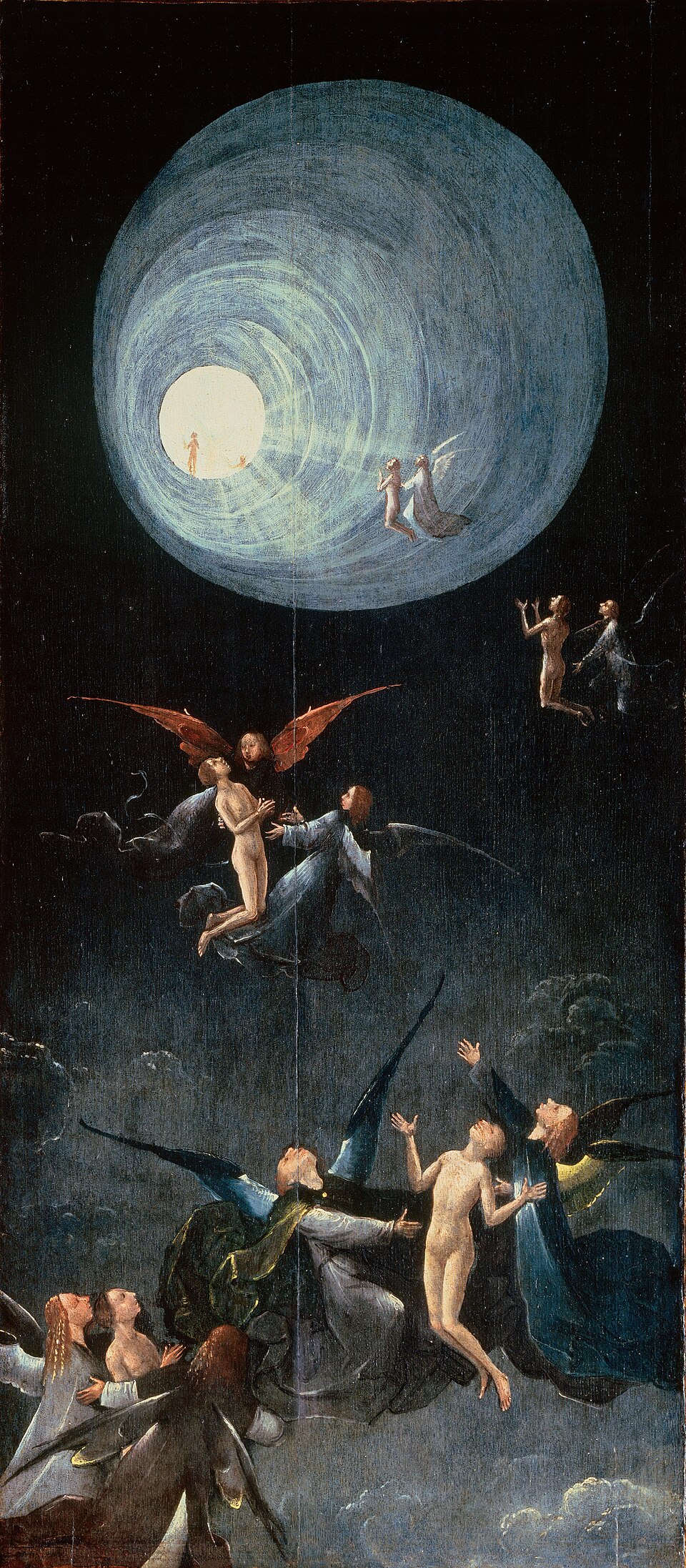
A spiritual awakening journey is not a single dramatic event but a multi-stage process that the mystery school tradition has mapped for thousands of years: an opening that disrupts the old sense of self, a period of discernment that sorts real insight from ego, structured study and initiation that give the opening a method, and a long stage of integration where the change has to show up in ordinary behavior before it counts as finished. Most people who use the phrase are describing only the first stage — the moment something cracked open. The tradition insists on the rest of the arc, because an opening that never gets integrated tends to fade, leaving behind little more than a memorable story.
This matters because the internet has flattened a years-long process into a single word. Search for the phrase and you will find lists of "signs," almost all describing the opening alone — tingling, synchronicity, sudden clarity, a restlessness with the life you had. Those are real enough. But the mystery schools have never treated the opening as the point of the work. It is the doorway, not the destination, and what happens after someone walks through it is where the actual spiritual awakening journey takes shape.
The First Stage: An Opening, Not a Conclusion
Every spiritual awakening journey the tradition recognizes begins the same way: something that used to hold still — a belief, a role, a certainty about who you are — stops holding still. It can arrive through crisis, through a quiet meditation, through illness, through a teacher's single well-aimed question. The trigger varies; the structural event does not. A gap opens between the self a person has been performing and something steadier underneath it, often described as a divine or eternal nature that the ordinary personality had been covering over.
The tradition's oldest instruction for this stage is also its simplest: Know Thyself. Not as a slogan but as the actual task of the opening — turning honest attention toward what just cracked, rather than rushing to decide what it means. People who skip this and leap straight to a new identity ("I am awakened now") tend to produce the loudest, least durable versions of the journey. The ones who stay with the discomfort of not-yet-knowing tend to build something that lasts.
The Second Stage: Discernment, the Part the Internet Skips
Once the opening has happened, the spiritual awakening journey turns into a sorting problem. Not every strong feeling that follows is a true signal. Grandiosity, spiritual fatigue, and ordinary confusion can all wear the same costume as genuine insight, and the ego is fully capable of relocating into spiritual language rather than dissolving in its presence. Discernment is the trained faculty that tells these apart, and the tradition is blunt that it is rarely developed alone — it is built through a teacher, a community, or a lineage that can see a person's blind spots from the outside.
This is also the stage where people most often mistake intensity for depth, chasing a bigger experience in search of proof that the first one "really happened." The chase usually produces diminishing returns: more disruption, less clarity, and a widening gap between what a person claims and what the people closest to them actually observe.
The Third Stage: A Map, Not Just More Experience
What distinguishes a completed spiritual awakening journey from a stalled one, in the tradition's view, is structure. The Kabbalah's Tree of Life is one such map — ten spheres and twenty-two paths representing the whole territory of consciousness, used for centuries to show a person where they stand and what lies ahead rather than leaving the journey to chance. Students who undertake a year-long study of that map often describe it compressing a decade of ordinary growth into ten months, not because the map does the work for them, but because it keeps the work oriented instead of scattered.
The same logic underlies the mystery schools' progression of initiation — foundational study, then an intensive healing program, then teaching, then guidance of others. Each step exists to give the next piece of the awakening somewhere to land, which is also why a lineage tracing back through figures like Solomon has always mattered more to initiates than any single person's private revelation. A map inherited and tested across generations catches errors that an individual, working alone, usually cannot see in themselves.
The Fourth Stage: Integration, Where Most of the Real Time Is Spent
Integration is the longest, least dramatic stage of any spiritual awakening journey, and where the tradition locates the actual proof of the work. Healing, in the mystery school's definition, is self-acceptance and self-forgiveness lived out daily rather than declared once and filed away. That means tending five ordinary root causes of imbalance the tradition has long named — diet, breathing, movement, thought, and environment — none mystical, all of them the ground where an awakening either takes root or quietly evaporates.
"To every thing there is a season, and a time to every purpose under the heaven." — Ecclesiastes 3:1, KJV
That old observation about seasons is exactly how initiates are taught to think about this stage: not as a plateau to escape quickly, but as its own necessary weather. A person does not finish integrating an opening by wanting to be finished. They finish it by living through enough ordinary Tuesdays — a conflict handled differently, an old habit declined, a season of boredom survived without reaching for the former escape — that the change stops being a story they tell and becomes simply how they are.
Why the Journey Rarely Runs on a Straight Line
Few people move through these four stages once and cleanly. More commonly, a spiritual awakening journey spirals — a person opens, discerns, integrates for a season, then meets a second, deeper opening that returns them briefly to the beginning with more capacity than before. Those with heightened sensitivity often meet this spiral earlier and harder; an empath's version of the opening stage tends to arrive through sheer exhaustion from absorbing others' emotion rather than a single chosen moment of insight, which is one reason discernment matters even more for that temperament.
The warrior and the healer are often described within the tradition as one capacity turned in two directions, and integration calls on both. The healer's part accepts what happened and tends the body and mind that carried it; the warrior's part carries the change forward through the resistance — internal and external — that meets every real transformation. A spiritual awakening journey that only uses one of the two rarely survives contact with ordinary life for long.
What the Journey Asks of You Over Time
Eventually, for those who stay with it, the tradition describes a further turn: the journey that began as a private opening becomes something a person is equipped to hold for someone else. This is not a requirement imposed from outside but a natural consequence of integration — having walked through discernment and structure and the slow work of change, a person is simply positioned differently in relation to someone else's opening. The oral lineage within the mystery schools exists for exactly this handoff, carried in spoken form from teacher to student until the student has absorbed enough to offer it onward.
None of this shortens the spiritual awakening journey or makes it predictable. What it offers instead is what is most urgently missing from the version circulating online: a sense of proportion. An opening is real, discernment is necessary, structure helps more than willpower alone, and integration takes the time it takes. Initiates who understand this stop asking whether their awakening has "happened yet" and start asking a more useful question — what does this stage, the one I am actually in, require of me today.
Walk the Path of the Initiate
These teachings come alive in The Initiated — Paul Schulz's introduction to the living mystery school tradition.
Get the BookFrequently Asked Questions
How long does a spiritual awakening journey take?
The tradition does not give a fixed length, because the journey is measured in integration, not calendar time. Early openings can arrive in a single afternoon, but the mystery schools generally expect the fuller arc — from first opening through discernment, structured study, and lived change — to unfold across years rather than weeks. A program like the year-long ascent of the Tree of Life is often described as compressing a decade or more of ordinary growth into ten months, which hints at how much slower the unassisted version usually runs.
What are the stages of a spiritual awakening journey?
Initiates generally describe four recognizable stages: an opening that disrupts the old sense of self, a period of discernment where the person sorts real insight from ego and confusion, a stage of structured study and initiation that gives the opening a map and a method, and a long stage of integration where the change has to prove itself in ordinary behavior before it counts as complete.
Can a spiritual awakening journey happen without a teacher?
The opening stage often happens without one — a crisis, a loss, or a quiet moment of insight rarely waits for formal instruction. The tradition is far more skeptical, though, that the later stages complete reliably alone, since discernment depends on an outside vantage point that a private mind struggles to supply for itself. This is the reasoning behind pairing the journey with a teacher, a lineage, or an initiatory structure rather than leaving each person to judge their own progress unaided.
Is a spiritual awakening journey the same as a dark night of the soul?
They overlap but are not identical. A dark night names a specific, often painful collapse of old meaning and motivation, usually concentrated in one difficult season. A spiritual awakening journey is the larger arc that a dark night can sit inside — the opening, the discernment, the study, and the integration that either follows such a collapse or arrives by a gentler route entirely.
How do I know if I'm on a spiritual awakening journey?
The clearest sign is not a feeling but a direction: old certainties about who you are have started to loosen, and you find yourself genuinely questioning patterns you once took for granted rather than simply enduring hardship. The tradition treats this loosening, however unsettling it feels, as the opening stage of the journey rather than something gone wrong — provided it is eventually met with discernment and structure rather than left to drift.