Testament of Solomon: What the Ancient Text Reveals About His Power
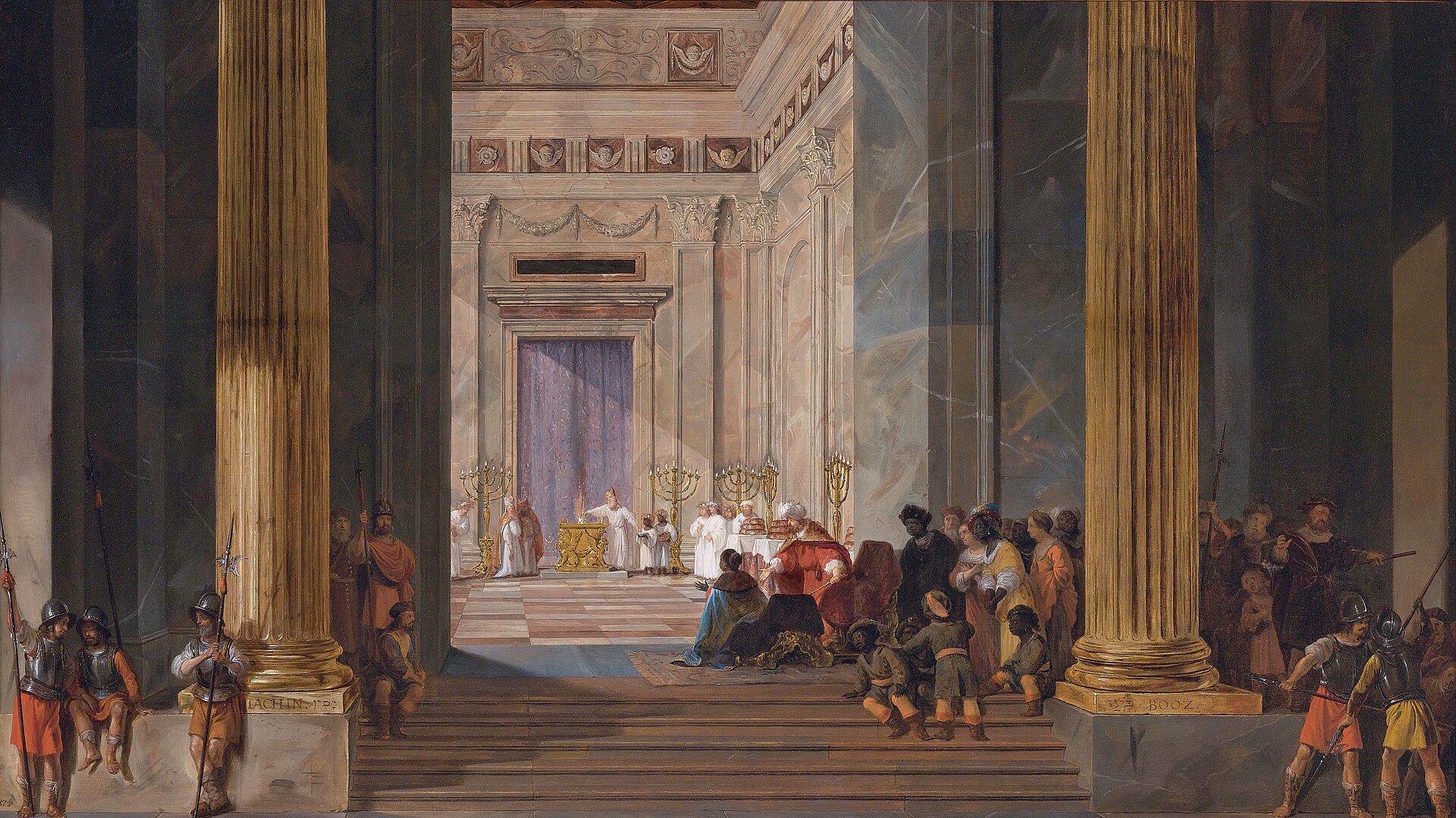
The Testament of Solomon is a pseudepigraphal Greek text, likely assembled somewhere between the first and fifth centuries CE, that presents itself as King Solomon's own account of how he built the Jerusalem Temple by interrogating and binding seventy-two demons with a magic ring given to him by the archangel Michael. It survives only in medieval manuscripts, none older than the fifteenth century, and it stands apart from scripture entirely — a work of Jewish and early Christian legend, not history, and not canon in any tradition that reads the Bible.
Where the Testament of Solomon Comes From
No author claimed the Testament of Solomon in his own name, which is exactly what "pseudepigrapha" means: writing attributed to a famous figure long after his death. The text almost certainly grew in layers. A core narrative of demon interrogation, likely composed in a Jewish milieu somewhere in the eastern Mediterranean, was later expanded by Christian editors who added angelic names, astrological material, and references that place parts of the text as late as the fourth or fifth century. The English-speaking world first met it through F. C. Conybeare's 1898 translation, which drew on manuscripts held in Paris, Vienna, and the Bodleian Library — none of them older than the 1400s. So while the legend it tells is ancient, every physical copy we possess is late medieval, filtered through a millennium of retelling before it reached the page.
The seed of the legend is older than the text itself. The Hebrew Bible already credits Solomon with unusual command over the natural world — 1 Kings describes him speaking "of trees, from the cedar that is in Lebanon even unto the hyssop," and of beasts, birds, and fish. The first-century Jewish historian Josephus went further, writing in his Antiquities of the Jews that God gave Solomon skill against demons, for the benefit and healing of men, and that Josephus himself had witnessed a Jewish exorcist named Eleazar use a ring and a root Solomon supposedly prescribed to expel a spirit from a possessed man. By the time the Testament of Solomon was compiled, this reputation had hardened into full narrative: Solomon as master of spirits, not merely of proverbs and cedar wood.
The Story the Text Tells
The narrative opens with a boy laborer on the Temple site being drained of his strength and half his wages by a demon named Ornias, who visits him each evening. Solomon prays for help, and the archangel Michael descends with a ring bearing an engraved pentalpha — a five-pointed star, the device later called the Seal of Solomon. With this ring, Solomon summons Ornias, binds him, and sets him to work. From there the pattern repeats and expands: Solomon interrogates a succession of spirits, among them the seven princes who rule the planets and the thirty-six decans who govern the degrees of the zodiac and the ailments of the body. Each demon names itself, confesses the specific harm it inflicts — fever, deception, marital strife, disease of a particular organ — and then names the angel or divine word that overpowers it. Bound by the ring, the demons quarry stone, carry water, and labor at tasks no human crew could manage, until the Temple stands complete.
The text is not only a catalogue of spirits. It also carries the Queen of Sheba's visit and, toward its end, a somber turn: Solomon's later marriages to foreign wives and his participation in their idol worship, after which — the legend says — his extraordinary power over the demons receded. The Testament closes less as a triumphant grimoire than as a cautionary account, wisdom gained through discipline and lost through drift from it.
The Seal of Solomon and the Grimoire Tradition
The ring described in the Testament of Solomon is the direct ancestor of what later centuries called the Seal of Solomon — the interlaced pentagram or hexagram signet that appears throughout medieval and Renaissance magical manuscripts. That afterlife runs long. The Clavicula Salomonis, or Key of Solomon, circulating in manuscript from the medieval period onward, and its later companion the Lesser Key of Solomon, or Lemegeton, both claim Solomon's authority and both formalize what the Testament only narrates: instructions, seals, and hierarchies for working with named spirits. The Lemegeton's first section, the Ars Goetia, lists seventy-two spirits — the same number bound in the Testament, a continuity too precise to be coincidence, even though the two texts were composed more than a thousand years apart and describe entirely different ritual frameworks. What none of those later manuscripts carried was the thing the Testament itself insists on: that the ring came to Solomon as a gift, granted to a king who had first asked for wisdom rather than power. Strip that away and what remains is a catalogue. The fuller account of Solomon as the tradition holds him — judge, builder, initiate — is the frame the grimoires lost.
How the Mystery Tradition Reads the Testament of Solomon
The mystery school tradition does not read the Testament of Solomon as a literal manual for compelling spirits, nor does it treat the demons it names as facts to be verified. It reads the text the way it reads most of Solomon's legendary material — as instruction wrapped in narrative, where the outward story of binding troublesome spirits points to an inward discipline every initiate eventually faces. Each demon in the text names an affliction — fever, deceit, discord, a specific bodily weakness — and each is overcome only once it is named and confronted directly, never by force alone. Initiates describe this as a fair description of the Great Work itself: the undisciplined, reactive forces within one's own nature must first be recognized by name before they can be brought into service rather than left to work mischief unseen. The Temple Solomon builds with bound labor becomes, in this reading, a figure for the temple of the self — a structure raised only once its builder has mastered what would otherwise obstruct it.
This reading sits inside a wider lineage claim the tradition makes about Solomon. As explored in our essay on what a mystery school actually is, the tradition holds that King Salomon stands at the head of a written lineage stretching back more than three thousand years, carrying teachings on sacred geometry, healing, and the mastery of consciousness that are said to descend, in unbroken transmission, to schools still operating today. The Testament of Solomon, in that context, is treated as one strand of a much larger legendary portrait — not proof of literal sorcery, but a teaching story about what becomes possible when discipline, humility, and direct experience of the sacred are joined in one life, and what is lost when they are not.
Why the Legend Still Matters to Seekers Today
Strip away the demons and the Testament of Solomon still offers something durable: a portrait of power exercised through naming, discipline, and service, and a warning about what happens when that discipline slackens. The ring is not the point — the willingness to confront what troubles a life, name it honestly, and put it to constructive use is. Every seeker building an inner temple faces a version of Solomon's task, minus the theatrics of bound spirits and quarried stone. The legend endures precisely because it dramatizes something ordinary and universal: that the obstacles inside us rarely vanish on their own, but they can be worked with once they are seen clearly.
Walk the Path of the Initiate
These teachings come alive in The Initiated — Paul Schulz's introduction to the living mystery school tradition.
Get the BookFrequently Asked Questions
What is the Testament of Solomon about?
The Testament of Solomon is a pseudepigraphal text presented as Solomon's own account of how he built the Jerusalem Temple by interrogating and binding seventy-two demons with a magic ring given to him by the archangel Michael. Each spirit names itself, confesses the affliction it causes, and reveals the angel or holy name that overpowers it, before being set to labor on the Temple's construction.
Is the Testament of Solomon part of the Bible?
No. The Testament of Solomon is not part of the Hebrew Bible, the Catholic or Orthodox canon, or any Protestant Bible. It belongs to the Old Testament pseudepigrapha, a body of Jewish and Christian legendary literature written in Solomon's name centuries after his lifetime and never accepted as scripture by any major tradition.
What is the Seal of Solomon in the text?
The Seal of Solomon is the ring the text says Michael delivered to Solomon, engraved with a pentalpha, or five-pointed star. Solomon uses it to summon and bind the demons tormenting Jerusalem. This device became the template for the interlaced hexagram and pentagram signets later called the Seal of Solomon in medieval and Renaissance magical literature.
Who wrote the Testament of Solomon and when?
No author is known. Scholars date the earliest layers of the text to somewhere between the first and fifth centuries CE, likely composed in a Jewish or early Christian milieu in the eastern Mediterranean, though the oldest surviving manuscripts are medieval copies no earlier than the fifteenth century, so the text was reshaped for well over a thousand years before reaching its present form.
How does the Testament of Solomon relate to the Key of Solomon?
The Testament of Solomon and the later Key of Solomon (Clavicula Salomonis) and Lesser Key of Solomon (Lemegeton) share a common premise, that Solomon possessed authority to command spirits, but they are separate works from different eras. The Testament is ancient legend; the Key and Lesser Key are medieval and early modern ceremonial grimoires that formalized the idea into ritual instruction, including the Ars Goetia's list of seventy-two named spirits, a number that echoes the Testament directly.