Thomas Moore Dark Night of the Soul: What His Book Actually Says
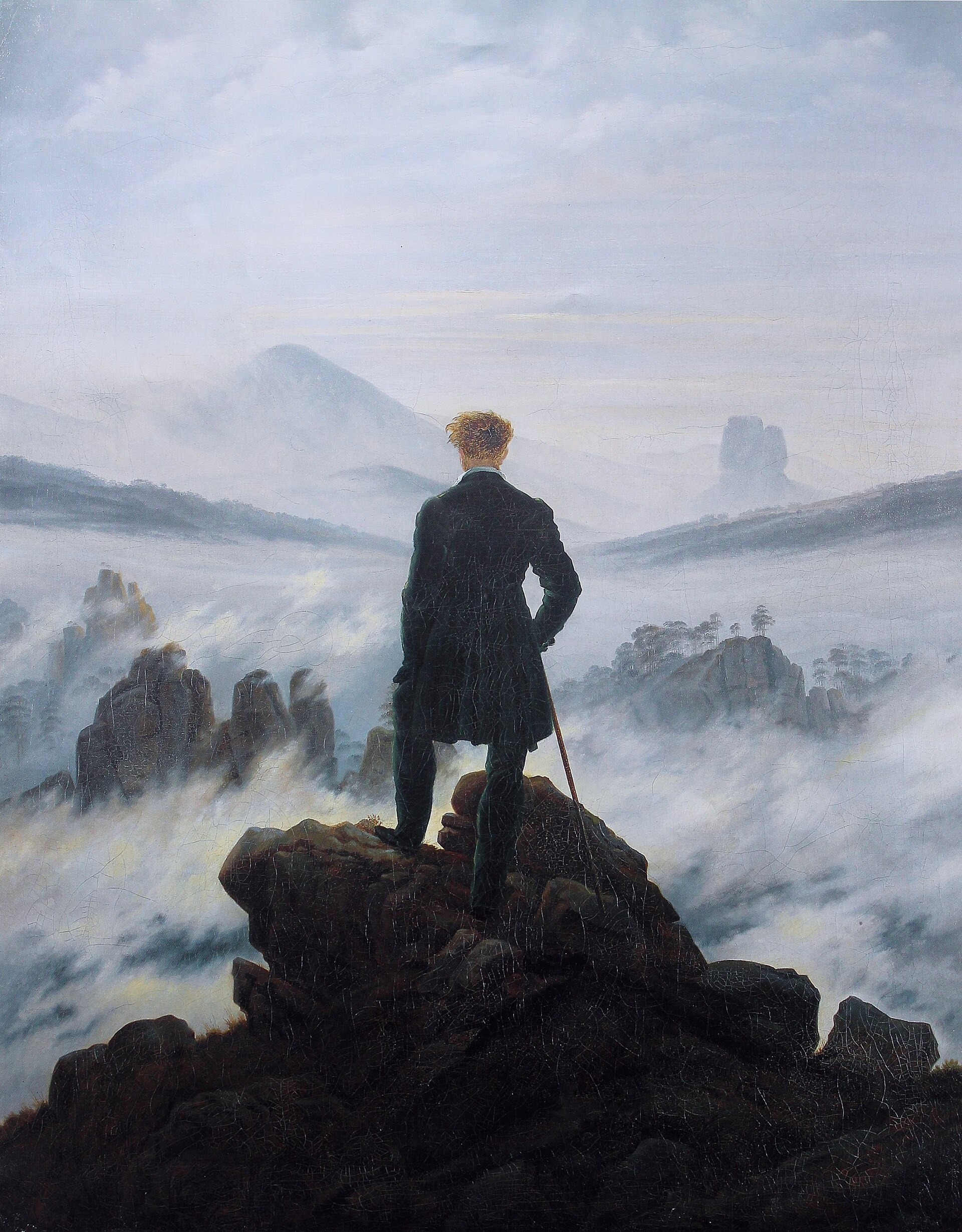
Thomas Moore Dark Night of the Soul refers to the psychotherapist and former monk's 2004 book, Dark Nights of the Soul: A Guide to Finding Your Way Through Life's Ordeals — a work that argues the crises people most want erased from their lives are frequently doing necessary work on the soul, and deserve to be met with attention rather than only repair. Moore is not proposing a new theology of suffering so much as a change of posture toward it: stop treating every collapse as a malfunction to be corrected as fast as possible, and start asking what it might actually be for. The book became a touchstone precisely because it refuses easy comfort while still insisting the darkness has a shape and a purpose, if a person is willing to look at it closely instead of fleeing it.
Who Thomas Moore Is — and Who He Is Not
The name causes confusion for a simple reason: it belongs to two very different men. The Thomas Moore of this essay was born in Detroit in 1940, entered a Catholic religious order, the Servites, at thirteen, and spent thirteen years training as a monk before leaving religious life to study musicology, theology, and eventually depth psychology. He later trained as a psychotherapist and worked for decades with patients before writing the book that made him widely known, Care of the Soul (1992), a bestseller that argued ordinary life — work, love, illness, aging — is itself the proper terrain of soul care, not an obstacle to it. Dark Nights of the Soul followed twelve years later as a focused extension of that argument into crisis specifically.
He is not the 16th-century Sir Thomas More, the English lawyer, statesman, and author of Utopia, executed in 1535 for refusing to recognize Henry VIII's break from Rome. The two men share a name, a Catholic background, and a serious intellectual life, and little else; one is a Tudor-era martyr, the other a living American writer whose primary intellectual debts run to Carl Jung and, more directly, to the archetypal psychologist James Hillman, under whom Moore studied closely.
Dark Nights of the Soul: The Book's Actual Argument
Moore's book is organized around a wide range of what he calls dark nights — divorce, chronic illness, failure, betrayal, grief, addiction, the loss of faith, even ordinary aging — treating each as a distinct species within a larger genus rather than one uniform experience. His case studies draw directly from decades of clinical practice, and he pairs them with figures from mythology, scripture, and literature who underwent comparable descents: Job, Persephone, Dante's dark wood, the biblical exile. The throughline is a single claim stated and restated in different registers: a dark night is not simply an obstacle blocking the life a person wants, but a legitimate — if unwelcome — part of that life, carrying its own intelligence.
Crucially, Moore does not romanticize suffering or suggest it should be sought out. His argument is narrower and more practical: once a dark night has arrived, fighting it purely as an enemy to be eliminated tends to prolong and intensify it, while attending to what it is actually doing — what illusion it is dismantling, what new capacity it is forcing into being — tends to let it complete its work and recede. He is explicit that this is slow, unglamorous labor, closer to tending a garden through a hard winter than to a dramatic breakthrough.
Soul Versus Spirit: Moore's Central Distinction
The book's deepest debt is to archetypal psychology, and specifically to a distinction Moore inherited from Hillman and elaborated throughout his own work: spirit and soul are not interchangeable words for the same inner life, but two different orientations that often pull against each other. Spirit, in this vocabulary, seeks height, light, clarity, and transcendence — it wants to rise above the mess and see the larger pattern. Soul moves the opposite direction: downward, into particulars, ambiguity, image, and feeling, tolerating what cannot yet be resolved rather than resolving it prematurely.
A dark night, Moore argues, belongs to soul's domain, not spirit's. The common instinct to rise above a crisis quickly — through forced positivity, premature forgiveness, or a hastily adopted new belief system — is, in his reading, a spirit-move applied to a soul-problem, and it tends to leave the underlying material untouched, ready to resurface later in a different shape. The slower alternative he recommends is staying with the difficulty long enough for it to disclose what it is actually about, which is uncomfortable precisely because it offers no shortcut and no fixed timetable.
Where Moore's Reading Meets the Older Tradition
Moore's framework shares real ground with the much older understanding of the dark night that predates him by four centuries. Both insist the darkness is not primarily a failure to be fixed, but a stage carrying its own necessity. Both resist the idea that comfort layered onto an unexamined life actually changes anything. And both treat the dissolving of a false or incomplete self-image as the real mechanism doing the work, rather than a symptom to be managed around while the person waits for normal life to resume.
The frameworks part ways in how explicitly each is anchored. St. John of the Cross, the Carmelite mystic who coined the phrase in the sixteenth century, wrote from inside a specific Catholic theology of contemplative prayer, with union with God as the night's named destination. Moore, by contrast, writes as a clinician addressing a pluralistic, largely secular readership, drawing as readily on Greek myth, Jungian psychology, and world religions as on his own Catholic formation, and he deliberately widens the phrase to cover ordinary secular crises — a failed marriage, a layoff, a diagnosis — that St. John's original, narrower sense was never meant to describe. His reading sits closer, in that respect, to how Jung's own psychological account of a comparable crisis gets applied today than to St. John's contemplative original, though Moore is careful never to claim the three frameworks are simply saying the same thing in different words.
Is This the Same as Clinical Depression?
Moore is direct on this point, and the distinction matters. His argument concerns attitude and meaning-making — how a person relates to a period of genuine darkness — not a claim that medical or psychological treatment becomes unnecessary once that darkness is reframed as purposeful. A dark night in his sense can and often does coexist with conditions that require clinical attention. Persistent hopelessness, an inability to function in daily life, or thoughts of self-harm call for professional mental health support as a first step, pursued alongside any deeper meaning-making work rather than as a substitute for it. Reframing suffering as potentially purposeful is not the same claim as declaring it safe to leave untreated.
Walk the Path of the Initiate
These teachings come alive in The Initiated — Paul Schulz's introduction to the living mystery school tradition.
Get the BookFrequently Asked Questions
Is Thomas Moore the psychotherapist the same as Sir Thomas More?
No. This Thomas Moore is a contemporary American writer and psychotherapist, born in 1940, who spent thirteen years in a Catholic religious order before leaving to study depth psychology. Sir Thomas More was the 16th-century English statesman and author of Utopia, executed under Henry VIII. The shared name is coincidence; the two men are centuries and disciplines apart.
What is Thomas Moore's book Dark Nights of the Soul actually about?
Dark Nights of the Soul: A Guide to Finding Your Way Through Life's Ordeals, published in 2004, argues that the crises people most want fixed — grief, divorce, illness, failure, despair — are often doing necessary work on the soul and should be met with attention and reverence rather than treated purely as problems to eliminate. Moore draws on his therapy practice, world mythology, and religious tradition to make the case, without claiming every dark night is the same kind of event.
What does Thomas Moore mean by "soul" versus "spirit"?
Following his teacher James Hillman's archetypal psychology, Moore treats spirit and soul as two different orientations rather than synonyms. Spirit seeks light, clarity, transcendence, and ascent above the mess of daily life. Soul stays low, attends to particulars, tolerates ambiguity, and finds meaning inside difficulty rather than escaping it. A dark night, in his reading, is where soul does its deepest work, which is why trying to spiritually rise above it too quickly can short-circuit the process.
Is Thomas Moore's dark night the same thing St. John of the Cross described?
They share the conviction that a period of darkness can be purposeful rather than purely destructive, but the frameworks differ. St. John of the Cross wrote as a Catholic mystic describing a specific stage of contemplative union with God. Moore writes as a psychotherapist drawing on myth, depth psychology, and multiple religious traditions at once, and he applies the phrase to a far wider range of ordinary life crises than St. John's original contemplative sense.
Does Thomas Moore say a dark night should never be treated medically?
No, and this distinction matters. Moore's argument is about attitude and meaning, not about replacing medical or psychological care. A dark night in his sense can coexist with a condition that genuinely needs treatment. If what is present includes persistent hopelessness, inability to function, or thoughts of self-harm, professional mental health support should come first, alongside any meaning-making work, not instead of it.