The Wisdom of Solomon: What the Ancient Texts and the Living Tradition Teach
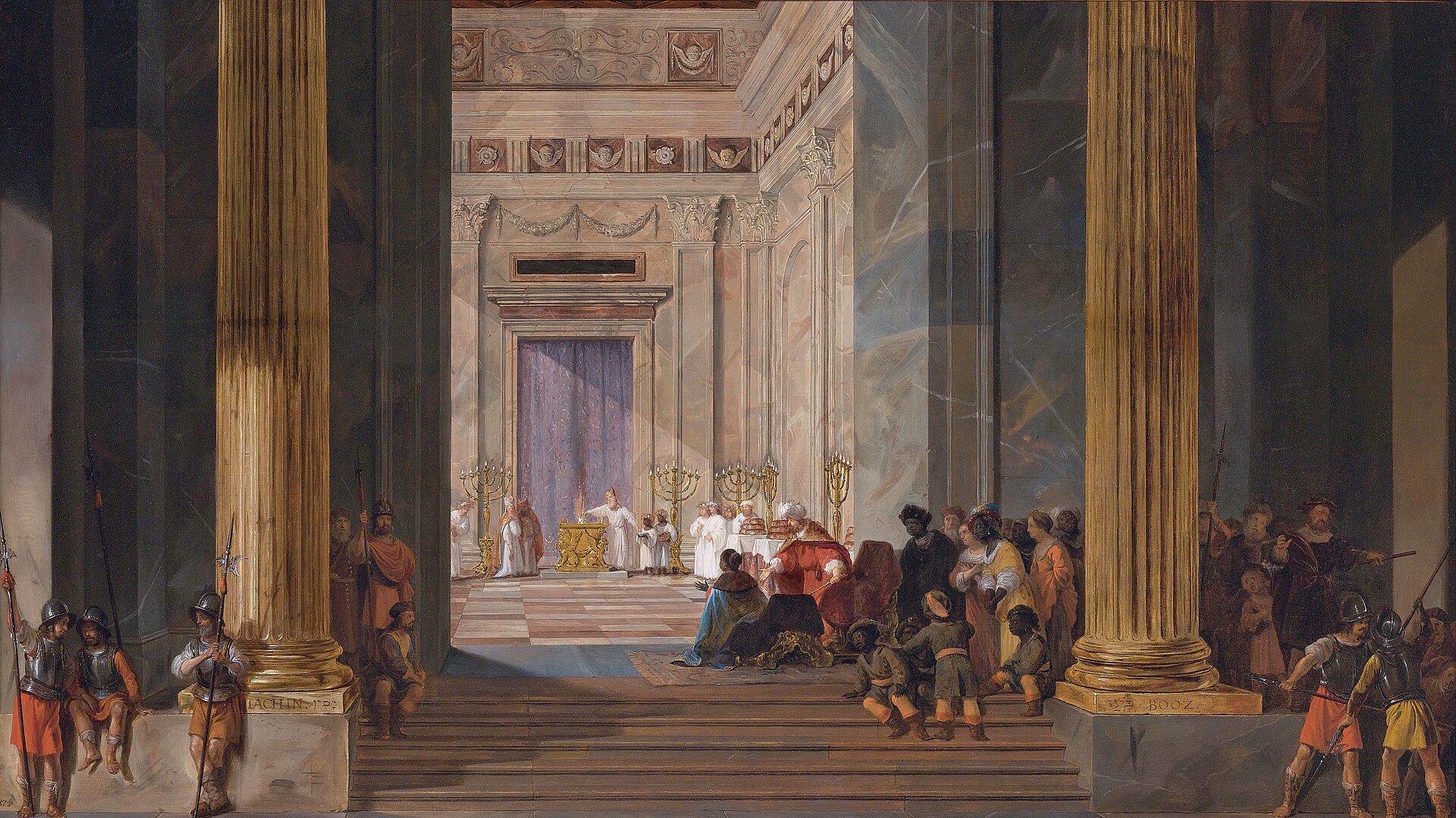
The wisdom of Solomon refers to two distinct things that have merged in popular memory: the discernment the Hebrew Bible attributes to King Solomon in the books of Kings, Proverbs, and Ecclesiastes, and a separate text — the deuterocanonical Book of Wisdom, also called the Wisdom of Solomon — written centuries after his death by a Greek-speaking Jewish author working under his name. Both point toward the same underlying claim: that Solomon achieved a form of knowing beyond ordinary cleverness, and that this knowing can still be studied, and in some measure recovered, by anyone willing to walk a similar interior path.
What Is the Wisdom of Solomon?
Strip away the embellishments and the biblical portrait is fairly specific. Solomon is not praised for raw intelligence, the ability to solve puzzles or recite facts. He is praised for judgment — the capacity to weigh a situation correctly and act rightly within it. 1 Kings calls it "wisdom and understanding exceeding much, and largeness of heart, even as the sand that is on the sea shore." In the Hebrew idiom, the heart was the seat of thought as much as feeling, so Solomon's wisdom was described as a capacity of the whole person, not a faculty isolated in the head.
The second sense of the phrase belongs to a different document entirely. The Wisdom of Solomon is a work of roughly the first century BCE, composed in polished Greek by a writer in Alexandria who adopted Solomon's voice to argue, to a Jewish community living under Hellenistic pressure, that righteousness outlasts injustice and that the soul does not end with the body. Scholars are all but unanimous that Solomon did not write it — but the choice to speak in his name is telling. By the time it was composed, "Solomon" had already become shorthand for wisdom itself.
The Dream at Gibeon: How Solomon's Wisdom Began
The origin story sits in 1 Kings 3. Solomon travels to Gibeon to offer sacrifices, and in a dream God asks him what he wishes to be given. He does not ask for long life, wealth, or victory over his enemies. He asks for an understanding heart, able to discern between good and evil and to judge a people too numerous to govern by instinct alone. The narrative treats the request itself as proof of wisdom — Solomon is judged wise before he has judged anything, simply because of what he chose to want.
Read as the mystery tradition tends to read it, this is a story about the order in which inner faculties must be developed before outer power can be safely held. Wealth and authority arriving before discernment tend to corrupt the one who holds them; discernment developed first can carry wealth and authority without being consumed by it.
The Judgment of the Two Mothers: Wisdom in Action
The most quoted demonstration of Solomon's wisdom follows almost immediately. Two women, each claiming a living infant as her own, come before the king. Solomon orders the child divided in two, one half to each — and watches. The true mother begs him to give the child to the other woman rather than see it harmed; the false claimant accepts the division. Solomon awards the child to the one who would rather lose her claim than see it destroyed.
"And all Israel heard of the judgment which the king had judged; and they feared the king: for they saw that the wisdom of God was in him, to do judgment." — 1 Kings 3:28
The device has been retold across cultures because it works on a principle deeper than clever interrogation: truth reveals itself under pressure that only the truthful can bear. Solomon's wisdom here is not knowledge of facts he could not otherwise access — it is the design of a test that lets reality do the judging for him.
The Deuterocanonical Book of Wisdom of Solomon
The Book of Wisdom takes a more mystical turn. It personifies Wisdom — Sophia in the Greek — as an active presence moving through creation and history, present at every turning point where the righteous were preserved. One of its best-known passages describes her this way:
"For she is the breath of the power of God, and a pure influence flowing from the glory of the Almighty... she is the brightness of the everlasting light, the unspotted mirror of the power of God, and the image of his goodness." — Wisdom of Solomon 7:25–26
This is a different register from Proverbs' practical instruction. Wisdom here is not a skill acquired through discipline; she is closer to a presence that seeks out and indwells souls prepared to receive her. It is this text, more than any other bearing Solomon's name, that later esoteric readers drew on when they described wisdom as a force with its own agency. The book is canonical scripture in Catholic and Orthodox Bibles and apocryphal in Protestant ones — a split that says more about sixteenth-century canon debates than about the text itself.
Proverbs, Ecclesiastes, and the Two Faces of Solomonic Wisdom
Traditionally credited to Solomon, Proverbs and Ecclesiastes present wisdom from almost opposite angles. Proverbs is confident and prescriptive: diligence is rewarded, folly is punished, the fear of the Lord is the beginning of knowledge. Ecclesiastes opens with "vanity of vanities; all is vanity" and tests every form of achievement — wealth, pleasure, labor, even wisdom itself — and finds each insufficient to answer the fact of mortality.
Read together, the two books describe a complete arc: the confident wisdom of the builder giving way to the tested wisdom of a man who has built everything and found it wanting. That second movement, where achievement stops satisfying and old certainties fall away, is close kin to what later Christian mysticism would name the dark night of the soul — not despair as an endpoint, but disillusionment as a passage toward a wisdom no longer dependent on outcomes.
The Wisdom of Solomon in the Mystery Tradition
Within the mystery school lineage, Solomon's wisdom is treated as a documented case rather than a legend admired from a distance. The tradition holds that Solomon was initiated into a transmission of knowledge concerning consciousness, creation, and the hidden order behind visible events — a transmission carried forward through unbroken teacher-to-student lineage said to trace back more than three thousand years, with an oral tradition reaching further still, to Hermes Trismegistus.
In that framing, "wisdom" does not mean information. It means a quality of direct perception — knowing a principle the way one knows a shape by seeing it, rather than a fact by memorizing it. Initiates describe the aim of this work as recovering that same quality of perception in the practitioner, not simply studying what Solomon is reported to have known.
How to Carry Solomon's Wisdom Into Your Own Life
Set aside the legendary trappings and what remains is a method any seeker can test directly. Ask for discernment before outcomes, the way Solomon asked at Gibeon rather than naming a prize. Let a situation reveal its own truth under honest pressure, the way the true mother revealed herself. Hold the confidence of Proverbs and the honesty of Ecclesiastes together rather than choosing one and discarding the other, since a wisdom that cannot survive doubt was never wisdom to begin with.
This is where wisdom, pursued far enough, opens into something larger than better decisions. The tradition describes deepening discernment as one of the early markers of a spiritual awakening — the point where a person begins to see through inherited assumptions rather than accumulating more of them. Solomon's wisdom was never a private possession locked in antiquity. It was a demonstration of what becomes available to consciousness once it stops asking for wealth and asks, first, to see clearly.
Walk the Path of the Initiate
These teachings come alive in The Initiated — Paul Schulz's introduction to the living mystery school tradition.
Get the BookFrequently Asked Questions
What is the Wisdom of Solomon in the Bible?
There are two related things called by this name. First, the wisdom itself: the discernment the Old Testament says God granted Solomon after his prayer at Gibeon, displayed in the Book of Proverbs, Ecclesiastes, and the Song of Songs. Second, the Wisdom of Solomon: a standalone deuterocanonical book, written in Greek centuries after Solomon's death, that meditates on Wisdom as a divine attribute and defends the righteous against injustice and death.
Is the Wisdom of Solomon a canonical book?
It depends on the tradition. The Book of Wisdom is canonical scripture in the Catholic and Eastern Orthodox Bibles, placed among the wisdom literature. Protestant Bibles exclude it from the canon and place it, if at all, in a separate Apocrypha section. Jewish tradition does not include it in the Tanakh. It survives complete only in Greek, which is one reason scholars date its authorship well after Solomon's lifetime.
What did Solomon ask for at Gibeon?
According to 1 Kings 3, God appeared to Solomon in a dream at Gibeon and offered him anything he wished. Rather than long life, riches, or the defeat of his enemies, Solomon asked for an understanding heart to judge his people and discern good from evil. The text says this request pleased God, who granted wisdom and, because Solomon had not asked for it, wealth and honor besides.
Why is Solomon considered the wisest man who ever lived?
The reputation rests on several strands woven together: the Gibeon narrative, the judgment of the two mothers, his authorship credited across Proverbs, Ecclesiastes, and Song of Songs, and the later legends attached to his name across Jewish, Christian, and Islamic tradition. Within the mystery school lineage, this reputation is read less as a claim about intellect and more as a claim about a particular quality of consciousness — direct apprehension of the principles governing creation.
How can I apply the wisdom of Solomon in daily life?
Traditions that study Solomon's wisdom point to a consistent method rather than a single technique: ask for discernment before you ask for outcomes, weigh a situation from more than one vantage before acting, and treat contradictory feelings — ambition and weariness, certainty and doubt — as information rather than as failure. Proverbs supplies the discipline; Ecclesiastes supplies the honesty. Held together, the two keep wisdom from curdling into either rigidity or despair.