Acts of Solomon: The Lost Biblical Book and What It Actually Held
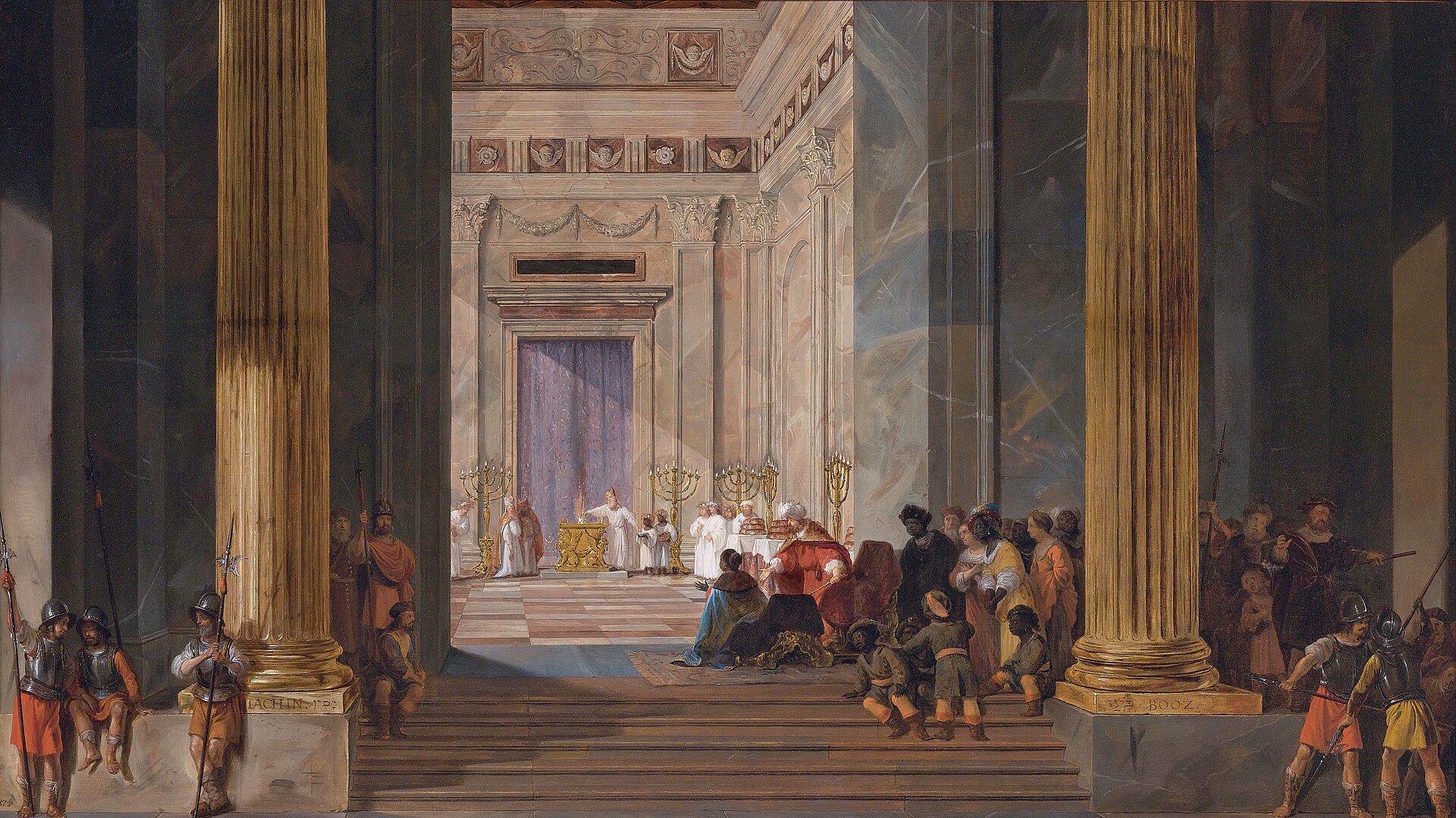
The Acts of Solomon is a lost book of the Hebrew Bible, named exactly once, in 1 Kings 11:41, as the fuller record of Solomon's reign, his undertakings, and his wisdom — a source the author of Kings expected readers to go and consult for themselves. No copy of it has ever surfaced. It is not the Testament of Solomon, not the Wisdom of Solomon, and not scripture in its own right; it was, by every indication, an official court archive that the compilers of Kings summarized and then pointed past, and that history simply did not keep.
What the Book of the Acts of Solomon Actually Says
The citation itself is brief. Closing out its long account of Solomon's reign, 1 Kings 11:41 reads: "And the rest of the acts of Solomon, and all that he did, and his wisdom, are they not written in the book of the acts of Solomon?" That single sentence is the entirety of what scripture tells us about this book. It arrives at a pointed moment in the narrative — right after the account of Solomon's foreign wives, his turn toward their gods, and the prophecy that his kingdom would be torn from his son's hands, and just before the story moves on to Rehoboam and the fracture of the united monarchy. The formula was standard practice for the author of Kings, who closes almost every king's reign with a near-identical line directing readers to "the book of the chronicles of the kings of Israel" or "of Judah." Solomon receives a title of his own, tied to no divided kingdom, because his reign came before Israel split in two.
Lost Royal Archives: The Acts of Solomon and Its Peers
The Acts of Solomon is not an isolated case. Across the books of Kings, the same closing formula recurs roughly thirty times, each time pointing to a document that has not survived. The Book of Jasher, cited in Joshua 10:13 and 2 Samuel 1:18, met the same fate. Chronicles, writing later and evidently drawing on different material, offers its own note on Solomon's reign at 2 Chronicles 9:29, attributing the fuller record to three named sources instead of one: "the book of Nathan the prophet," "the prophecy of Ahijah the Shilonite," and "the visions of Iddo the seer." Whether these were separate scrolls, sections of a single larger archive, or the Chronicler's way of reframing an existing source under prophetic authority, no one can now say with certainty. What the pattern shows clearly is that ancient Israelite historiography operated the way every other ancient Near Eastern court did — by keeping institutional annals that its own scribes drew from constantly, and that outlived their usefulness the moment scripture had absorbed what it needed.
Those archives perished for mundane reasons. Jerusalem burned in 586 BCE, and its royal and temple records burned with it; further copies, if any existed elsewhere, were subject to the same centuries of war, exile, and neglect that erased most of the ancient world's paperwork. Only the texts a community chose to treat as scripture were copied faithfully enough, generation after generation, to survive at all. The Acts of Solomon was cited, not canonized — and that distinction, more than any conspiracy or deliberate suppression, explains why it is gone.
What the Acts of Solomon Probably Contained
Nothing rules out an educated guess at its contents, because Kings itself preserves material that reads like a condensed extract from exactly this kind of source. The list of Solomon's twelve district governors and their monthly provisioning duties in 1 Kings 4 has the flavor of an administrative register, not a storyteller's invention. The measurements, materials, and construction sequence of the Temple and palace in 1 Kings 6 and 7 read like building specifications lifted from an official record. The account of the fleet built with Hiram of Tyre, the gold brought back from Ophir, and the visit of the Queen of Sheba in 1 Kings 9 and 10 all carry the texture of a court's own account of its trade and diplomacy. Ancient Near Eastern royal annals, the Egyptian and Assyrian examples that do survive show us, typically recorded building projects, military and diplomatic dealings, tribute, and administrative reorganization in exactly this register. The Acts of Solomon was most likely a longer version of the very material Kings already excerpts — along with, if 1 Kings 4:32 is any guide, a fuller accounting of his three thousand proverbs, his thousand and five songs, and his study of trees, beasts, birds, and fish, only a fraction of which made it into the surviving text.
Not the Testament, Not the Song: Telling the Solomon Texts Apart
Solomon's name attached itself to more literature than perhaps any other biblical figure, and the confusion is understandable. The Song of Solomon, or Song of Songs, is canonical love poetry. The Wisdom of Solomon is a deuterocanonical text composed centuries later in Hellenistic Alexandria. The Psalms of Solomon and the Odes of Solomon are pseudepigraphal collections from the Second Temple and early Christian periods. And, as we've explored in our essay on the Testament of Solomon, a much later legendary text has Solomon binding seventy-two demons with a ring to complete his Temple — a work of narrative invention, not history, composed long after his lifetime. The Acts of Solomon belongs to none of these categories. It is not devotional poetry, not wisdom literature, and not occult narrative. It was cited as a plain historical record, the way a modern writer might footnote an archive rather than reprint it, and it is the only one among all these "Solomon" texts that we know existed and no longer have any trace of at all.
How the Mystery Tradition Reads the Acts of Solomon
The mystery school tradition holds that its own written record reaches back more than three thousand years, to Solomon's era, and that oral instruction beneath it reaches further still. Read against a book like the Acts of Solomon, that claim takes on a particular shape. The tradition has never rested on the survival of any single scroll. What it describes as unbroken is a transmission carried initiate to initiate, through direct instruction and lived practice, rather than page to page through a single physical archive that any fire or invading army could end in an afternoon. Whether or not the specific document named in 1 Kings 11:41 is ever recovered changes nothing about what the tradition claims to carry forward.
There is also something instructive in what little the surviving text tells us Solomon actually studied — trees, beasts, birds, fish, the living world down to its particulars. Initiates read that catalogue as evidence of a mind trained to perceive subtle qualities in ordinary things, the same discipline that later practitioners bring to sensing and directing the body's own vital force, as we've written about in our essay on energy healing. A written record can vanish. What that record once described — sustained attention, disciplined study, direct knowledge of how life moves through living things — does not require ink to persist. It requires only someone willing to keep practicing it.
Why the Silence Still Matters
It is tempting to read the absence of the Acts of Solomon as evidence of something hidden on purpose, a suppressed record of secret power. The tradition resists that temptation, because the ordinary explanation fits the evidence better: institutional archives from the ancient world overwhelmingly did not survive, Solomon's included, and singling his out as uniquely suppressed says more about our appetite for buried secrets than about what actually happened to a scribe's scroll in a burned city. What endures instead is the citation itself — a single sentence, pointing at an empty space where a fuller record once stood. That emptiness is not a wound in the tradition. It is a reminder that the transmission it claims never depended on paper in the first place, and that the "acts" worth recovering are not lines on a vanished page but a discipline any serious seeker can still take up directly.
Walk the Path of the Initiate
These teachings come alive in The Initiated — Paul Schulz's introduction to the living mystery school tradition.
Get the BookFrequently Asked Questions
What is the Acts of Solomon?
The Acts of Solomon is a book named once in the Hebrew Bible, at 1 Kings 11:41, as the fuller record of Solomon's reign, his achievements, and his wisdom. No copy of it has ever been found. Scholars generally understand it as a royal archive or court annal that the author of Kings drew on and condensed, then pointed readers toward for the complete account.
Is the Acts of Solomon in the Bible?
Only its title is in the Bible. The verse 1 Kings 11:41 names the book and says Solomon's remaining deeds are written there, but the book itself is not part of the biblical canon and no manuscript of it has survived. It sits in the same category as other lost sources Kings cites, such as the chronicles of the kings of Israel and of Judah.
Has the Acts of Solomon ever been discovered?
No. Despite centuries of biblical scholarship and archaeology in the region, no scroll, fragment, or manuscript identified as the Acts of Solomon has ever surfaced. Most scholars believe it was lost the way most ancient Near Eastern court archives were lost, through war, fire, or simple neglect over the centuries following the fall of Jerusalem.
What is the difference between the Acts of Solomon and the Testament of Solomon?
The Acts of Solomon is a lost historical source cited in 1 Kings, likely a court annal of building projects, trade, and administration. The Testament of Solomon is a much later pseudepigraphal legend describing Solomon binding demons with a magic ring. One is a vanished record; the other is a surviving work of legend, and they were never the same text.
Why does the Bible cite books that no longer exist?
The authors of Kings and Chronicles regularly pointed readers to fuller official records for details they chose not to include, much as a modern history might cite an archive without reprinting it in full. Those source documents were never meant to become scripture themselves, so they were not copied and preserved with the same care, and most simply perished.