Annals of Solomon: The Lost Book Behind a Different Bible Translation
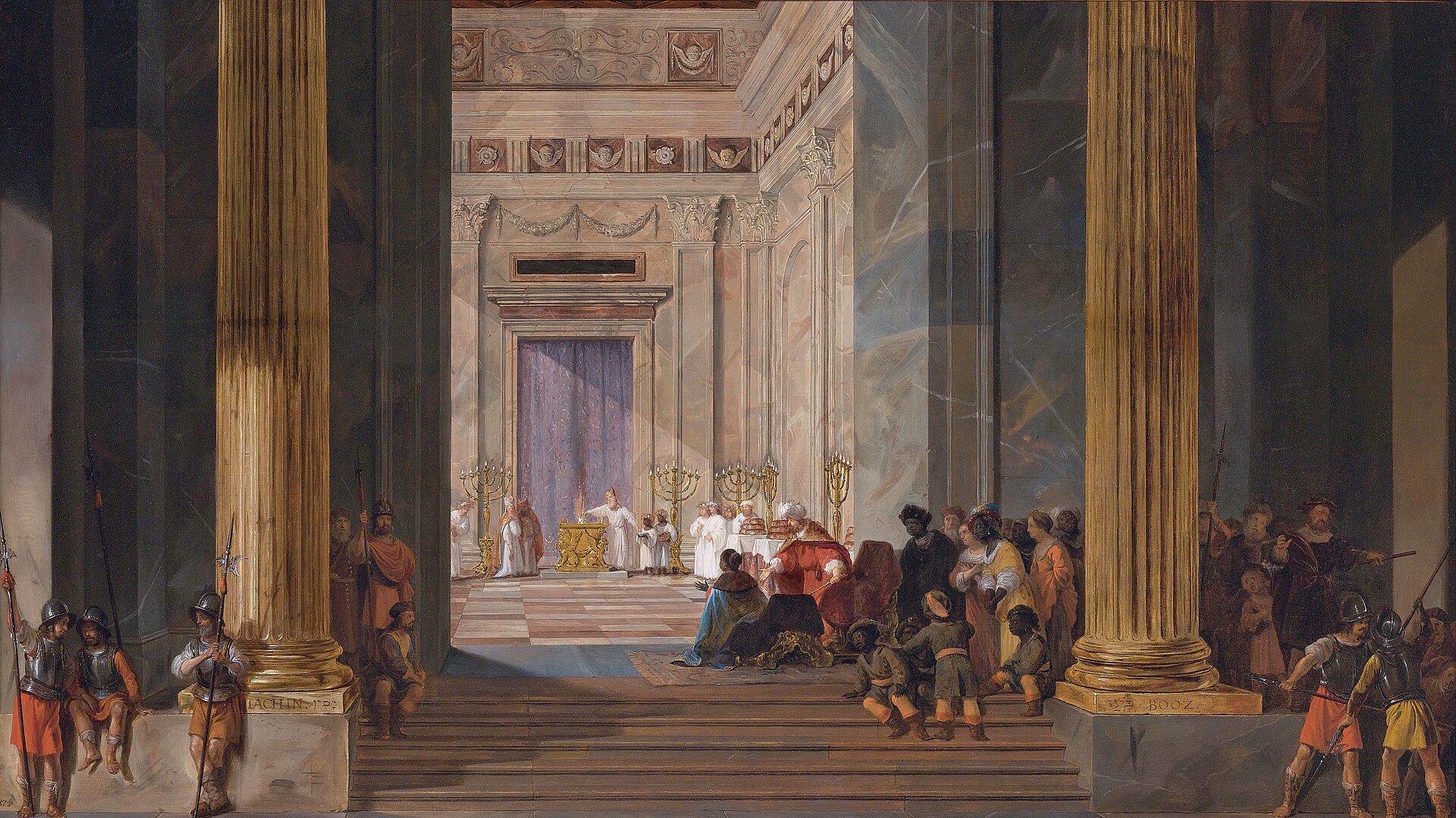
The annals of Solomon is the title one major Bible translation, the NIV, gives to a book named exactly once in scripture, at 1 Kings 11:41, as the fuller record of Solomon's reign, his achievements, and his wisdom. It is not a separate ancient work from what the King James Version calls the acts of Solomon — it is the same lost source, rendered into English by a different translation choice, and like its KJV counterpart, no copy of it has ever surfaced. What follows is why the two names exist, what kind of document lies behind either title, and what the tradition that traces itself back to Solomon makes of a record that vanished so completely.
Acts or Annals of Solomon? Why Two Bible Translations Disagree
Open 1 Kings 11:41 in the King James Version and you read: "the rest of the acts of Solomon, and all that he did, and his wisdom, are they not written in the book of the acts of Solomon?" Open the same verse in the New International Version and the wording shifts: "are they not written in the book of the annals of Solomon?" Nothing in the underlying Hebrew changed between translations — what changed is how each committee chose to render one compact phrase describing an official court record. "Acts" leans toward deeds performed, a résumé of accomplishment. "Annals" leans toward a chronological register, entries kept in sequence as events occurred. Both are reasonable English choices for a Hebrew term with no single tidy equivalent, and neither translation describes a different book from the other. A reader who searches for the annals of Solomon and a reader who searches for the acts of Solomon are, without realizing it, asking about the exact same lost source.
This is not an isolated quirk of one verse. Across Kings and Chronicles, translators repeatedly choose between "acts," "annals," "chronicles," and "records" for related Hebrew formulas describing royal archives. Before assuming two source citations describe two different documents, it is worth checking whether the discrepancy is a translation artifact rather than a genuine difference in the Hebrew.
Ancient Royal Annals: Where the Annals of Solomon Fits
"Annals" is in fact the more historically precise word for what this lost book almost certainly was, because keeping year-by-year state registers was standard practice across the ancient Near East, not a peculiarity of Israel's monarchy. Assyrian kings maintained eponym lists and royal annals recording campaigns and building works in careful sequence. Hittite kings, such as Mursili II, left annals narrating each year of a reign in turn. Egypt's Palermo Stone preserves fragments of a chronicle recording pharaonic reigns stretching back centuries. Solomon reigned in the tenth century BCE, in direct diplomatic and trade contact with Phoenicia and Egypt, and there is no reason to think his own scribes worked any differently from their neighbors. A court overseeing a Temple project, twelve district governors, and active trade routes to Ophir would have generated exactly the kind of ongoing archive "annals" describes: an institutional record kept by scribes as a matter of course, not a literary composition written for its own sake.
That distinction matters for understanding why it disappeared. A royal annal was a working document, added to year after year, not a text a community set out to copy and preserve the way it preserved scripture. When the archive that housed it burned or was scattered, there was no independent tradition of transmission to fall back on. The annals of Solomon were real, useful, and ordinary for their time — and that ordinariness, ironically, is exactly why nothing of them remains.
The Other Lost Annals Named in the Books of Kings
Solomon's is far from the only vanished royal record the biblical text cites and leaves behind. After his reign splits into two kingdoms, the author of Kings closes almost every subsequent monarch's story with a near-identical formula, pointing readers to "the annals of the kings of Israel" or "the annals of the kings of Judah." That closing note recurs roughly thirty times across the two books, each time naming a source that has not survived. Read together, these citations describe two long-running institutional archives, one per kingdom, that the author drew on continuously while compiling a shorter narrative for public and religious use. The annals of Solomon reads, in this light, less like a strange one-off and more like the founding entry in a record-keeping tradition the monarchy sustained for roughly four centuries, until Jerusalem's fall in 586 BCE brought the whole practice, and its archive, to an end.
What the Annals of Solomon Probably Recorded
Kings itself offers strong hints about the contents of the fuller archive it is summarizing. The register of Solomon's twelve district governors in 1 Kings 4, each responsible for provisioning the royal household for one month of the year, reads like an extract from an administrative ledger rather than a storyteller's invention. The exhaustive measurements, materials, and construction order of the Temple and palace complex in 1 Kings 6 and 7 have the texture of building specifications lifted directly from a project record, the same kind of material examined in the essay on acts of Solomon. First Kings 4:32 adds that Solomon spoke three thousand proverbs and composed a thousand and five songs, and studied plant life, animals, birds, reptiles, and fish — a scope reading like a scholar's index, only a portion of which made it into the text we now have. The annals of Solomon, whatever else they held, were plainly a far longer document than the summary Kings gives us reason to expect.
Reading an Empty Archive: How the Mystery Tradition Approaches the Annals of Solomon
The mystery school tradition that traces its own lineage to Solomon describes its written record as reaching back more than three thousand years to his era, with an oral instruction beneath that written record reaching further still. Set beside a book like the annals of Solomon, that claim invites an honest question: if the era's own official archive could vanish so completely, what confidence can any tradition have in what it says it carries from that same period? The tradition's answer does not rest on the survival of a single document. What it holds as continuous is a transmission carried person to person, through direct instruction and lived practice, rather than page to page through one physical record that fire, war, or four centuries of neglect could end. In that sense the empty space where the annals once stood is instructive rather than damaging — as we've explored in writing about the dark night of the soul, an absence is not automatically a loss. Sometimes it simply marks the point where a written thing gives way to something that was never going to depend on ink in the first place.
There is also a plain lesson in what little detail survives about what Solomon actually recorded: proverbs, songs, and close study of the living world, not merely conquests and construction totals. Initiates read that catalogue as a portrait of a disciplined, observant mind, one trained to notice pattern and meaning in ordinary things. A court archive can burn. The discipline of sustained, careful attention that such an archive once documented does not require a scroll to continue — it requires only someone willing to take it up again.
Why the Name Still Matters
Calling the same lost source "annals" instead of "acts" changes nothing about its fate, but it changes how we picture it. "Acts" suggests a hero's résumé; "annals" suggests a scribe's ledger, kept faithfully by people who never expected anyone centuries later to go looking for it. That second picture is closer to the truth of ancient court record-keeping, and a more honest way to hold the loss. The annals of Solomon were not a treasure someone hid. They were a working document that outlived its usefulness, and what is left is a single citation pointing at the space where they once stood — a reminder that what a tradition actually preserves has always been a matter of practice carried forward, not paper kept safe.
Walk the Path of the Initiate
These teachings come alive in The Initiated — Paul Schulz's introduction to the living mystery school tradition.
Get the BookFrequently Asked Questions
What is the annals of Solomon?
The annals of Solomon is the New International Version's name for the lost book cited at 1 Kings 11:41 as the fuller record of Solomon's reign, achievements, and wisdom. Older translations such as the King James Version call the same book the acts of Solomon. No copy of it, under either name, has ever been recovered.
Is the annals of Solomon the same book as the acts of Solomon?
Yes. Both names translate one Hebrew phrase in 1 Kings 11:41. "Annals" and "acts" are two English renderings of the same lost source, chosen by different translation committees working from the same underlying Hebrew word for a royal chronicle. They do not refer to two separate ancient documents.
Why do Bible translations disagree on the name of Solomon's lost book?
The underlying Hebrew term describes the kind of record a royal court kept — day-by-day or year-by-year state business. English has no single perfect equivalent, so translators have reached for different words across the centuries: "acts" emphasizes deeds performed, while "annals" emphasizes a chronological register. Both are defensible readings of the same phrase.
What did the annals of Solomon probably contain?
Based on what the surrounding text of Kings preserves, the annals of Solomon likely held detailed building records for the Temple and palace, administrative lists such as his twelve district governors, trade and tribute accounts from Ophir and Tyre, and a fuller record of his proverbs and his study of the natural world, only summaries of which survive in the biblical text itself.
Are there other lost annals mentioned in the Bible?
Yes. The books of Kings repeatedly close a monarch's reign by pointing to "the annals of the kings of Israel" or "the annals of the kings of Judah," a formula used roughly thirty times. None of these royal archives has survived either, which suggests Solomon's lost book was a single early example of a record-keeping practice the monarchy maintained for centuries.