Egyptian Mystery Schools: What the Temple Priesthoods Actually Taught
The Egyptian mystery schools were the initiatory orders attached to Egypt's great temple priesthoods, most famously the cults of Isis and Osiris, which admitted candidates through formal rites rather than birth and reserved their deepest teaching on death and the soul for those who had crossed that threshold. They are the oldest initiatory tradition the historical record documents in any detail, older than Eleusis, older than the Pythagorean brotherhoods, and by most honest accounts the source both later claimed as their own. Understanding what actually happened inside an Egyptian temple, as far as the fragments allow, means separating a genuinely old and well-attested religious institution from the far newer occult fantasy that grew up around it.
What Made a Temple Priesthood a Mystery School
Ordinary Egyptian religion was public. Festivals filled the streets, processions carried divine images between shrines, and any citizen could bring an offering to a local sanctuary. But behind the outer courts of the major temples, at Heliopolis, Memphis, Abydos, and later Philae, stood an inner precinct that only initiated priests and priestesses could enter, and a body of teaching, concerning cosmology, the afterlife, and the technical vocabulary of ritual, never displayed to the public at all. That division between an outer, visible religion and an inner, restricted one is the same structural feature that later defined the Eleusinian Mysteries in Greece, and Greek visitors recognized it immediately as kin to their own initiatory institutions.
Admission into the priesthood itself functioned as the first initiation, involving purification and, for the higher grades, training in the sacred writing, hieroglyphs literally meaning "the god's words," that recorded the temple's deeper cosmology. Herodotus, touring Egypt in the fifth century BCE, reported that the priests of Thebes traced their line back through 341 generations, and that Egyptian secrecy around ritual matters ran stricter than anything comparable he had witnessed in Greece.
The Myth at the Center: Isis, Osiris, and the Promise of Resurrection
The best-documented Egyptian mystery, the one that eventually spread across the entire Roman world, was built on the myth of Osiris. In the version preserved by the Greek writer Plutarch, the god Osiris was murdered and dismembered by his jealous brother Set, his scattered remains recovered and reassembled by his wife Isis, and his body restored to life long enough to father their son, Horus, before he passed into rule over the underworld as lord of the dead. The myth gave the temple mysteries their central promise: a mortal who underwent the corresponding rites could hope to share in Osiris's own passage through death into continued existence, a promise carved into funerary texts for two thousand years before any Greek initiate ever heard of it.
The cult of Isis carried that promise furthest. Beginning in the Hellenistic era, temples to Isis appeared from Pompeii to Roman Britain, each initiating members into rites the second-century writer Apuleius described, in his novel The Golden Ass, as bringing the initiate "to the boundary of death" and back, "reborn" under the goddess's protection. Apuleius, honoring his own oath of silence, refused to describe the rite itself, telling his reader only that he had approached the gods below and above and worshipped them face to face — the same reticence that marks every genuine account of ancient mystery religion, Egyptian or Greek.
"I am all that has been, that is, and that will be; no mortal has ever lifted my veil." — inscription reported at the temple of Isis at Sais, preserved by Plutarch
Thoth, Hermes Trismegistus, and the Roots of Hermetic Wisdom
Standing beside Isis and Osiris in the temple's inner teaching was Thoth, ibis-headed god of writing, measured speech, and the weighing of the soul's heart against the feather of truth at judgment. Thoth's priesthood at Hermopolis guarded a body of learning concerning language, mathematics, and cosmic order that Greek visitors found so impressive they eventually merged Thoth with their own messenger god, calling the composite figure Hermes Trismegistus, "thrice-great Hermes." The Hermetic texts that later circulated under his name, compiled centuries after the Egyptian temples that inspired them, claim Egypt as their point of origin even where their actual authorship is Greco-Roman. The tradition I was initiated into places its own oral lineage far earlier still, tracing a current of teaching back some eight thousand years to the era of Hermes himself, long before that lineage's own written history through King Solomon begins — a lineage explored further in King Solomon Wisdom.
That inner-sight tradition left its own visual signature in the wedjat, the Eye of Horus, carved as protection against harm, an eye said to perceive what the two ordinary eyes could not. The same intuition, an inner faculty set apart from ordinary sight, recurs across cultures with no direct contact with Egypt at all, a convergence traced more fully in Awakening of the Third Eye.
Women of the Egyptian Mysteries
Egyptian temple religion gave women standing that few contemporary Mediterranean traditions matched. Priestesses of Hathor and Isis held recognized offices rather than exceptional honors, and several of Egypt's most consequential rulers carried religious authority inseparable from temple cult. Hatshepsut, who ruled as pharaoh in her own right in the fifteenth century BCE, commissioned temple reliefs at Deir el-Bahari depicting her own divine conception by the god Amun, grounding her kingship directly in temple theology. Nefertiti, chief wife of the heretic pharaoh Akhenaten, appears in temple art performing priestly functions ordinarily reserved for the king alone. Cleopatra VII, the last pharaoh of Egypt, styled herself the living incarnation of Isis in public ritual, a claim that meant something only because Egyptian religion had already granted the goddess's cult that standing.
How Egyptian Initiation Reached Greece and Rome
Greek writers did not claim to have invented mystery religion; they said, repeatedly, that they had learned it from Egypt. Herodotus wrote that the Greeks took the names of nearly all their gods from Egypt. Plato, in the Timaeus, has an Egyptian priest tell Solon that the Greeks are perpetual children next to Egypt's deep written memory. Pythagoras, according to several ancient biographers, spent years studying with Egyptian priests before founding his own initiatory brotherhood at Croton, carrying back a doctrine of the soul's transmigration that mirrors what little is known of Egyptian priestly training. Whatever separates legend from documented fact, the direction of the claim never wavers: Egypt as the older source, Greece as the pupil who wrote it down.
Why the Egyptian Mystery Schools Ended
No single date closes the Egyptian mysteries, because no single mystery school existed; a network of temple priesthoods declined unevenly as Egypt passed under Persian, then Greek, then Roman, then Christian rule. The cult of Isis proved the most resilient, carried by traders and soldiers across the Roman Empire as far as Roman London. Her sanctuary at Philae, on an island near the first cataract of the Nile, held out longer than any comparable institution in the ancient world; the Eleusinian Mysteries fell after Alaric's raid in 396 CE, but Philae's priests kept initiating members until the emperor Justinian ordered the temple closed by force around 537 CE. Because the deepest content of Egyptian initiation, like every ancient mystery, was guarded by oath rather than written down, its closure meant the inner rites were lost once the last trained priests died without successors, leaving only the outer myths and the temples themselves behind.
What the Egyptian Mystery Schools Left Behind
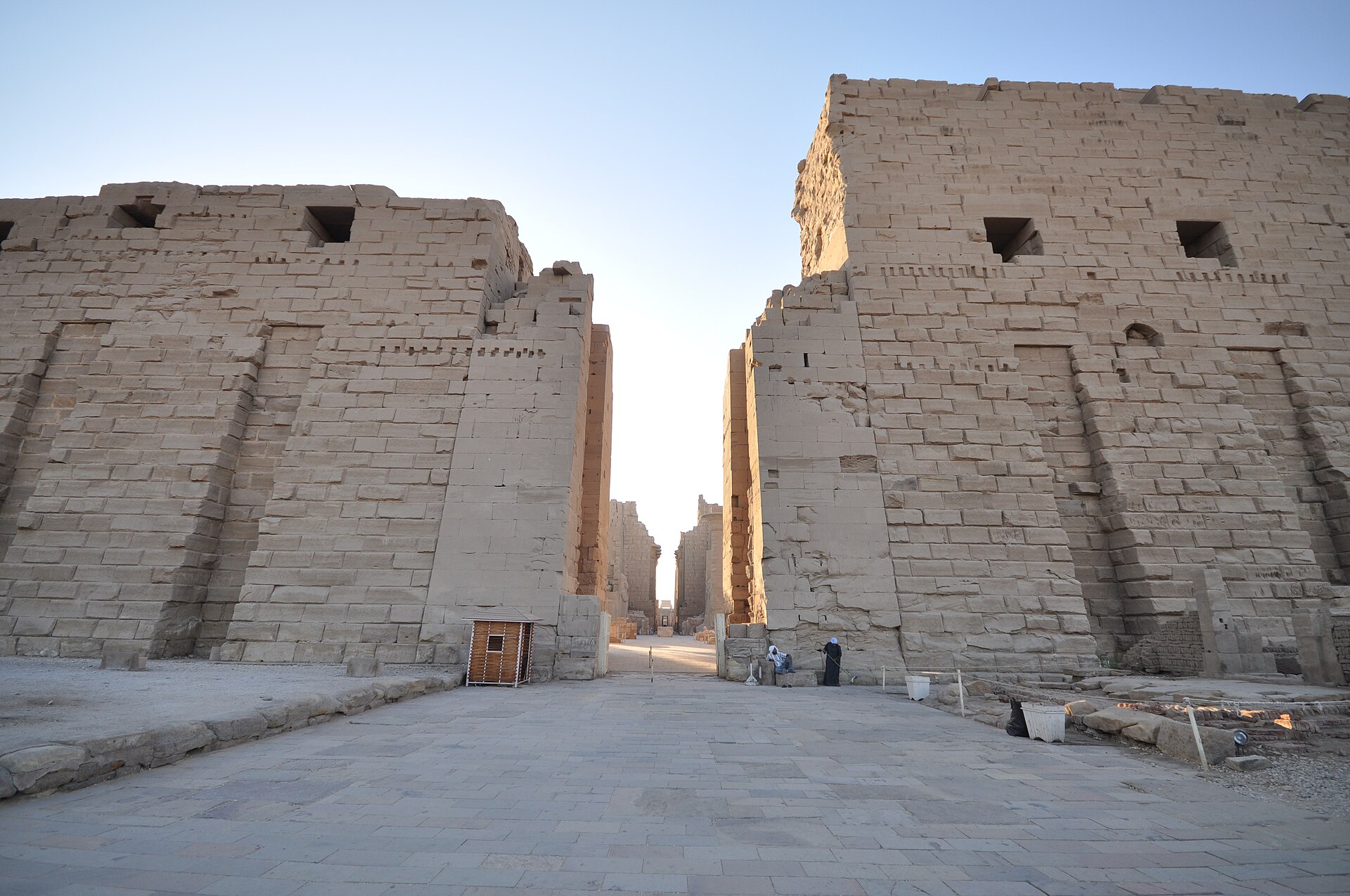
The temples still stand, at Karnak, at Philae, at Abydos, their pylon gates outlasting the priesthoods that built them by a thousand years and more. Harder to verify is any unbroken chain of living transmission reaching from those priesthoods to the present; the Hermetic and Rosicrucian revivals that later claimed Egyptian ancestry were, by their own historians' admission, reconstructions built from fragments rather than continuous lines of initiation. The tradition I was initiated into makes a more limited claim than a general inheritance from Egypt: that one lineage, dating in written history to King Solomon and reaching back in oral memory to Hermes himself, was never broken, even as Philae's doors closed for the last time. Readers can weigh that claim against the record above. What the Egyptian temples leave beyond dispute is the standard itself: a graded, guarded transmission concerning the soul's fate, sustained longer than any other tradition of the ancient world managed to sustain it.
Walk the Path of the Initiate
These teachings come alive in The Initiated — Paul Schulz's introduction to the living mystery school tradition.
Get the BookFrequently Asked Questions
What were the Egyptian mystery schools?
The Egyptian mystery schools were initiatory orders attached to the great temple priesthoods of ancient Egypt, most famously the cults of Isis and Osiris. Candidates were admitted through a formal rite rather than birth, and the deepest instruction concerned the soul's survival of death, transmitted only within the temple's inner precincts.
Which Egyptian gods stood at the center of the mysteries?
Isis and Osiris anchored the best-documented mysteries, built on the myth of Osiris's murder, dismemberment, and restoration by his wife Isis. Thoth, god of writing and measured speech, presided over the temple's scribal and priestly wisdom, and was later identified by Greek writers with Hermes Trismegistus.
Did women take part in the Egyptian mystery schools?
Yes, more fully than in most contemporary traditions. Egyptian temple religion recognized priestesses of Isis and Hathor as ordinary offices, not exceptions, and royal women including Hatshepsut, Nefertiti, and Cleopatra held religious authority tied directly to temple cult, not merely political rank.
How long did the Egyptian mystery schools last?
Longer than any rival tradition in the ancient Mediterranean. Temple initiation in Egypt is attested for well over two thousand years before the cult of Isis spread abroad, and her sanctuary at Philae kept initiating priests until the emperor Justinian closed it by force around 537 CE.
Did the Egyptian mysteries influence Greek philosophy?
Greek writers consistently said so themselves. Herodotus, Plato, and Plutarch each credited Egyptian temple learning as an older source behind Greek wisdom, and Pythagoras is said to have studied for years among Egyptian priests before founding his own initiatory brotherhood at Croton.