Haile Selassie King Solomon: What the Claimed Lineage Actually Says
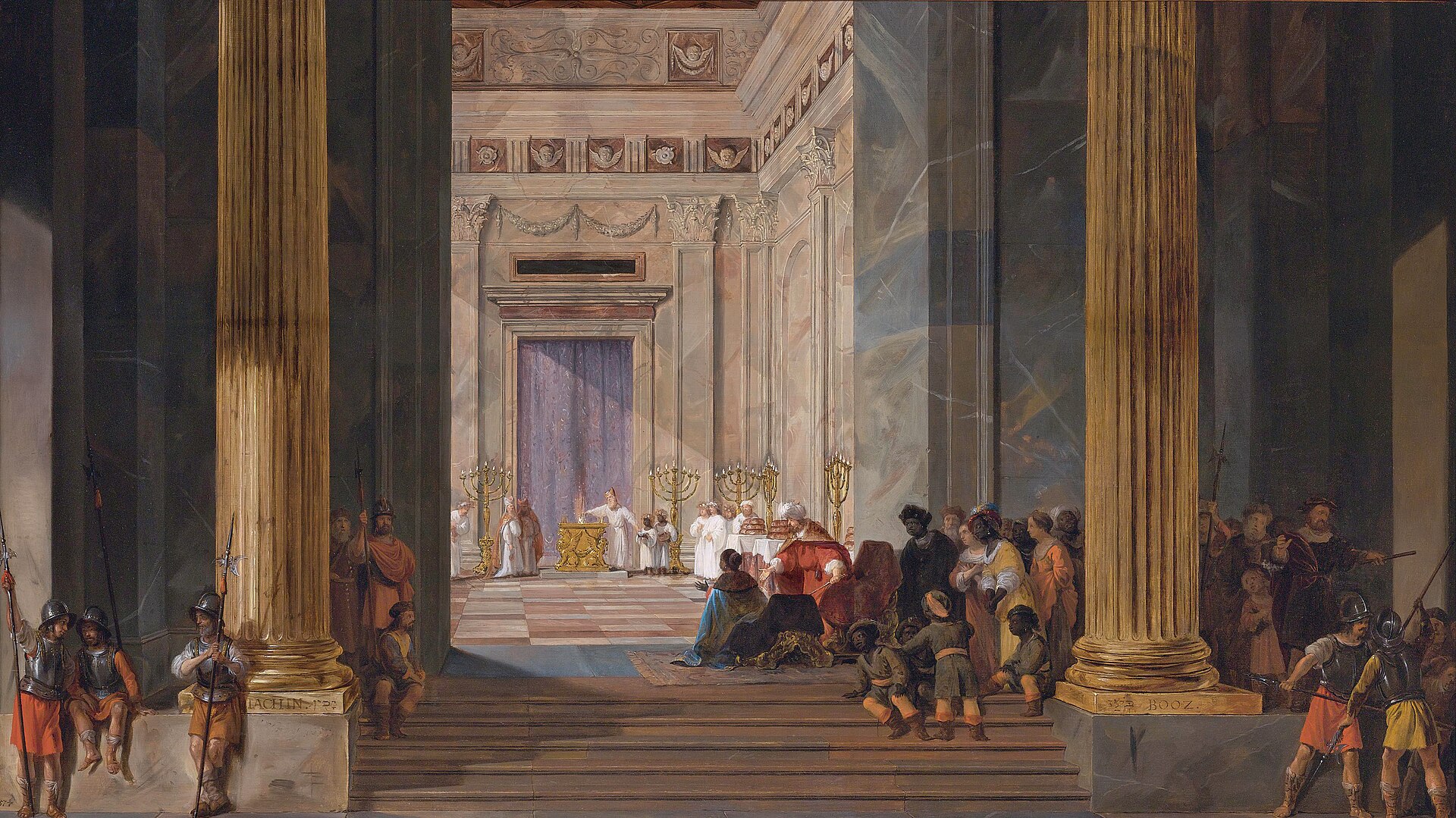
Haile Selassie King Solomon searches almost always point to the same claim, written directly into the Ethiopian emperor's own title: that he was the two hundred and twenty-fifth monarch of an unbroken royal line descending from Solomon through the son tradition says the Queen of Sheba bore him. It is not a casual comparison or a modern flourish. It was the constitutional basis of Ethiopian kingship for most of recorded history, and it shaped a movement, Rastafari, that still reads Selassie's life as the fulfillment of a much older promise. Understanding what the claim says, where it comes from, and what weight it can actually bear requires separating three different things: a biblical episode, a national legend, and a twentieth-century political and spiritual reality.
The Solomonic Dynasty: Ethiopia's Claim to a Three-Thousand-Year Throne
Ethiopia's monarchy called itself the Solomonic dynasty, and the name was not symbolic. From the restoration of the line in 1270 under Yekuno Amlak until its abolition in 1974, every Ethiopian emperor's legitimacy rested on descent from Menelik I, held to be the first king born of Solomon and the Queen of Sheba. The imperial constitution of 1931 made the claim explicit: the throne belonged "irrevocably" to the line of Haile Selassie, "descendant of King Sahle Selassie, whose line descends without interruption from the dynasty of Menelik I, son of the Queen of Ethiopia, the Queen of Sheba, and King Solomon of Jerusalem." Few monarchies anywhere have written their founding legend directly into a modern legal document in this way. The claim gave the Ethiopian crown something most thrones lack: a sacred genealogy that reached, in principle, back to the wisest king the Hebrew Bible records, and through him to the covenant Israel's scriptures describe.
Whether or not every link in that chain can be verified, the dynasty's own self-understanding treated the lineage as the source of its authority, not a decoration on top of it. That is worth sitting with before turning to the man who became its last occupant, because it means Selassie did not invent or exaggerate the Solomon connection. He inherited it as the entire premise of the institution he led.
Who Haile Selassie Actually Was
Born Tafari Makonnen in 1892, he rose through the Ethiopian nobility as a provincial governor before becoming regent in 1916 and emperor in 1930, taking the throne name Haile Selassie, "Power of the Trinity." His full title ran to many lines: Emperor of Ethiopia, Elect of God, King of Kings, Lion of Judah — honorifics drawn directly from the Solomonic claim and from the biblical imagery long attached to it. When Italy invaded Ethiopia in 1935, Selassie went into exile and appealed personally to the League of Nations in Geneva, warning the assembled nations that their failure to act against aggression would eventually reach them too. He was restored to the throne in 1941 with British support, then spent the following decades modernizing Ethiopia's administration, courts, and education system while maintaining the absolute authority the Solomonic constitution granted him.
That authority ended in 1974, when a military committee called the Derg deposed him amid famine, unrest, and a wave of revolutions sweeping the region. He died in custody in 1975, under circumstances Ethiopia's post-revolutionary government never fully disclosed. His death closed a dynasty the Kebra Nagast had traced back three millennia — not because the legend had been disproven, but because the political order that had sustained it for seven centuries finally gave way.
The Kebra Nagast: Where the Lineage Story Actually Comes From
The biblical record itself says only this much: the Queen of Sheba, hearing of Solomon's wisdom, traveled to Jerusalem "to prove him with hard questions," brought him extravagant gifts, and returned home.
"And when the queen of Sheba heard of the fame of Solomon concerning the name of the LORD, she came to prove him with hard questions." — 1 Kings 10:1 (KJV)
Scripture never names a child from that meeting. The son, Menelik I, and the entire line descending from him appear instead in the Kebra Nagast, "The Glory of the Kings," a Ge'ez text compiled by Ethiopian clergy in the fourteenth century — roughly two thousand years after Solomon's reign. The full account of Sheba and Solomon's meeting that this blog has covered elsewhere treats the biblical episode on its own terms; the Kebra Nagast builds a much larger structure on top of it, describing how the queen conceived a son after her stay in Jerusalem, how that son traveled to his father's court as a young man and returned to Ethiopia with priests, nobles, and — the text insists — the Ark of the Covenant itself, carried out of the Temple and installed at Aksum. The fuller legend of Menelik, son of Solomon, is a national founding myth in the fullest sense: a text written to establish that Ethiopia's kings were never merely African rulers but heirs to Israel's own covenant, chosen to carry something out of Jerusalem before the First Temple's eventual destruction.
This distinction matters for anyone searching the phrase "Haile Selassie King Solomon" expecting a documented genealogy. The biblical visit is attested; the dynastic line claiming to descend from it is a legend given formal, centuries-later literary shape, repeated as constitutional fact by a monarchy with every institutional reason to repeat it. Tradition and legal fiction are not the same as verified history, and the honest answer treats them as what they are.
Rastafari and the Belief That Selassie Fulfilled an Older Promise
In 1920, the Jamaican activist Marcus Garvey is widely remembered for urging Black communities of the African diaspora to "look to Africa for the crowning of a Black king" as a sign of imminent redemption. When Haile Selassie was crowned a decade later under titles reaching straight back to the Solomonic claim — Lion of Judah, Elect of God, King of Kings — a new religious movement forming in Jamaica read the coronation as exactly that prophecy fulfilled. Rastafari tradition holds that Selassie is Jah, God incarnate, the return of the royal and messianic line scripture traces through Solomon and David, and it draws much of its iconography, its reverence for Ethiopia as Zion, and its hope of African redemption directly from his life and titles.
Selassie's own relationship to that belief was more complicated than the movement's devotion suggests. He was a lifelong, devout member of the Ethiopian Orthodox Church, and when Rastafari delegations and journalists raised the question of his divinity directly, he is widely reported to have rejected it, insisting he was a man and a Christian like any other. The tradition that reveres him as more than a king is Rastafari's own, held by its adherents as a matter of faith and lived experience — it is not a claim this essay states as settled fact, and Selassie himself did not claim it for himself.
What the Mystery School Tradition Makes of an Unbroken Lineage
The mystery school tradition has its own stake in this question, independent of Ethiopian politics or Rastafari theology. Its own teaching lineage is likewise traced back to King Solomon, held across more than three thousand years of written record, from master to initiate, generation to generation. What the Ethiopian case illustrates — whatever one concludes about its historical accuracy — is why lineage of this kind was ever worth claiming at all. An unbroken line back to Solomon was never, in the tradition's own understanding, a matter of bloodline alone. It was a claim about the unbroken transmission of a particular kind of authority: wisdom received, tested, and handed forward intact rather than reconstructed from fragments by each new generation on its own. Ethiopia's emperors staked their legitimacy on that kind of transmission for seven centuries. The mystery schools stake theirs on it still, holding that the "Great Work" Solomon is remembered for beginning did not end with his reign, but continues wherever that initiatory chain remains unbroken.
Read this way, the search for Haile Selassie's connection to King Solomon is really a search for something older than either man: the conviction, held across very different cultures and centuries, that true spiritual authority is inherited through direct transmission, not improvised. Whether that inheritance runs through an Ethiopian throne, a Jamaican religious movement, or an initiatory school, the underlying claim is the same one Solomon's own legend has always made — that wisdom received at its source outlasts the empire built around it.
Walk the Path of the Initiate
These teachings come alive in The Initiated — Paul Schulz's introduction to the living mystery school tradition.
Get the BookFrequently Asked Questions
Did Haile Selassie really claim to be descended from King Solomon?
Yes. Haile Selassie's full imperial title named him the two hundred and twenty-fifth ruler of the Solomonic line, tracing his ancestry through Menelik I, the son tradition says the Queen of Sheba bore to King Solomon after her visit to Jerusalem.
What is the Kebra Nagast?
The Kebra Nagast, or "Glory of the Kings," is a fourteenth-century Ge'ez text that tells how the Queen of Sheba conceived a son by Solomon, how that son, Menelik I, founded Ethiopia's royal line, and how the Ark of the Covenant came to rest at Aksum.
Why do Rastafarians consider Haile Selassie divine?
Rastafari tradition holds that Selassie's 1930 coronation under titles such as "Lion of Judah" and "King of Kings" fulfilled Marcus Garvey's 1920 call to "look to Africa" for a crowned king, and that this fulfillment marked him as Jah incarnate. Selassie himself, a devout Ethiopian Orthodox Christian, is reported to have rejected the claim.
Is there historical evidence for the Solomon-Sheba-Menelik lineage?
The Queen of Sheba's visit to Solomon is recorded in 1 Kings 10, but Menelik I and the unbroken royal line descending from him appear only in the Kebra Nagast, a national foundation legend written roughly two thousand years after Solomon's reign, not in independent extra-biblical records.
When did the Solomonic dynasty actually end?
The dynasty ended in 1974, when a military committee known as the Derg deposed Haile Selassie and abolished the Ethiopian monarchy. He died in custody the following year, closing a line the Kebra Nagast had traced back three thousand years.