Sheba and Solomon: What Really Happened When the Queen Came to Jerusalem
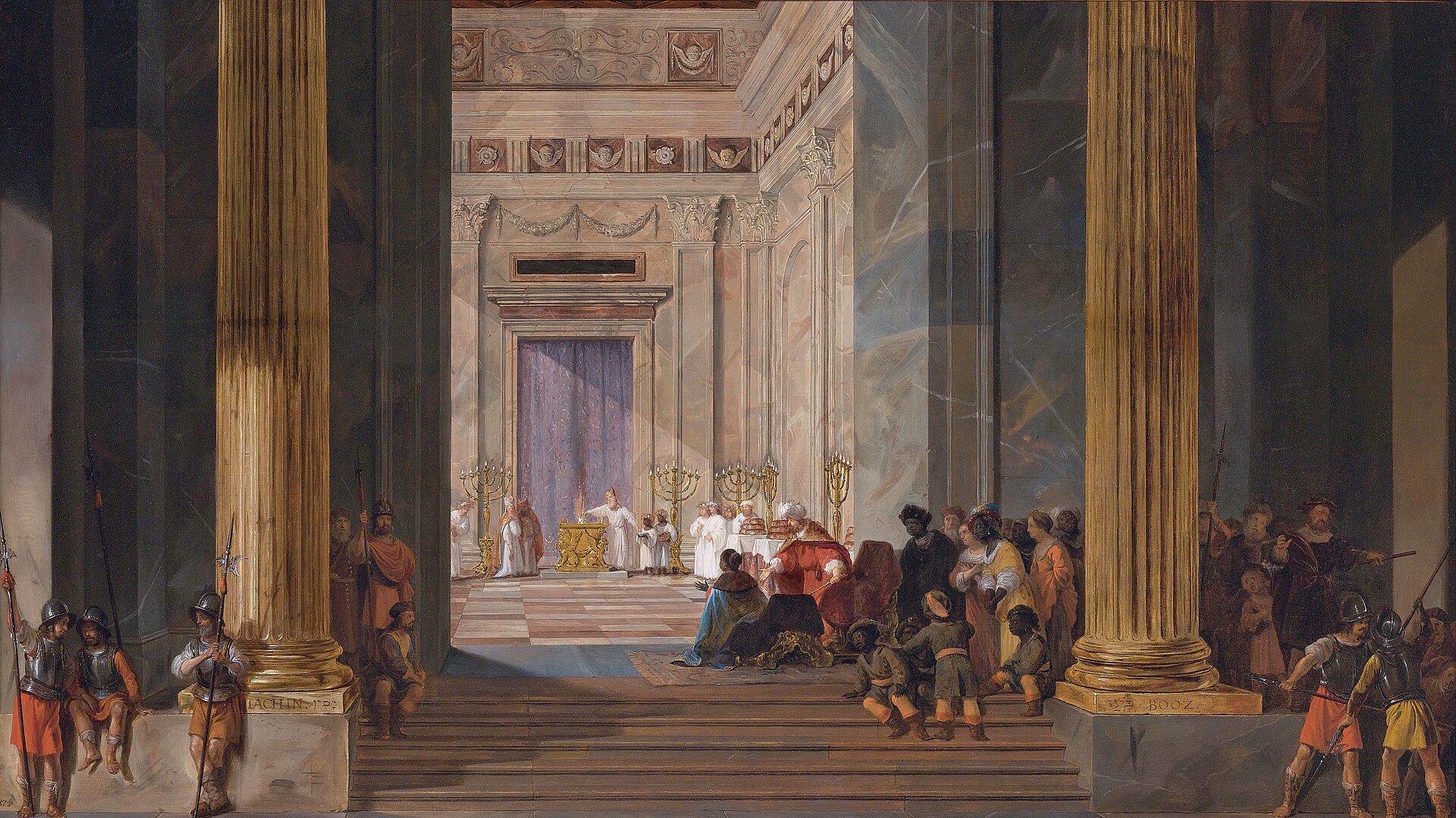
The story of Sheba and Solomon, told plainly, is this: a foreign queen, having heard reports of a king's extraordinary wisdom and wealth, traveled a great distance with a caravan of gifts to test the reports herself, arrived with a set of difficult questions meant to expose any pretender, found every question answered to her satisfaction, and left having exchanged treasure, trade, and blessing. Scripture records it in a single dense chapter. Legend, over the following two thousand years, has filled in nearly everything the chapter left out — her name, her homeland, and what, if anything, passed between the two sovereigns beyond conversation. Both the sparse original and the long afterlife it generated repay close attention.
The Biblical Account of Sheba and Solomon
The core narrative appears in 1 Kings 10 and again, nearly word for word, in 2 Chronicles 9. The queen, hearing of Solomon's fame "concerning the name of the Lord," arrives in Jerusalem with camels bearing spices, an enormous quantity of gold, and precious stones, and proceeds "to prove him with hard questions." The text is specific that she held nothing back and Solomon left nothing unanswered: "there was not any thing hid from the king, which he told her not." Having witnessed his household, his officials, his cupbearers, and the burnt offerings he made, she is described as left "breathless" — the Hebrew idiom is closer to having no more spirit in her.
What follows is not romance but statecraft. She praises his God and his kingdom, gives him gold, spices "such as came no more in such abundance" afterward, and precious stones. Solomon, in turn, gives her "all her desire, whatsoever she asked" beyond what he offered from his own royal bounty. Then she returns home. The entire episode, gift exchange included, reads as a formal diplomatic and trade visit between two heads of state, framed by the biblical author as evidence of Solomon's God-given wisdom rather than as a private encounter between individuals.
Where Sheba Actually Was
The text never names her personally — "Queen of Sheba" is a title, not a name — and identifying her homeland has occupied historians for over a century. The leading candidate is Saba, an ancient South Arabian kingdom centered in what is now Yemen, which controlled the lucrative overland trade in frankincense and myrrh moving north toward the Mediterranean. Sabaean inscriptions confirm a sophisticated kingdom with queens among its rulers during roughly the right era, and the goods the Bible lists — gold, spices, precious stones — match what a Sabaean trade delegation would have carried. A rival tradition, embraced most strongly in Ethiopia, places her homeland in the Ethiopian highlands, and holds that the queen's visit shaped an entire nation's identity for the next three thousand years.
Either location makes political sense. Solomon's kingdom sat astride the trade corridors linking Africa, Arabia, and the Mediterranean; a monarch whose caravans depended on safe passage through Israelite territory had every reason to negotiate directly with the king controlling it, and every reason to confirm his reputation for fair dealing before committing to it.
The Riddles: Testing Wisdom Before Trusting It
The Bible states that she came "to prove him with hard questions" but never records what those questions were, and this silence became an invitation. Jewish midrash and later Islamic tradition supplied dozens of riddles over the centuries: distinguishing a bouquet of real flowers from artificial ones by scent alone, identifying which of several nearly identical children shared one mother, discerning truth from clever imitation. Whatever the specific content, the shape of the test matters more than its details. She did not accept a report of wisdom; she designed instruments to verify it — an ancient formalization of a principle any serious student of a wisdom tradition eventually learns: a teaching's worth is proven by testing, not by testimony.
The same principle runs through the tradition's account of King Solomon as more than a historical monarch — a keeper of knowledge whose authority rested on demonstrated understanding rather than title. Her arrival with riddles in hand is, read this way, a model for how any claim to wisdom ought to be approached: with rigorous scrutiny, not credulity.
The Kebra Nagast and the Ethiopian Solomonic Line
No account of Sheba and Solomon is complete without the Kebra Nagast, "The Glory of Kings," Ethiopia's national epic compiled in its present form around the fourteenth century. It names the queen Makeda and holds that during her stay in Jerusalem she conceived a son by Solomon, who was later born in Ethiopia and named Menelik. The Kebra Nagast further holds that Menelik, grown to manhood, traveled to Jerusalem to meet his father, and returned home carrying the Ark of the Covenant to Aksum, where Ethiopian tradition maintains it remains guarded to this day. On the strength of this account, Ethiopia's monarchy — a line that endured, with interruptions, until Emperor Haile Selassie was deposed in 1974 — claimed direct descent from Solomon himself, and the title "Lion of Judah" borne by Ethiopian emperors traces to this same claim.
Historians read the Kebra Nagast as foundational legend rather than documentary record, written centuries after the events it describes to ground a young Christian kingdom's legitimacy in the oldest lineage its authors could invoke. That does not make it worthless; the story enshrines a culture's conviction that wisdom, once truly encountered, is not merely admired but carried forward.
"And she said to the king, It was a true report that I heard in mine own land of thy acts and of thy wisdom. Howbeit I believed not the words, until I came, and mine eyes had seen it: and, behold, the half was not told me." — 1 Kings 10:6-7
Sheba and Solomon in the Mystery School Lineage
Within the initiatory lineage that traces its own founding to Solomon, the Queen of Sheba is not treated as a footnote to a greater king's story. She is honored in her own right among the tradition's historical initiates — remembered as the sovereign who refused to accept a reputation for wisdom on hearsay, who traveled at real cost and real risk to verify it in person, and who, having verified it, became what the tradition calls a bridge between kingdoms and sacred knowledge. That framing changes the emphasis of the whole encounter. It is not, first, a story about a king impressing a visitor. It is a story about two sovereigns of complementary domains — one seated in the north with a temple and a throne, one arriving from the south with trade routes and her own accumulated wisdom — meeting as equals, each capable of recognizing the other's authority because each already carried real authority of their own.
Initiates describe this pattern as recurring throughout the history of transmitted wisdom: genuine understanding recognizes genuine understanding across the boundaries of culture and religion that would otherwise keep two traditions separate. The tradition holds that this recognition, not conquest, is what allowed teachings to move between civilizations — two people each already prepared to see clearly. The same theme, wisdom examined rather than merely inherited, runs through this site's essay on the wisdom of Solomon.
What the Story of Sheba and Solomon Still Teaches
Strip away the gold, the camels, and the centuries of embellishment, and the encounter of Sheba and Solomon leaves a short, durable lesson. Wisdom that matters will withstand direct examination; a teacher, a text, or a tradition worth trusting does not ask to be taken on faith alone. The queen's willingness to travel, to question, and to look for herself before she believed is itself the more instructive act in the story — arguably more instructive than any answer Solomon gave her. For the modern seeker weighing which teachings, teachers, or traditions deserve real trust, her method has not aged: go and see, ask the hard question, and only then decide what the encounter was worth.
Walk the Path of the Initiate
These teachings come alive in The Initiated — Paul Schulz's introduction to the living mystery school tradition.
Get the BookFrequently Asked Questions
Who were Sheba and Solomon?
Solomon was the third king of Israel, ruling roughly 970-930 BCE and remembered for the Jerusalem Temple and for wisdom literature attributed to him. The Queen of Sheba was the sovereign of a wealthy southern kingdom, likely centered in what is now Yemen, who traveled north to test Solomon's famed wisdom for herself and to open trade relations between their two realms.
Was the Queen of Sheba a real historical person?
Almost certainly a real title, if not a single fully documented individual. Archaeology confirms that the ancient kingdom of Saba in South Arabia controlled the incense and spice trade and was ruled by monarchs with the authority to conduct exactly this kind of state visit around the time Solomon reigned. No inscription names her, but the scale of the trade the Bible describes matches what historians know of Sabaean commerce.
What riddles did the Queen of Sheba ask Solomon?
Scripture does not preserve the specific wording of her questions, only that she came to test him with hard questions and that he answered all of them, leaving nothing hidden from her. Later Jewish and Islamic legend filled the gap with riddles about distinguishing real flowers from artificial ones, or telling which of several children shared a mother, framing the exchange as a formal trial of discernment rather than trivia.
What does the Kebra Nagast say about Sheba and Solomon?
The Kebra Nagast, Ethiopia's fourteenth-century national epic, holds that the Queen of Sheba (called Makeda) conceived a son by Solomon during her visit, and that this son, Menelik I, founded the Solomonic dynasty of Ethiopian kings. The tradition also holds that Menelik brought the Ark of the Covenant to Aksum. Historians treat this as a foundational legend that gave Ethiopia's monarchy sacred legitimacy, not as verified history.
What does the meeting of Sheba and Solomon mean in the mystery school tradition?
Within the initiatory lineage that traces itself to Solomon, the Queen of Sheba is honored as one of the tradition's historical initiates in her own right — a sovereign who would not accept a reputation for wisdom on hearsay and traveled to verify it directly, then became a bridge carrying sacred knowledge between two kingdoms. Initiates read the story less as romance and more as a teaching on testing wisdom before trusting it.