King Solomon Treasure: What the Bible Actually Records, and What Legend Added
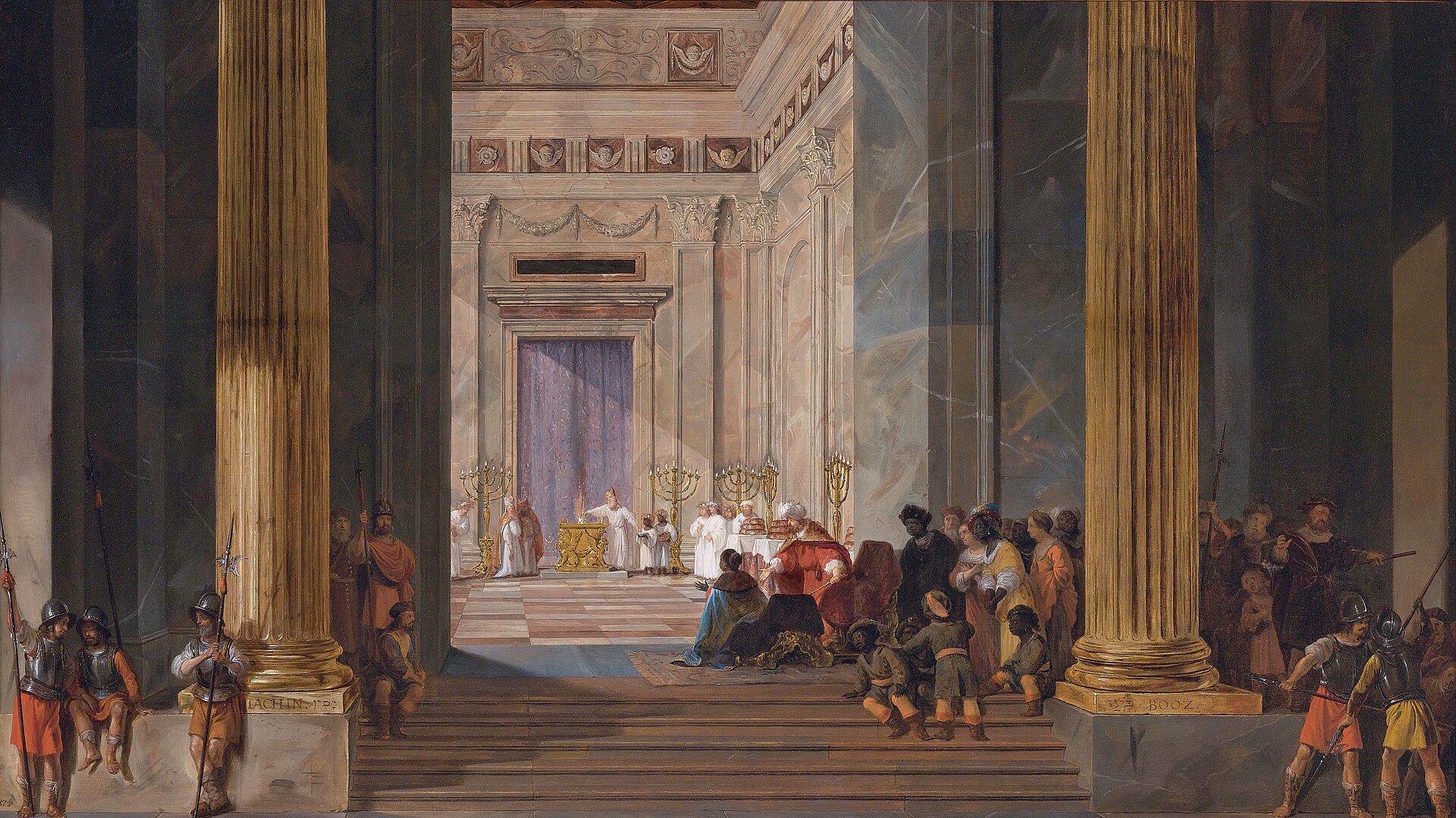
King Solomon treasure, in scripture, is not a hidden hoard waiting to be discovered — it is a documented annual delivery. 1 Kings 10:14 states plainly that six hundred and sixty-six talents of gold came to Solomon every year, gathered through trade fleets, tribute, and gifts from visiting rulers, and spent on a Temple, a palace, and a throne room designed to broadcast the wealth of the God he served. The famous "lost mines" belong to a nineteenth-century novel, not to the Hebrew Bible. What the text actually describes is stranger than the legend: named ships, named trade routes, an exact weight of gold, and a treasury that emptied within a generation of the king's death.
The Six Hundred Sixty-Six Talents: What 1 Kings Actually Records
The core figure appears in a single, unambiguous verse:
"Now the weight of gold that came to Solomon in one year was six hundred threescore and six talents of gold, beside that he had of the merchantmen, and of the traffick of the spice merchants, and of all the kings of Arabia, and of the governors of the country." — 1 Kings 10:14-15, KJV
A talent was a unit of weight rather than a coin, and most scholars place it at roughly seventy-five pounds — which would put the annual delivery named in that verse at somewhere near twenty-five tons of gold, and that figure explicitly excludes what came separately from merchants, spice traders, Arabian kings, and provincial governors. 2 Chronicles 9:13 repeats the same six hundred sixty-six figure almost word for word, one of the few places the two overlapping royal histories agree on a specific number rather than a general claim of wealth. What the text does not do is total the figure across Solomon's reign, or describe it as buried, hidden, or stored in a single location. It describes a recurring delivery, and it describes, in careful detail, where that gold went.
Ophir, Tarshish, and the Ships That Brought It Home
Solomon did not simply collect tribute — he built a merchant navy. 1 Kings 9:26-28 records that he constructed a fleet at Ezion-geber, on the Red Sea, with Hiram, king of Tyre, who supplied sailors "that had knowledge of the sea." That fleet sailed to a place called Ophir and returned with four hundred and twenty talents of gold — 2 Chronicles 8:18 gives four hundred fifty, a small discrepancy typical of how the two histories transmit numbers. Ophir's actual location is one of the oldest open questions in biblical geography — proposals have placed it in southern Arabia, East Africa, and India, with no scholarly consensus settling the matter. A separate, longer-range operation is named in 1 Kings 10:22: "once in three years came the navy of Tharshish, bringing gold, and silver, ivory, and apes, and peacocks" — this fleet, not a mine, is what scripture credits with the exotic goods later legend compresses into buried treasure.
The Queen of Sheba's Gifts
The single largest documented gift to Solomon's treasury came from a visiting monarch, not a mining operation. When the Queen of Sheba arrived to test Solomon's wisdom with hard questions, she came, the text says, "with a very great train, with camels that bare spices, and very much gold, and precious stones" (1 Kings 10:2). Before she left, having found Solomon's wisdom exceeded what she had been told, she gave him a hundred and twenty talents of gold and spices in a quantity the text calls unmatched (1 Kings 10:10). Solomon, in turn, "gave unto the queen of Sheba all her desire, whatsoever she asked" (1 Kings 10:13), beyond the customary royal gifts. The fuller diplomatic and legendary weight of that meeting — including the later Ethiopian tradition that makes it the origin of a royal dynasty — is covered in the essay on Sheba and Solomon.
The Ivory Throne and the House of the Forest of Lebanon
Scripture spends more verses describing what Solomon built with the gold than describing the gold itself. 1 Kings 10:18-20 details a throne of ivory overlaid with gold, six steps leading up to it, two lions beside the armrests and twelve more on the steps — "there was not the like made in any kingdom." 1 Kings 10:21 makes the point unmistakable: even his drinking vessels were gold, for "silver... was nothing accounted of in the days of Solomon." He also built the House of the Forest of Lebanon (1 Kings 7:2-5), a pillared hall that stored gold shields — two hundred large and three hundred smaller, per 1 Kings 10:16-17, a detail that matters directly to what happened next.
King Solomon's Mines: The Legend Scripture Never Told
The phrase "King Solomon's Mines" comes from a title, not a text. H. Rider Haggard published the adventure novel under that name in 1885, inventing a lost African diamond mine and sending fictional explorers after it; the book became one of the best-selling works of its era and shaped how readers have pictured Solomon's wealth ever since. Nothing in the Hebrew Bible names a mine Solomon owned, worked, or hid — the gold it describes arrives by ship and by tribute, not by excavation.
There is a real archaeological site the legend sometimes gets attached to. Copper-smelting operations in the Timna Valley and at Khirbat en-Nahas in Jordan have been dated to the tenth century BCE — Solomon's approximate era — and popular writing has occasionally called them "Solomon's mines" on that basis. The scholars who excavated them generally attribute the work to the Edomites, a neighboring kingdom, and the metal involved is copper, not gold. The overlap in dates is genuine; the attribution to Solomon himself is not something the archaeological record establishes.
What Became of the Treasure
The most concrete answer to what happened to Solomon's wealth arrives within five years of his death. 1 Kings 14:25-26 records that Shishak, king of Egypt — identified by most historians with the pharaoh Shoshenq I — marched on Jerusalem during the reign of Solomon's son and successor, Rehoboam, and "took away the treasures of the house of the LORD, and the treasures of the king's house... and all the shields of gold which Solomon had made." Those gold shields, described in loving detail two chapters earlier, are the specific loss the text names — a rare case where scripture tracks a single object from creation to removal. The larger succession crisis that opened the door to that loss is told in full in the essay on Solomon's son Rehoboam.
How the Mystery Tradition Reads Solomon's Wealth
Within the initiatory lineage Paul Schulz teaches, Solomon's gold is read as illustration rather than as the point itself. The tradition holds that Solomon's wealth followed from his wisdom, not the reverse — that a mind aligned with the deeper laws governing creation draws material abundance as one consequence among many, not as the goal of the work. What the tradition finds instructive is not the size of the hoard but its trajectory: gathered through genuine enterprise, and lost within a single generation once the wisdom that organized it was no longer at the center of the throne. The fuller account of what the tradition claims Solomon's wisdom actually was is told in the essay on King Solomon and the mystery school tradition. Gold accumulated without that wisdom, the tradition holds, is always temporary — and scripture's own narrative, glory under Solomon and plunder under his son, reads as confirmation of exactly that principle. The mines Rider Haggard imagined never needed to exist; the ships, the tribute, and the loss recorded in 1 Kings are dramatic enough on their own.
Walk the Path of the Initiate
These teachings come alive in The Initiated — Paul Schulz's introduction to the living mystery school tradition.
Get the BookFrequently Asked Questions
How much gold did King Solomon have?
1 Kings 10:14 says six hundred and sixty-six talents of gold came to Solomon in a single year, not counting what came separately through merchants, Arabian kings, and regional governors. A talent was a unit of weight, not a coin, and scholars estimate it at roughly seventy-five pounds — meaning the annual delivery alone weighed in the range of twenty-five tons. That figure covers one year of Solomon's reign, not the full treasure accumulated across it.
Where did Solomon's gold actually come from?
Scripture names several channels at once: a merchant fleet built with Hiram of Tyre that sailed to Ophir and returned with gold, almug wood, and precious stones (1 Kings 9:26-28); a separate fleet of "ships of Tarshish" that came in every three years bearing gold, silver, ivory, apes, and peacocks (1 Kings 10:22); tribute from regional kings and governors; and gifts from visiting rulers, most famously the Queen of Sheba.
Is King Solomon's Mines a real place?
Not as scripture describes it. "King Solomon's Mines" is the title of an 1885 adventure novel by H. Rider Haggard and has no biblical source — the Bible never names a mine Solomon owned or worked. Real copper-mining sites in the Timna Valley and at Khirbat en-Nahas, dated to the tenth century BCE, are sometimes popularly linked to Solomon's era, but archaeologists generally attribute them to Edomite operations, not a Solomonic gold mine.
What happened to Solomon's treasure after he died?
A significant portion was lost within five years of Solomon's death. 1 Kings 14:25-26 records that Shishak, king of Egypt, marched on Jerusalem during the reign of Solomon's son Rehoboam and took the treasures of both the Temple and the royal palace, including the gold shields Solomon had commissioned. What remained continued to be spent, given as tribute, or plundered by later invasions across the divided kingdom's history.
Did the Queen of Sheba really give Solomon gold?
Yes. 1 Kings 10:10 records that she gave him a hundred and twenty talents of gold, along with a great quantity of spices and precious stones, describing it as the largest single gift of spices Solomon ever received. The exchange is presented in the text as reciprocal — Solomon gave her whatever she asked for in return, beyond the customary royal gifts.