Kybalion: What the Book Actually Teaches and Why It Still Matters
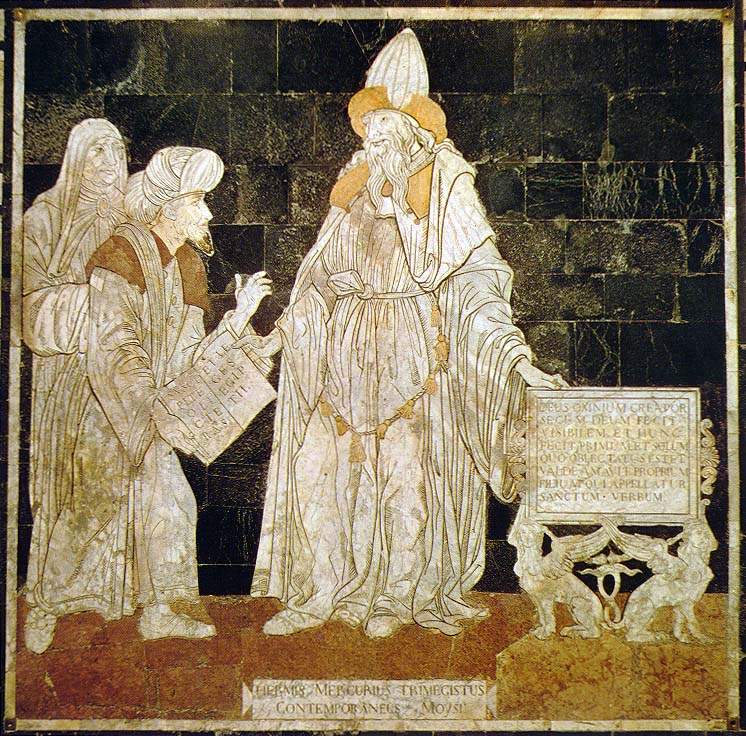
The Kybalion is a short 1908 book, published under the name "Three Initiates," that claims to distill the oral hermetic teachings of ancient Egypt into seven working principles governing mind, matter, and fate. It does not read like scripture and it does not read like a self-help manual, though it has been mistaken for both. It reads like a set of tools — axioms meant to be tested against a life, not simply memorized and set back on a shelf.
What Is the Kybalion, Exactly?
In full, the book's original title is The Kybalion: A Study of the Hermetic Philosophy of Ancient Egypt and Greece. It is dedicated to Hermes Trismegistus, whom the text calls "the Great-Great" and "the Master of Masters," and its opening pages make an unusual claim for a printed book: that the material inside had never before been fully written down, having instead passed from teacher to student, "lips to ear," across centuries, precisely to keep it out of hands unprepared to use it well.
Whatever one makes of that claim historically, the book itself is organized with real discipline. After a short introduction and a chapter framing hermetic philosophy generally, it lays out seven principles one at a time, then spends its remaining chapters working through the implications — mental transmutation, planes of correspondence, the divine paradox of a changeless All expressing itself through endless change, and a closing chapter of axioms meant to be applied directly.
The History Behind the Kybalion
The book was first printed in 1908 by the Yogi Publication Society, a small Chicago press associated with the American New Thought movement, which was then in full flower. It entered the public domain decades ago, which is why dozens of reissued and annotated editions now circulate under different publishers and covers, most of them reproducing the 1908 text unchanged.
The Kybalion opens with its own account of why so little had ever been written on the subject before it, and why the authors judged the moment right to break with that habit of silence:
"The lips of Wisdom are closed, except to the ears of Understanding." — The Kybalion (1908)
That line is not decoration. It is the book's whole argument for its own existence: the teaching had been kept close not out of vanity but because handing a tool to someone unready to use it tends to do more harm than good. The authors present themselves as breaking silence carefully, offering the axioms alongside enough explanation that a genuine student — not merely a curious reader — could put them to use.
The Seven Principles the Kybalion Teaches
The heart of the book is a set of seven principles the authors present as universal, applying equally to the movement of planets and the movement of a single troubled thought. Mentalism holds that the universe is mental in its fundamental nature. Correspondence holds that the patterns on one plane of existence echo on every other — the old formula "as above, so below." Vibration holds that nothing in the universe rests; everything is in motion, differing only in rate. Polarity holds that opposites are really two extremes of a single scale, capable of being shifted rather than simply fought. Rhythm holds that all things swing between poles in a measurable tide. Cause and Effect holds that nothing happens by chance, only by law not yet understood. Gender holds that masculine and feminine forces operate on every plane, not the physical alone, and that creation requires both.
This essay keeps that list brief on purpose. Each principle carries enough weight to deserve its own treatment, with the historical background, the objections it raises, and the practical exercises the tradition attaches to it — all of which this site covers at length in its companion essay on hermeticism principles.
Who Wrote the Kybalion?
The title page names no one — only "Three Initiates," with no further identification in the original edition. That anonymity has never fully lifted. The strongest circumstantial case, built from comparing vocabulary and argumentative habits across the Yogi Publication Society's catalog, points to Chicago writer William Walker Atkinson as principal author, very likely working alongside at least one collaborator. No signed manuscript has surfaced to settle it as fact rather than strong inference, and the question of why the authors chose to hide at all turns out to matter almost as much as the answer. This site traces that case, and the reasoning behind the concealment, in a full companion essay on the Kybalion's three initiates.
How to Read the Kybalion as a Student, Not a Consumer
Initiates who have worked with this text for years tend to give the same advice to newcomers, and it runs against the habits most readers bring to a short book: do not read it once and file it as understood. The Kybalion itself warns against this in its closing pages, noting that a student who cannot work out how to apply its principles has not yet actually received them — the axioms remain, in the book's own phrase, "words, words, words" until put into practice.
A useful method is to read the book straight through once for its overall shape, then return to each principle separately and test it against something real — a recurring mood you cannot shake, a pattern that keeps repeating in your relationships, a decision you keep deferring. Polarity, for instance, is not abstract once you have actually tried shifting your attention from a fear toward its opposite quality and watched the fear's grip loosen. Rhythm is not abstract once you notice how reliably your own moods swing and how much steadier you become simply by expecting the swing rather than being surprised by it each time.
The Kybalion in the Mystery School Tradition Today
Inside the living mystery school lineage, the Kybalion is treated less as a historical curiosity than as a compressed curriculum — seven principles that a student spends years, not weeks, actually integrating. The tradition holds that the book's oral roots run far deeper than its 1908 publication date suggests, describing a teaching lineage traced back thousands of years to Hermes Trismegistus himself, carried by initiates who wrote almost nothing down and taught almost entirely mouth to ear. Whether or not every historical link in that chain can be documented to a modern scholar's satisfaction, the practice the book describes has clearly outlasted its publishers, its various editions, and even the certainty of its own authorship.
What survives is the method: a small number of laws, stated plainly, meant to be worked rather than admired. That is finally why the book still circulates freely more than a century after it first appeared under three unnamed names — not because the mystery was solved, but because the principles kept proving themselves useful to anyone patient enough to actually apply them.
Walk the Path of the Initiate
These teachings come alive in The Initiated — Paul Schulz's introduction to the living mystery school tradition.
Get the BookFrequently Asked Questions
What is the Kybalion?
The Kybalion is a short hermetic text first published in 1908 under the byline "Three Initiates." It presents itself as a modern restatement of an oral teaching attributed to Hermes Trismegistus, organized around seven principles — Mentalism, Correspondence, Vibration, Polarity, Rhythm, Cause and Effect, and Gender — that the book claims govern mind, matter, and fate alike.
Who wrote the Kybalion?
No signed manuscript has ever surfaced. Stylistic and publishing-history evidence points most strongly to Chicago New Thought writer William Walker Atkinson as principal author, likely working with at least one collaborator inside the Yogi Publication Society that first printed the book. This site covers the authorship question in full in a companion essay.
Is the Kybalion based on real ancient Egyptian teachings?
The book frames itself as a distillation of teaching passed down from Hermes Trismegistus, a sage-figure tied to the real Hellenistic Hermetica of late antiquity. Historians generally treat the unbroken oral chain as a literary framing device rather than a documented lineage, though the seven principles it presents do draw on genuine currents in Hellenistic Hermeticism, Renaissance occult philosophy, and nineteenth-century New Thought.
What are the seven principles the Kybalion teaches?
Mentalism (the universe is mental in nature), Correspondence (as above, so below), Vibration (nothing rests, everything moves), Polarity (everything has two poles), Rhythm (everything flows out and in), Cause and Effect (nothing happens by chance), and Gender (masculine and feminine principles operate on every plane, not only the physical). Each is treated in depth in this site's companion essay on hermeticism principles.
What is the best way to start reading the Kybalion?
Read it once straight through for the shape of the argument, then a second time slowly, testing each principle against a real situation in your own life rather than treating it as abstract doctrine. The tradition holds that the book rewards practice over memorization — its axioms are meant to be applied, not merely quoted.