Menelik Son of Solomon: The Legend Behind Ethiopia's Royal Line
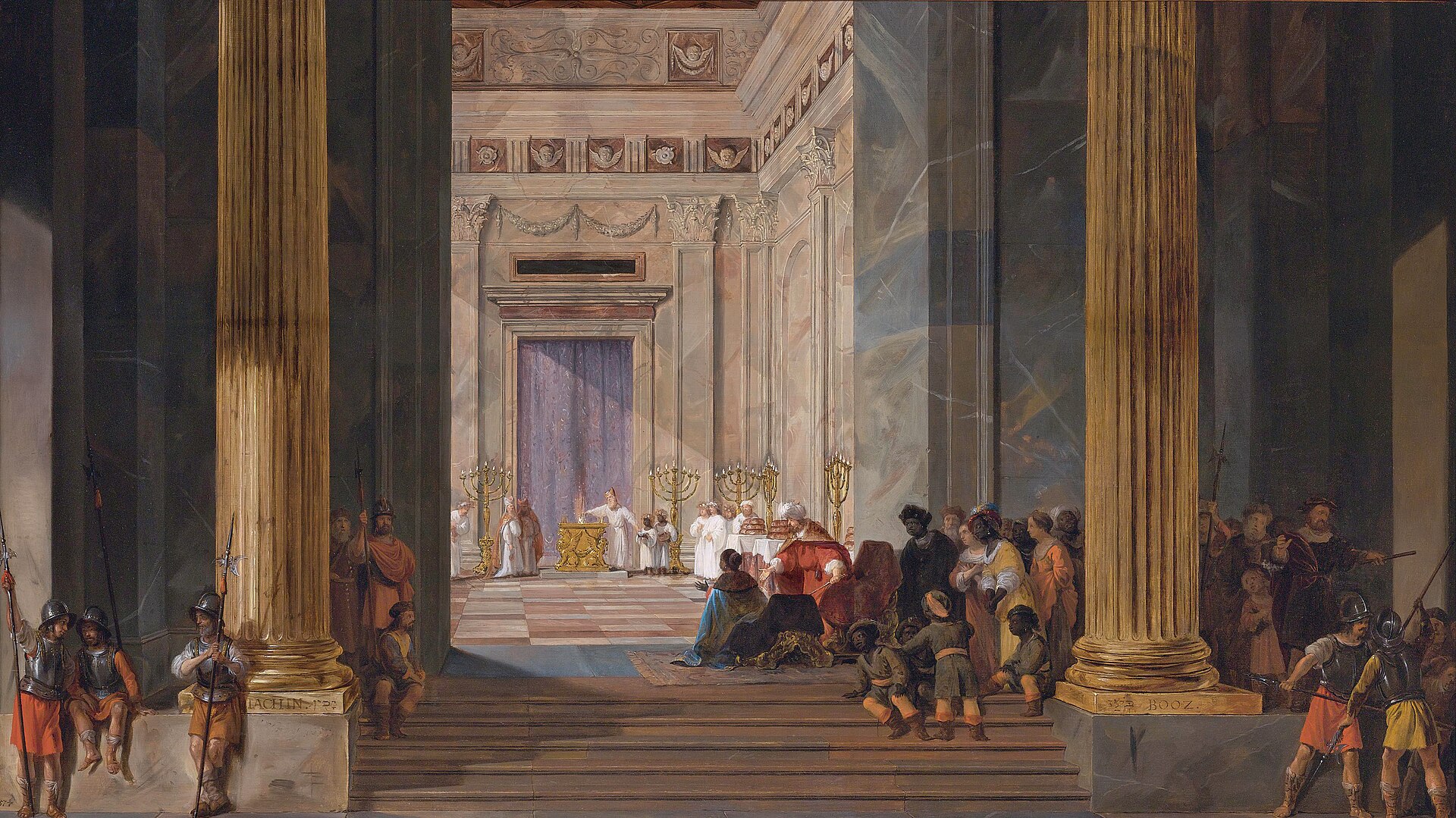
Menelik son of Solomon is the legendary founder of Ethiopia's imperial dynasty — the child the Kebra Nagast says was born to King Solomon of Israel and the Queen of Sheba after her famous visit to Jerusalem. According to that account, Menelik grew to manhood in Ethiopia, traveled north as a young man to meet the father he had never seen, and returned home carrying not only Solomon's blessing but, tradition insists, the Ark of the Covenant itself. Historians treat the story as founding legend rather than documented fact, yet for nearly three thousand years it did real work: it gave an African Christian kingdom a claim to biblical kingship that outlasted empires, and it still shapes how people today read the politics of an entire region.
Who Was Menelik, Son of Solomon?
In Ethiopian tradition, Menelik I is remembered as the first emperor of a line that would eventually be called Solomonic, after the father it claimed. The name itself is popularly glossed as "son of the wise man," though its exact etymology is debated among scholars of Ge'ez, the classical Ethiopian language in which his story was first fixed in writing. He does not appear in the Hebrew Bible at all; his entire existence rests on the Kebra Nagast, "The Glory of Kings," the national epic that reached its present form around the fourteenth century CE, drawing on older oral material to explain where Ethiopia's monarchy came from and why it deserved to rule.
That absence from scripture matters less to the tradition than it might seem. The meeting of Sheba and Solomon recorded in 1 Kings 10 is terse: a queen arrives, tests the king's wisdom, exchanges gifts, and departs. The Kebra Nagast exists precisely to answer the question that terseness leaves open — what, if anything, came of that meeting — and its answer is Menelik, a figure built to carry two royal bloodlines, two scriptures, and two continents' worth of sacred claim in a single person.
The Kebra Nagast's Account of Menelik, Son of Solomon, and the Ark
The narrative runs in careful stages. The queen, named Makeda in the Ethiopian text, conceives a son during her stay in Jerusalem and bears him after returning to her own kingdom. Raised without his father, Menelik eventually learns who he is and insists on making the journey north himself. Solomon, the text says, receives him with evident joy and wishes to keep him in Israel as his heir, but his counselors object to naming a foreign-born son over native claimants, and Solomon instead anoints Menelik king over Ethiopia and prepares to send him home with gifts and an honor guard.
That honor guard is where the story turns. The Kebra Nagast holds that the firstborn sons of Israel's leading families, assigned to accompany the young king home, could not bear to be separated from the Ark of the Covenant and secretly removed it from the Temple, leaving a copy in its place. By the time the caravan was well on its way and Solomon learned what had happened, the text says, he grieved but accepted the loss as the working of divine will — the Ark had chosen, in effect, to go where it was going. Menelik arrived in Ethiopia not merely as an anointed king but as the unwitting bearer of the nation's holiest object, and Ethiopian tradition has never let go of the claim since.
"Ethiopia stretcheth out her hands unto God," the Kebra Nagast declares of the kingdom Menelik founded — a line its compilers meant literally, as evidence that the Ark's presence had made Ethiopia a second seat of the covenant.
The Solomonic Dynasty Menelik Founded
Whatever its historical basis, the Menelik legend became the load-bearing wall of Ethiopian kingship for most of the last millennium. Emperors styled themselves as his direct descendants, and with him, descendants of Solomon and David by extension, a claim that did real political work by placing Ethiopia's crown inside the same biblical lineage Christians and Jews already regarded as sacred. The line was not unbroken in practice — the Zagwe dynasty held power for roughly three centuries before being displaced in 1270 by Yekuno Amlak, who justified the change precisely by asserting his own, superior claim to Solomonic blood through Menelik. From that restoration onward, Ethiopian emperors carried the title "Lion of Judah," Mo'a Anbessa, publicly binding the throne to the house the Kebra Nagast had invented for it generations earlier.
The dynasty, restored and reasserted again and again, proved remarkably durable. It survived the medieval wars that reshaped the Horn of Africa, the brief Italian occupation of the 1930s, and centuries of regional upheaval, ending only in 1974 when Emperor Haile Selassie I — the 225th sovereign in the traditional count running back through Menelik to Solomon — was deposed by a military government. Nearly seven hundred years of restored Solomonic rule, resting on a lineage no outside record can confirm, came to an end in the same century that put a man on the moon.
From Aksum to Jamaica: Why Menelik Still Matters
The Ethiopian Orthodox Tewahedo Church maintains that the Ark Menelik is said to have carried north has rested ever since in the Chapel of the Tablet beside the Church of Our Lady Mary of Zion in Aksum. By long custom a single guardian monk watches over it for life, accepting a vow that, once taken, he will not leave the chapel grounds again. No outsider is permitted to view the object itself, which keeps the claim permanently beyond the reach of verification — and, for believers, permanently beyond the reach of doubt.
The legend's reach extends well past Ethiopia's borders. Haile Selassie's full titulary, "Lion of Judah, Elect of God, King of Kings of Ethiopia," advertised his place as the latest link in Menelik's chain, and it was precisely that chain the Rastafari movement seized on when it emerged among Jamaicans in the 1930s. Reading his 1930 coronation against messianic passages in the Hebrew prophets and the Book of Revelation, early Rastas concluded that a monarch whose throne descended, however legendarily, from Solomon himself could not be an ordinary head of state. The claim that began as a medieval Ethiopian text justifying a royal succession ended up, six centuries later, shaping a Caribbean religious movement and, through reggae, a worldwide audience that had never heard of the Kebra Nagast.
What the Mystery School Tradition Makes of Menelik's Lineage
The initiatory lineage that traces its own founding to Solomon reads the Menelik story less as a genealogical dispute than as an illustration of how sacred authority actually travels. The tradition does not rest its own claim on bloodline in the literal sense Ethiopian chroniclers were defending; it rests on initiation — a chain of teacher to student, verified at each link, stretching back the same three thousand years the Kebra Nagast reaches for. Initiates point to Menelik's journey as a template for that kind of transmission: he did not inherit his father's wisdom automatically by being born to it, but had to travel, present himself, and be recognized before anything of real value passed to him. The crown and the Ark came only after the meeting, never before it.
Read this way, the story of Menelik, son of Solomon, sits comfortably beside the kingdom Solomon built as a second chapter in the same lesson: that what a tradition carries forward — a throne, an Ark, or a teaching — only remains legitimate so long as each generation can show it was actually received, not merely claimed. Ethiopia's emperors understood this well enough to keep repeating the claim for seven centuries. The tradition that still invokes Solomon's name today understands it the same way, measuring its own authority not in centuries alone but in an unbroken, demonstrable line of hands through which the knowledge actually passed.
Walk the Path of the Initiate
These teachings come alive in The Initiated — Paul Schulz's introduction to the living mystery school tradition.
Get the BookFrequently Asked Questions
Who was Menelik, son of Solomon?
Menelik I is the legendary figure the Kebra Nagast names as the son of King Solomon of Israel and the Queen of Sheba, born after her visit to Jerusalem. Ethiopian royal tradition credits him with founding the Solomonic dynasty, the line of emperors who ruled Ethiopia, with interruptions, from antiquity until 1974.
Is the story of Menelik and the Ark historically true?
Historians treat it as national founding legend rather than documented history. The Kebra Nagast was compiled in its present form around the fourteenth century, long after the events it describes, to ground Ethiopia's Christian monarchy in the most authoritative lineage its authors could invoke. No independent record confirms Menelik's birth or journey.
What happened to the Ark of the Covenant after Menelik took it to Ethiopia?
Ethiopian tradition holds that the Ark has rested since that journey in the Chapel of the Tablet beside the Church of Our Lady Mary of Zion in Aksum, watched over by a single guardian monk who, by custom, never again leaves the chapel grounds once he accepts the role.
Did the Solomonic dynasty in Ethiopia really end?
Yes. The line claimed by Menelik's descendants was interrupted for roughly three centuries by the Zagwe dynasty before being restored in 1270 by Yekuno Amlak, who asserted his own Solomonic descent. The restored line continued until Emperor Haile Selassie I, its 225th ruler by the traditional count, was deposed in 1974.
Why do Rastafarians connect Haile Selassie to Solomon and Menelik?
Haile Selassie's official titles, including Lion of Judah and King of Kings, rested on his place as the latest link in the line tradition traces to Menelik and Solomon. Rastafari, emerging in 1930s Jamaica, took this inherited biblical kingship as evidence of his messianic significance, reading his coronation through the lens of Christian and Hebrew scripture.