Psalm of Solomon: What the Ancient Text Says About Israel's Coming King
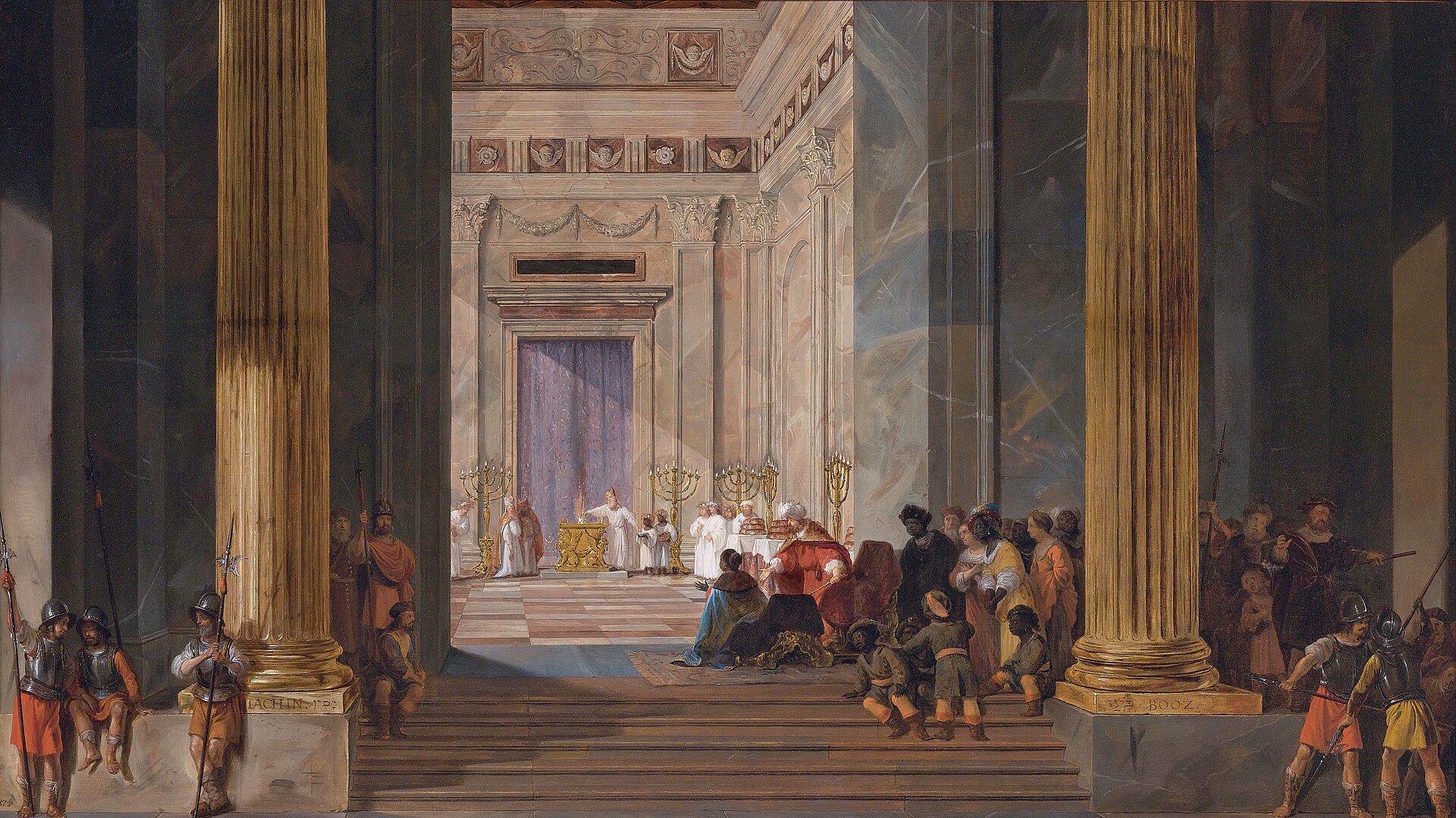
A Psalm of Solomon is one of eighteen Hebrew poems, composed by an unknown Jewish author roughly two thousand years ago and later attributed to King Solomon, that mourn a foreign army's capture of Jerusalem and look ahead to a righteous king who will set it right. Scholars know the full set as the Psalms of Solomon, but the phrase people actually search — a psalm of Solomon — points to the same body of work: poetry written centuries after Solomon's death, carrying his name for the authority it lent, and preserved outside the Bible in Greek and Syriac manuscripts rather than in Hebrew scripture.
This essay sets out what the Psalm of Solomon collection contains, why it bears Solomon's name despite being written so much later, what its most famous passage says about a coming king, and how the mystery tradition situates it within the larger legendary portrait of Solomon it has carried forward for generations.
What Is the Psalm of Solomon, Exactly?
The collection consists of eighteen psalms, composed originally in Hebrew, though that original has not survived. What remains comes down through Greek translation, supplemented by a later Syriac version, both rendered from a Hebrew source now lost. Read in sequence, the psalms trace a single historical wound and its aftermath: the corruption of Jerusalem's ruling priest-kings, the arrival of a foreign conqueror who breaches the city's walls and defiles the Temple, the humiliation and scattering that follow, and — running through nearly every psalm — a conviction that God remains just even when the righteous suffer. The tone is closer to Lamentations than to Proverbs: grief and hard-won hope, not the practical instruction usually associated with Solomon's name.
Most scholars connect the crisis behind the psalms to a datable event: the Roman general Pompey's capture of Jerusalem in 63 BCE, after he was invited into a succession dispute between two feuding Hasmonean brothers and ended up breaching the Temple precinct himself. Psalm 2 goes further, describing the death of an arrogant foreign ruler on foreign soil — a passage many read as a reaction to Pompey's own death in Egypt in 48 BCE, murdered by a court he had come to for refuge. If that identification holds, the collection was assembled across roughly a generation, by people who watched their capital fall and then watched the conqueror meet his own violent end.
Why Is It Called the Psalm of Solomon If He Didn't Write It?
Attaching Solomon's name to a text he never wrote was not forgery in the modern sense — it followed a well-established ancient convention. The same pattern produced the Testament of Solomon and the deuterocanonical Wisdom of Solomon: a later author, working in a tradition that already regarded Solomon as Israel's greatest psalmist and sage, wrote in his voice to lend the work weight it would not otherwise carry. The Bible itself supplies the seed of that reputation — 1 Kings 4:32 credits Solomon with three thousand proverbs and one thousand and five songs — so urgent, prayerful poetry addressing a national catastrophe had an obvious authorial voice to borrow.
The actual authorship is anonymous and almost certainly plural — a circle of writers within Jerusalem's Pharisaic milieu in the decades after Pompey's invasion. Their target was not Rome alone but the Hasmonean priest-kings whose corruption and illegitimate claim to a throne meant for David's line had, in the psalmist's view, invited the disaster. That combination — grief over foreign occupation joined to anger at native corruption — gives the collection a double edge, and explains why the psalms end not with a plea for Rome's withdrawal alone, but with a plea for a legitimate king.
The Vision of a Coming King in Psalm 17
Psalm 17 is the longest poem in the collection and the one scholars return to most, because it offers one of the fullest surviving pictures of Jewish messianic hope from the century before Christianity. It opens by acknowledging that God alone is Israel's true king, then turns to a direct petition: raise up the promised heir of David to rule in his place. The king it describes is no military strongman in the mold of the Hasmoneans or their Roman conquerors. He governs by holiness and wisdom rather than the sword, is said to be free of pride and sin, and is described — in the phrasing most English translations use — as a righteous king taught by God, strengthened by the holy spirit to judge justly and gather Israel's scattered people home.
"He will be a righteous king, taught by God, over them, and there shall be no unrighteousness among them in his days." — Psalms of Solomon 17 (paraphrased from standard English translations)
One detail draws particular scholarly attention: in the Greek text, the anticipated ruler is at one point called, in a phrase translators render as "the Lord's anointed" or "the Lord Messiah," among the earliest known instances of that combination applied to a hoped-for king. Because the psalm was written in a purely Jewish context, with no reference to Jesus, it shows what "messiah" already meant to ordinary Jerusalem worshippers before Christianity existed — a divinely appointed son of David who would restore just rule, not a title invented after the fact.
Is the Psalm of Solomon Part of the Bible?
It is not, in any tradition that reads scripture today. The Psalms of Solomon appear in no Jewish canon, no Catholic or Eastern Orthodox Bible, and no Protestant Bible or its Apocrypha — unlike the Wisdom of Solomon, which did make it into the Catholic and Orthodox Old Testament. The collection belongs instead to the broader category scholars call pseudepigrapha, writings composed under a revered figure's name that circulated widely without ever being formally accepted as scripture. That the text nonetheless survived, copied faithfully in Greek and Syriac, shows early readers valued it well beyond what its canonical status would suggest — the eighteen psalms are even listed in the table of contents of at least one major early biblical manuscript, though the psalms' own text did not survive in that particular copy.
How the Mystery Tradition Reads the Psalm of Solomon
The mystery school tradition does not treat the Psalm of Solomon as a lost prophecy to be decoded, nor does it weigh in on the historical debate over whom Psalm 17 originally described. It reads the text the way it reads most literature carrying Solomon's name — as a further layer of the legendary portrait built up around one historical figure over three thousand years of memory, each layer adding something the tradition considers instructive. As explored in our essay on the modern mystery school, the living lineage traces its own authority back to Solomon directly, and texts like this one — written in his voice long after his death, yet still describing a ruler who governs through wisdom rather than force — are read as continuing evidence of how durable that image of kingship became across the centuries.
What the tradition draws from Psalm 17 is less historical than practical: the king it describes rules his outer kingdom only because he has first been governed, inwardly, by wisdom rather than appetite. Initiates are taught to read that inward sovereignty as a template for their own development, not a throne to be inherited but a state of consciousness to be earned — the same territory covered in our essay on spiritual enlightenment, where sustained inner order, not a single dramatic event, is what the tradition holds as the true mark of a life rightly ruled.
Why the Psalm of Solomon Still Matters
Strip away the historical particulars and the Psalm of Solomon still offers something durable: a record of a community that watched its institutions fail and its capital fall, and answered both with an image of a better ruler rather than with despair. That the collection never entered any Bible has not diminished what it preserves — a genuinely ancient Jewish voice, writing in Solomon's name, describing the difference between power seized and power rightly held.
Walk the Path of the Initiate
These teachings come alive in The Initiated — Paul Schulz's introduction to the living mystery school tradition.
Get the BookFrequently Asked Questions
What is the Psalm of Solomon?
A Psalm of Solomon refers to any of eighteen Hebrew poems, together called the Psalms of Solomon, written by an unknown Jewish author or authors around the first century BCE and later attributed to King Solomon. The collection laments a foreign conqueror's capture of Jerusalem, condemns the corrupt priest-kings who ruled before him, and closes with hope in a righteous king still to come.
Is the Psalm of Solomon in the Bible?
No. The Psalms of Solomon are not part of the Hebrew Bible, the Catholic or Eastern Orthodox canon, or any Protestant Bible or Apocrypha. They belong to the wider body of Jewish pseudepigrapha — texts written under a famous figure's name that no major tradition ever accepted as scripture, though early Christian scribes clearly valued them enough to copy and preserve them.
Who actually wrote the Psalms of Solomon?
No author is named in the text itself. Scholars generally attribute the collection to a Jewish writer or circle of writers working in Jerusalem in the decades after 63 BCE, likely aligned with the Pharisees, who used Solomon's name because of his established reputation as Israel's psalmist and sage rather than because he wrote a word of it himself.
What does Psalm 17 say about the coming king?
Psalm 17, the longest and most quoted of the collection, asks God to raise up "the son of David" to purge Jerusalem of foreign and corrupt rule, govern without sin or violence, and lead by wisdom and holiness rather than by force. It is one of the fullest surviving portraits of Jewish messianic hope from the century before Christianity, describing a king taught directly by God and empowered by the holy spirit.
Why does the Psalm of Solomon matter for understanding the New Testament?
The Psalms of Solomon were written in the same world that produced the Gospels' first audience, and Psalm 17's portrait of a righteous, divinely taught, sinless king shaped the messianic expectations many first-century Jews carried. Reading it shows what "messiah" meant to ordinary people before the term was applied to Jesus, and how much of that older hope the New Testament writers were answering rather than inventing.