Solomon from Bible Times: How David's Son Became King
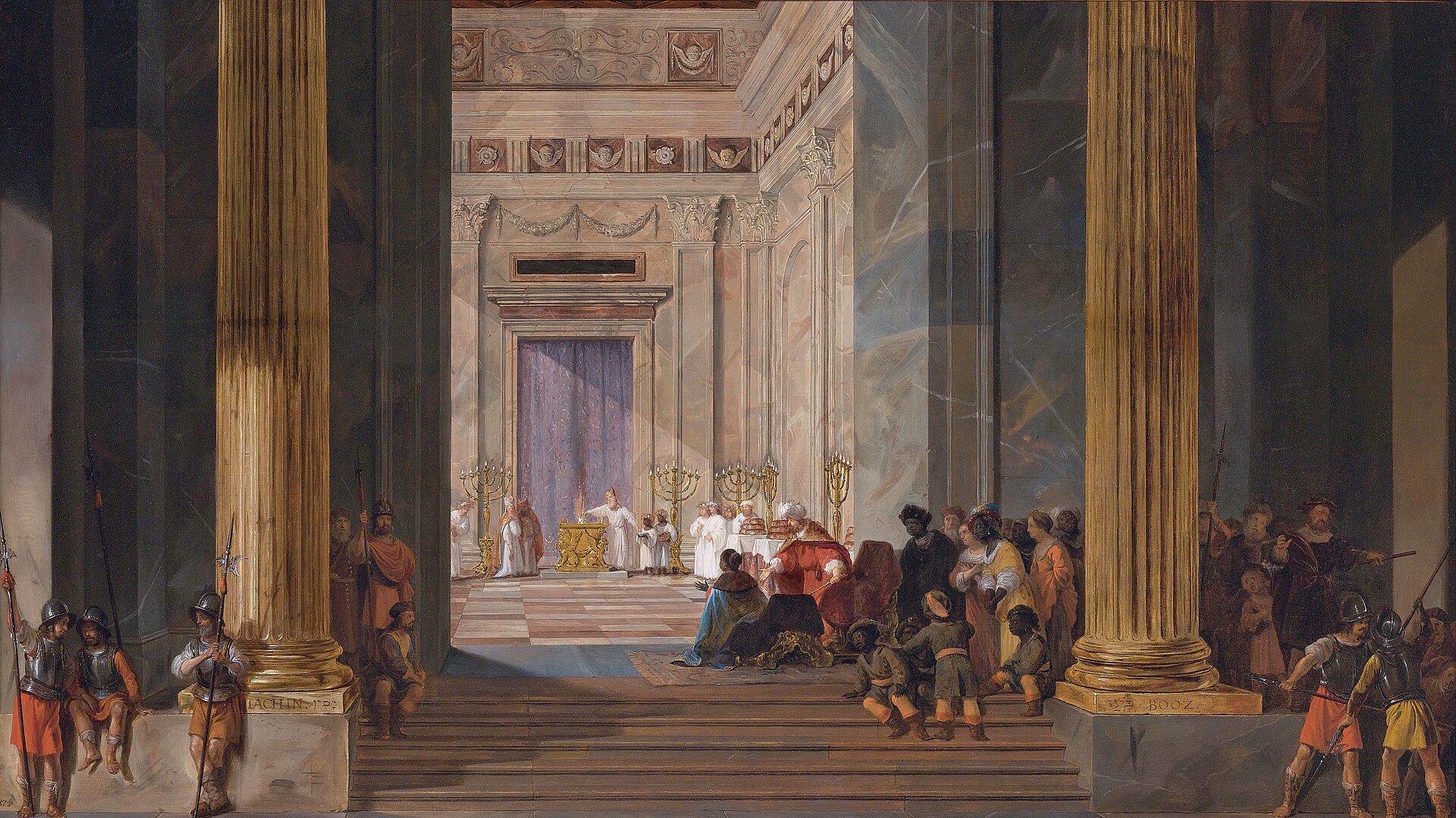
Solomon from Bible times is remembered as Israel's wisest king, but he did not simply inherit that title the way an eldest son inherits a farm. He was David's tenth son and Bathsheba's second child by David, not the natural heir by birth order, and he became king only because a rival's attempt to seize the throne forced the matter to a head while David was still, barely, alive. The story scripture tells in 1 Kings 1–2 is less a coronation than a crisis managed in real time — a dying king, a self-proclaimed rival, and a queen mother who understood exactly what was at stake if she waited even one more day to act.
The Household Solomon from Bible Times Was Born Into
Solomon's origins carry their own weight before the succession story even begins. His mother, Bathsheba, had been the wife of Uriah the Hittite, one of David's own soldiers, before David took her and arranged Uriah's death in battle to cover the affair — an episode the prophet Nathan confronted directly, telling David a parable about a rich man who stole a poor man's only lamb. The child born of that first union died in infancy, which the narrative frames as consequence rather than accident. Solomon was the child born afterward, and 2 Samuel 12:24–25 records something unusual for a royal birth account: the Lord "loved him," and Nathan gave the infant a second name, Jedidiah, meaning "beloved of the Lord." That detail matters, because it plants, early and quietly, the idea that this particular son of David carried a favor the text does not extend to his brothers.
Solomon from Bible Times and the Coup That Almost Worked
By the time David was elderly and confined to his bed, his fourth son Adonijah — older than Solomon and, by the ordinary logic of succession, next in line — began acting like a king before anyone had named one. He gathered chariots and horsemen, secured the backing of Joab, David's own battle-hardened commander, and the priest Abiathar, and held a sacrificial feast at En-rogel to which he invited his brothers but pointedly excluded Solomon, along with Nathan the prophet and Benaiah, the commander of David's personal guard. It was, in effect, a self-coronation staged just outside the walls of Jerusalem while the true king still breathed.
Nathan recognized the danger immediately and went to Bathsheba with a plan. She approached David and reminded him of an earlier promise — that Solomon, not Adonijah, would sit on his throne — and Nathan arrived soon after to confirm that Adonijah's feast was already underway. David acted without hesitation. He ordered Zadok the priest, Nathan the prophet, and Benaiah to set Solomon on the king's own mule and bring him down to the spring of Gihon, where Zadok anointed him with oil from the sacred tent and the trumpet sounded. The people's response was immediate and overwhelming — 1 Kings 1:40 describes a crowd whose rejoicing was loud enough that "the earth was split by their noise." Adonijah's guests heard it from En-rogel and understood at once what it meant. The feast broke up in panic; Adonijah fled to the altar and grasped its horns, the ancient claim to sanctuary, until Solomon agreed to spare him on the condition that he prove himself "a worthy man." It was a narrow, engineered victory, decided within hours rather than settled by any orderly rule of inheritance.
David's Final Charge
What follows in 1 Kings 2 is David's deathbed instruction to his son, and it is worth reading closely because it refuses to separate spiritual counsel from political reality. David tells Solomon to "be strong and show yourself a man," to keep God's statutes and commandments so that his line might endure — and then, in the same breath, names three men from his own unfinished business: Joab, whose past killings of rival commanders in peacetime David had never been able to punish without destabilizing his own reign; Barzillai's sons, who had shown David kindness and were to be rewarded; and Shimei, who had cursed David during Absalom's rebellion and whom David had spared under oath but never fully trusted. David hands his son not a clean throne but a ledger of accounts still open, and the honest reading of the text is that securing a kingdom in the ancient Near East meant closing those accounts, not merely praying over them.
Consolidating a Throne That Was Not Yet Secure
Solomon's early reign shows him doing exactly that. When Adonijah later requested Abishag, David's attendant in his final years, as a wife — a request with real political weight in that world, since taking a former king's concubine was itself a claim to legitimacy — Solomon read it as a renewed bid for the throne and had him executed. Joab, hearing of it, fled to the altar as Adonijah once had, but Solomon ordered Benaiah to strike him down even there, closing the account David himself had left open. Abiathar the priest was stripped of his office and sent home, which the text notes fulfilled an old prophecy against the house of Eli, and Shimei was confined to Jerusalem under threat of death, a confinement he eventually broke, sealing his own fate. However these episodes strike a modern reader, the tradition preserves them without softening, and 1 Kings 2:46 closes the account plainly: "the kingdom was established in the hand of Solomon."
What Comes After the Throne Is Secure
Only once the succession crisis is fully resolved does the more familiar Solomon appear — the king who travels to the high place at Gibeon and, offered anything by God in a dream, asks not for long life, wealth, or the defeat of his enemies but for an understanding heart to govern well.
"Give thy servant an understanding heart to judge thy people, that I may discern between good and bad." (1 Kings 3:9, KJV)
The narrative treats this request as the hinge of his reign: because he asked for wisdom rather than riches, riches and honor are given to him besides. What follows — the judgment between the two women claiming one child, the building of the Temple, the visit of the Queen of Sheba — is the Solomon most readers already know. But none of it happens in the text until the succession is settled, and that ordering is deliberate. Scripture is telling its readers that wisdom without a secured house to exercise it in is not yet wisdom that can act.
Solomon from Bible Times in the Living Tradition
The mystery school lineage I teach within traces its written record back more than three thousand years to Solomon himself, and it is this fuller picture — not only the wise judge but the son who had to secure his house before he could build anything lasting — that the tradition asks initiates to sit with. Just as the ancient mystery schools of Egypt and Greece held that authority over sacred knowledge had to be earned and consolidated through real trial before it could be transmitted, Solomon's own story insists that wisdom arrives after struggle, not instead of it. Centuries later, whole books would be written in Solomon's name by seekers reaching for that same current of hidden knowledge — a body of writing I look at in the Wisdom of Solomon and what the ancient texts actually teach — but the root the tradition keeps returning to is Solomon's own reign: a throne won through decisive action, then used to build something meant to outlast him.
Read this way, Solomon from Bible times is not a figure of easy inheritance but of hard-won stewardship — a reminder that the wisdom scripture most admires in him was inseparable from the difficult, unglamorous work of first making sure there was a kingdom left to be wise about.
Walk the Path of the Initiate
These teachings come alive in The Initiated — Paul Schulz's introduction to the living mystery school tradition.
Get the BookFrequently Asked Questions
Who was Solomon in the Bible?
Solomon was the third king of Israel, the son of David and Bathsheba, and the successor most closely associated with the building of the First Temple in Jerusalem. Scripture credits him with unmatched wisdom, vast wealth, and a reign remembered as Israel's golden age, though his later years are recorded as a period of religious and political decline.
How did Solomon become king if he wasn't David's firstborn?
Solomon was not next in line by birth order. He became king because his older half-brother Adonijah tried to seize the throne while David was still alive, and David responded by having Solomon anointed and publicly proclaimed king that same day, settling the succession before Adonijah's attempt could take hold.
What did David tell Solomon before he died?
According to 1 Kings 2, David's final charge to Solomon combined spiritual instruction — to walk in God's ways and keep his commandments — with specific political guidance about how to handle men David himself had never been able to fully settle accounts with during his own reign.
Did Solomon really ask God for wisdom instead of wealth?
Yes. The tradition holds that early in his reign, at a sanctuary in Gibeon, Solomon was offered anything he wished for and asked instead for an understanding heart to govern his people well. The account frames his subsequent wealth and honor as following from that request rather than being sought directly.
Is there evidence outside the Bible that Solomon existed?
Direct extra-biblical inscriptions naming Solomon have not surfaced, which is not unusual for rulers of that era and region. Archaeological debate continues over building remains at sites such as Megiddo, Hazor, and Gezer sometimes associated with his building program, but the certainty here rests on the textual tradition rather than a contemporary inscription.