Spiritual Awakening Books: The Ancient and Modern Texts Worth Actually Reading
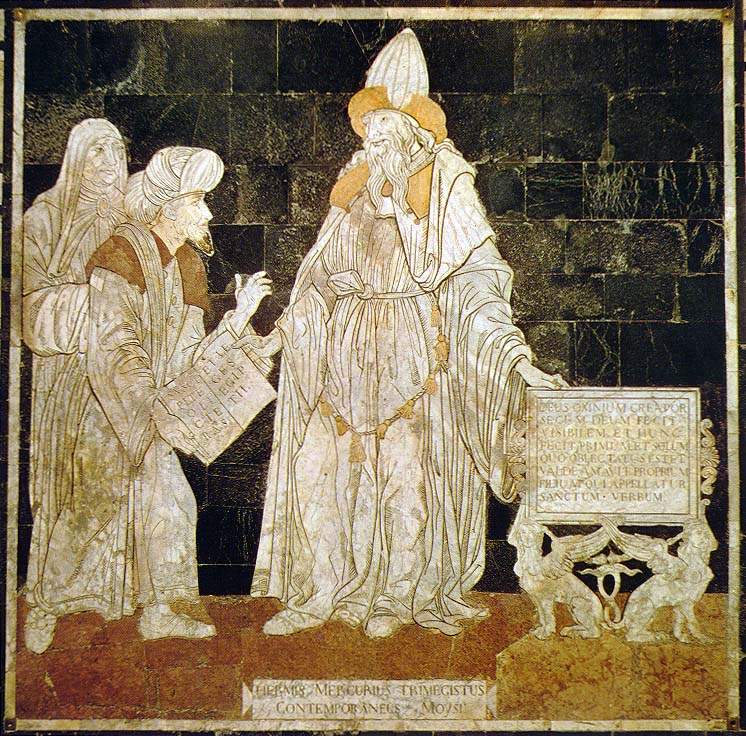
The best spiritual awakening books are not the twelve titles that recur on every algorithm-generated list. They come from three older sources: the hermetic philosophical tradition, biblical wisdom literature written centuries before the phrase "spiritual awakening" existed, and the handful of mystical texts that describe the crisis and reorientation an awakening actually involves. Most popular lists skip straight to twentieth-century paraphrases of these sources without naming the sources themselves, which is a little like recommending a translation without mentioning the original.
What Separates Real Spiritual Awakening Books From the Self-Help Shelf
A genuine spiritual awakening book does two things a self-help bestseller rarely bothers with. First, it names its own lineage plainly — where its ideas came from, who first wrote them down, and what tradition, if any, still carries them forward. Second, it treats the reader as a student rather than a customer, offering axioms and questions to work with over years rather than a five-step system promising results by next Tuesday. Neither quality guarantees a book will actually change anyone's life; that outcome depends on the reader far more than the text. But both qualities are reasonably good filters for separating books worth a slow, repeated reading from books written mainly to be finished once and shelved.
This is not a case against modern authors. Some of the most useful contemporary writing on awakening draws directly and honestly on older sources, crediting them rather than repackaging their ideas as original discoveries. The problem is not novelty; it is the growing number of titles that borrow the vocabulary of ancient wisdom traditions — chakras, kundalini, "the void," hermetic law — while stripping out the discipline, context, and lineage that gave those words their original weight.
The Hermetic Core of Any Serious Spiritual Awakening Books List
Start with The Kybalion, a short 1908 text published under the byline "Three Initiates" that organizes hermetic philosophy into seven working principles — Mentalism, Correspondence, Vibration, Polarity, Rhythm, Cause and Effect, and Gender. It is public domain, freely available, and dense enough that most readers underestimate it on a first pass. The book's own closing pages warn against exactly that mistake, insisting that a principle understood only in the abstract has not really been received at all:
"The lips of Wisdom are closed, except to the ears of Understanding." — The Kybalion (1908)
Behind the Kybalion sits an older and more diffuse body of writing, the Corpus Hermeticum — a collection of Greek philosophical dialogues from late antiquity, attributed to the sage-figure Hermes Trismegistus, that first developed many of the ideas the Kybalion later compressed into its seven principles. The Corpus is harder reading, translated from Greek rather than written for a popular American audience, but it is the deeper well the more accessible book draws from.
Biblical Wisdom Texts That Predate Every Modern Spiritual Awakening Book
Scripture contains its own wisdom literature, written specifically to address how a person ought to see and live rather than to record law or history. Ecclesiastes wrestles openly with meaning, mortality, and the limits of achievement in a way that reads remarkably close to contemporary awakening literature, just three thousand years earlier. The deuterocanonical Wisdom of Solomon goes further, personifying wisdom itself as a companion that "passes into holy souls" and renews them from age to age — language a modern reader could mistake for a New Age paperback if they did not know its actual date.
These texts carry a caution worth sitting with, though. Solomon is credited with more wisdom writing than almost any other biblical figure, yet his own son and heir, Rehoboam, inherited a united kingdom and split it within months through arrogance and bad counsel. Growing up surrounded by wisdom texts did not automatically transmit wisdom to the next generation. The tradition draws a direct lesson from this: a book can describe the path with total accuracy and still fail to walk anyone down it. Reading remains a beginning, not a substitute for the years of lived practice the texts themselves describe.
When a Tradition Left No Book At All
Not every awakening tradition produced a text a modern reader can simply order and read. The Eleusinian Mysteries, the most famous initiatory rite of the ancient Greek world, ran for roughly two thousand years and transformed thousands of initiates each generation, yet left behind no surviving manual describing what actually happened inside the sanctuary at Eleusis. Participants were bound under penalty of death to silence, and the tradition was transmitted entirely through direct participation rather than written instruction. What little is known comes from outside fragments and cautious references, never from an insider's account of the rite itself.
This matters for anyone building a reading list, because it is a reminder that books are one vehicle for awakening among several, not the only one. Some of history's deepest transformative traditions ran almost entirely on oral transmission and direct experience, treating the written word as, at best, a supplement to something that could not be fully captured on a page.
The Dark Night: A Different Kind of Spiritual Awakening Book
Saint John of the Cross's sixteenth-century poem and prose commentary, Dark Night of the Soul, belongs on this list for a different reason than the Kybalion or the wisdom texts. It does not offer principles to apply so much as a map of the disorientation that often accompanies real spiritual growth — the sense of abandonment, dryness, and loss that can follow an initial opening before a deeper, steadier union takes hold. Modern awakening literature tends to undersell this stage, focusing on peak experiences and skipping past the harder middle. John of the Cross wrote from inside that middle stretch, which is exactly why his four-hundred-year-old text still gets recommended to people going through something they cannot yet name.
How the Mystery School Tradition Reads These Books
Inside a living mystery school lineage, none of these texts are treated as standalone. They are read alongside direct teaching, under the same founding decree that runs through all of them: Know Thyself. The Kybalion supplies a working philosophy of mind and cosmos; the biblical wisdom texts supply a moral and devotional grounding; the mystical accounts supply an honest map of the difficult stretches. None substitutes for the others, and none substitutes for guided practice under someone who has already walked the path the books describe. The tradition holds that a book can orient a seeker and even accelerate their understanding, but the deeper transmission — the part that actually changes how a person lives — has always passed primarily through relationship, not through the page.
How to Actually Choose and Read a Spiritual Awakening Book
Favor primary sources over summaries wherever possible. A modern author's paraphrase of the Kybalion is rarely as useful as the Kybalion itself, which is short, public domain, and not actually difficult once a reader commits to it. Read slowly enough to test each idea against something real in your own life rather than collecting concepts the way one collects trivia. And treat the absence of a tidy, book-shaped answer as informative rather than disappointing — as the Eleusinian Mysteries demonstrate, some of the deepest transformative traditions in history left almost nothing written down at all, trusting instead in a form of transmission no page can fully hold.
Walk the Path of the Initiate
These teachings come alive in The Initiated — Paul Schulz's introduction to the living mystery school tradition.
Get the BookFrequently Asked Questions
What are the best spiritual awakening books to start with?
Begin with a primary text rather than a modern summary of one: the Kybalion for hermetic philosophy, the Wisdom of Solomon or Ecclesiastes for biblical wisdom literature, or Saint John of the Cross's Dark Night of the Soul for the mystical crisis tradition. Each is short, freely available in the public domain, and rewards slow, repeated reading far more than a single pass through a popular paraphrase.
Are spiritual awakening books actually useful, or just entertainment?
It depends entirely on the book and how it is read. A text grounded in a real tradition, read slowly and tested against one's own experience, can genuinely orient a person going through an awakening. A book skimmed once for its takeaways functions as entertainment regardless of its source material — the tradition holds that understanding comes from practice, not consumption.
Is the Kybalion a good spiritual awakening book for beginners?
Yes, with one caveat: it rewards a second and third reading more than a first. Its seven principles are stated plainly enough for a newcomer to follow, but their real value only becomes clear once a reader starts testing them against actual situations rather than treating them as trivia to memorize.
Do spiritual awakening books replace a teacher or a living tradition?
The tradition holds that they do not. A book can orient a person and supply language for what they are experiencing, but the mystery schools have always paired their texts with direct transmission from an initiated teacher, on the premise that some understanding only transfers through relationship and guided practice, not through reading alone.
Why do so many biblical books get treated as spiritual awakening books?
Because several of them were written explicitly as wisdom literature rather than law or history — Ecclesiastes, Proverbs, and the deuterocanonical Wisdom of Solomon all address how to live rightly and see clearly, which is precisely the territory a spiritual awakening occupies. Their age and canonical status do not disqualify them from that shelf; if anything, they are among the oldest entries on it.