Wisdom of Solomon KJV: What the 1611 Apocrypha Text Actually Says
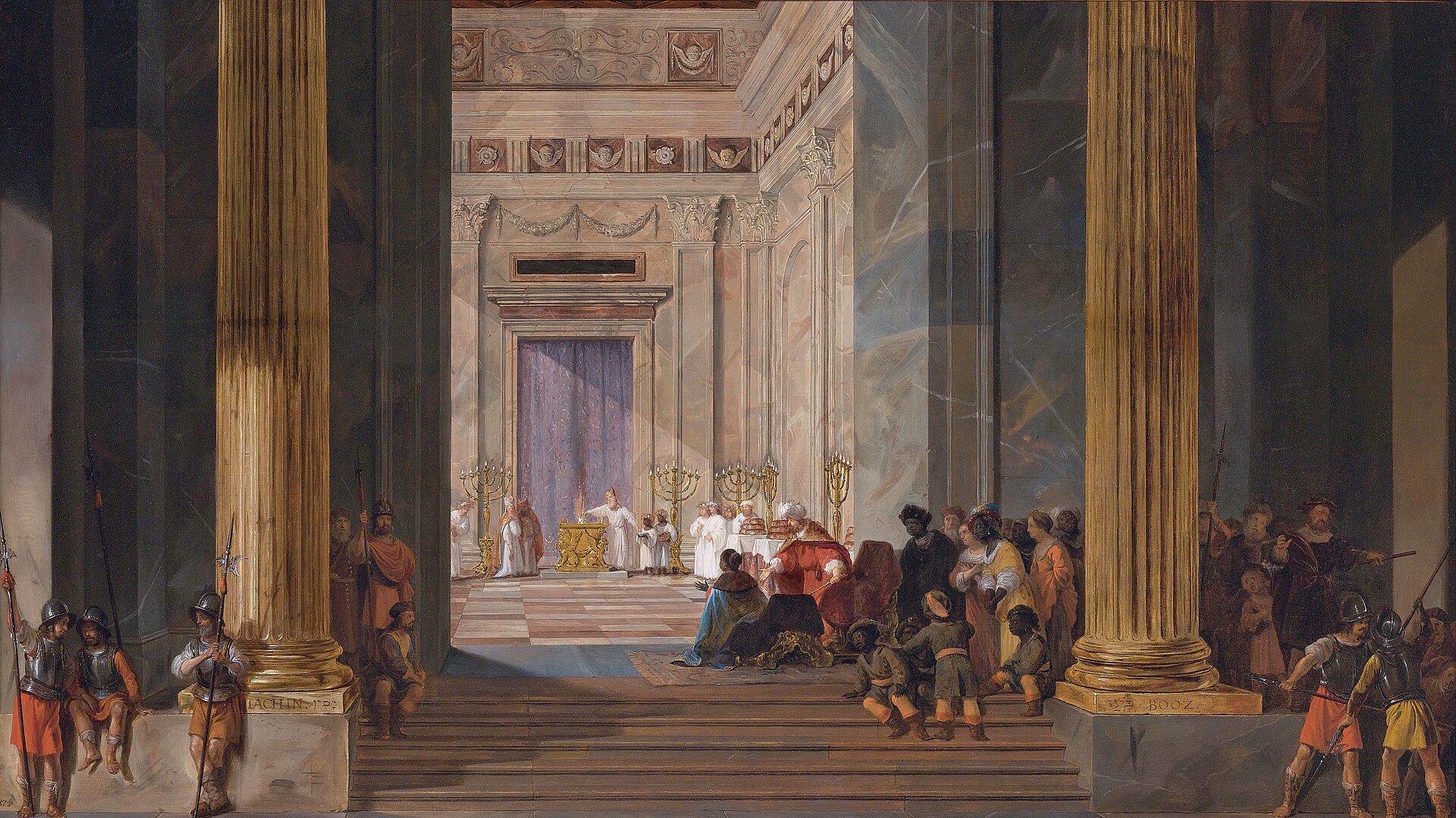
The Wisdom of Solomon KJV text is a nineteen-chapter book that appeared in the original 1611 King James Bible's Apocrypha section, sitting between the Old and New Testaments rather than inside either one. It is not part of the Protestant canon most readers know today, which is exactly why so many people encounter the name and assume it must be somewhere in their own Bible and cannot find it. It is there, in a manner of speaking — just not in the edition that eventually became standard.
What the book actually contains surprises people who expect another collection of pithy sayings in the style of Proverbs. It is closer to a sustained philosophical argument: an extended meditation on Wisdom as a divine attribute, written in Solomon's voice, defending the righteous against the claim that death erases the difference between a good life and a wasted one. Understanding why it carries his name, what it says, and why later English Bibles quietly let it go requires looking at both the text and the publishing history around it.
Where the Wisdom of Solomon KJV Text Sits in the 1611 Apocrypha
The King James translators of 1611 did not invent the practice of separating this material out. They inherited it from earlier English Bibles — the Geneva Bible and the Bishops' Bible before it — which had already grouped fourteen books together under the heading "Apocrypha," Greek for "hidden things." Alongside Tobit, Judith, additions to Esther, Ecclesiasticus, Baruch, and both books of Maccabees, the translators placed the Wisdom of Solomon in its own bound section, printed after Malachi and before Matthew. Readers of the first-edition KJV moved through it as a matter of course, the way they moved through any other book in sequence.
That arrangement did not survive intact. Printing costs, ongoing disputes over the Apocrypha's authority, and a hardening Protestant consensus that only the Hebrew canon counted as fully scriptural all worked against it. By the early nineteenth century, pressure had built to drop the section outright. The British and Foreign Bible Society's 1826 resolution to stop funding and distributing Bibles that included the Apocrypha effectively settled the matter for the English-speaking Protestant world. Almost every KJV printed since traces its lineage to that decision, which is why a modern reader can own a King James Bible cover to cover and never once encounter the Wisdom of Solomon KJV text unless they specifically seek out a printing that restores it.
What the Wisdom of Solomon KJV Text Actually Contains
The book divides cleanly into three movements. The first five chapters set up a contrast between the righteous, whose souls are "in the hand of God" and untouched by real torment even when the wicked appear to triumph over them in this life (Wisdom 3:1, KJV), and the ungodly, who reason "our life is short and tedious" and conclude that strength alone should decide right and wrong (Wisdom 2:1–11). It is an argument aimed squarely at people watching injustice go unpunished and wondering whether virtue is worth the cost.
Chapters six through nine shift into Solomon's own voice, and this is the section most responsible for the book's traditional attribution. Solomon describes seeking Wisdom before every other good, praying for her directly: "Wherefore I prayed, and understanding was given me: I called upon God, and the spirit of wisdom came to me" (Wisdom 7:7, KJV). What follows is one of the most striking passages of personification anywhere in ancient religious literature — a list of some twenty-one qualities describing Wisdom as "the breath of the power of God," "an unspotted mirror of the power of God," and "more beautiful than the sun" (Wisdom 7:22–29, KJV). Wisdom here is not a skill or a virtue a person accumulates. She is described as active, near-personal, moving through generations and making people friends of God.
The final ten chapters retell the Exodus, reframing the plagues and the parting of the sea as demonstrations of the same Wisdom at work in history, guiding Israel and confounding Egypt's idolatry point by point. It is a strange structural choice by modern literary standards, but it makes sense as capstone: having argued that Wisdom governs the fate of individuals, the author closes by arguing she also governs the fate of nations.
Sophia: The Divine Feminine Wisdom at the Book's Center
The Greek word behind every one of those descriptions is Sophia, grammatically feminine, and the KJV translators kept the grammar's implications intact even while rendering it in English as "wisdom" and "she." That choice matters more than it might first appear. Nowhere else in the corpus of texts associated with Solomon's name does wisdom appear so consistently as something closer to a person than a property — sent from God, dwelling with him, present at creation, actively choosing whom to enter and befriend (Wisdom 7:27–28).
Later Jewish and Christian thought would keep wrestling with what to do with this figure. Some strands folded Sophia into descriptions of the Word or Logos; others kept her more distinct, an emanation standing between the unknowable divine source and the created world. Either way, the Wisdom of Solomon KJV text preserves one of the clearest ancient statements of an idea that recurs across the mystery traditions in different vocabulary: that wisdom is not primarily information a person collects, but a living current that a person is either open or closed to receiving.
Why Modern Bibles Dropped the Wisdom of Solomon KJV Text
The canonicity question the Reformers raised was not arbitrary. The book survives complete only in Greek, with no confirmed Hebrew original ever recovered, and it was never accepted into the Jewish canon that closed centuries before the Reformation. Protestant scholars used the same standard the Reformation applied elsewhere: if a book was not part of the Hebrew scriptures Jesus and the apostles would have recognized, it belonged in a secondary category, useful for instruction but not for establishing doctrine. Catholic and Eastern Orthodox tradition drew the line differently and kept the book fully canonical, which is why it still appears, unmarked as apocryphal, in Bibles used by those churches today.
None of that historical argument required believing the book was worthless, and the 1611 translators plainly did not think so — they translated it with the same care they gave every other book in the volume. What changed was not a judgment about the text's quality but a decision, made over the following two centuries, about which books counted as authoritative enough to keep bound between the same two covers as everything else.
What the Mystery Tradition Reads Into Solomon's Prayer for Wisdom
The lineage I was initiated into traces its written record back roughly three thousand years to Solomon, and it treats his repeated requests for understanding — at Gibeon in 1 Kings 3, and again in this later text's own retelling — as a template rather than a historical footnote. The pattern is always the same: wisdom is asked for before wealth, and it is described as arriving from outside the self rather than being manufactured by will alone. That is the same claim the school makes about self-knowledge generally. "Know Thyself" is not treated as an achievement a student produces through effort, but as a capacity a student opens, the way Solomon is depicted opening himself to Sophia rather than constructing her.
Initiates are taught that every human carries a divine spark, an eternal nature obscured rather than absent, and that the work of initiation is to recognize what was already there. Read that way, the Wisdom of Solomon's claim that Wisdom "entereth into holy souls" already prepared for her (Wisdom 7:27) is less a piece of ancient Greek theology and more a precise description of what a genuine spiritual opening actually feels like from the inside: not the acquisition of new information, but the removal of whatever had been blocking a connection that was there all along.
Readers curious how this same theme plays out across Solomon's other biblical wisdom will find the fuller picture, including the Gibeon narrative and the judgment of the two mothers, traced in King Solomon Wisdom: The Dream, the Judgment, and the Books That Carry His Name. And for how the tradition frames the harder, less flattering side of the occult arts Solomon's name later attracted, Hermeticism Magic: What the Tradition Actually Teaches About the Occult Arts draws the line between philosophy and practice the same way this essay draws it between canon and Apocrypha.
Walk the Path of the Initiate
These teachings come alive in The Initiated — Paul Schulz's introduction to the living mystery school tradition.
Get the BookFrequently Asked Questions
Is the Wisdom of Solomon in the King James Bible?
It was in the original 1611 King James Bible, printed in a separate Apocrypha section between the Old and New Testaments. Most Protestant KJV editions sold today omit the Apocrypha entirely, so the book is easy to miss unless you seek out a printing that restores it.
What is the Wisdom of Solomon KJV text about?
It opens by contrasting the fate of the righteous and the wicked, moves into Solomon's own prayer for wisdom and a description of Wisdom's nature, and closes with a long retelling of the Exodus as proof that divine wisdom guided Israel and judged Egypt.
How many chapters does the Wisdom of Solomon have?
Nineteen. The King James Apocrypha divides it the same way modern Catholic and Orthodox Bibles do, following the standard Greek chapter divisions inherited from the Septuagint manuscript tradition.
Did Solomon actually write the Wisdom of Solomon?
Almost certainly not. The book survives only in Greek, quotes ideas from Greek philosophy unavailable in Solomon's tenth-century-BCE lifetime, and most scholars date its composition to Hellenistic Alexandria sometime in the first century BCE, roughly nine hundred years after Solomon died.
Why was the Wisdom of Solomon removed from later Bibles?
Protestant reformers questioned the Apocrypha's canonical status because it survives only in Greek rather than Hebrew and was never part of the Jewish scriptural canon. Cost and controversy pushed English publishers to drop it after 1611, and the British and Foreign Bible Society's 1826 decision to stop funding Apocrypha-inclusive Bibles cemented its absence from the KJV editions still printed today.