Bible King Solomon: Every Book Where He Appears in Scripture
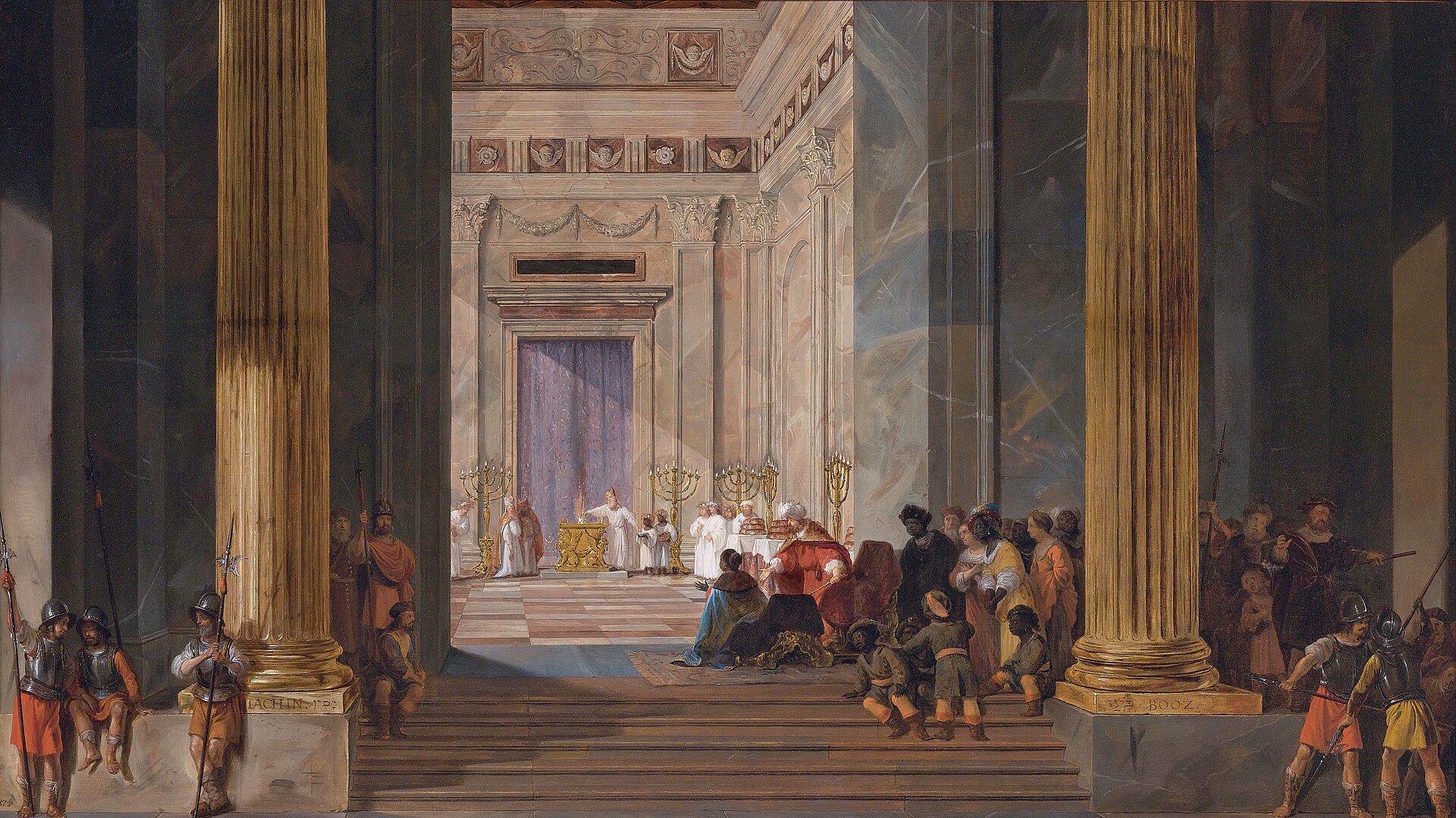
Bible king Solomon is not confined to a single storyline. He appears across at least nine books of scripture — two competing history books, three works of wisdom literature attributed to his own hand, two psalms bearing his name, and, depending on which Bible sits on your shelf, a deuterocanonical treatise written centuries after he died. Read together, these books do not simply repeat one account of a wise king; they assemble a composite portrait, each text contributing a facet the others leave out. This is a guide to where he shows up and what each appearance actually says.
Bible King Solomon in the Two History Books
The primary narrative of Solomon's reign runs through 1 Kings 1–11, which covers his rise to the throne, the dream at Gibeon where he asks God for an understanding heart rather than wealth or long life, the building of the Temple, the visit of the Queen of Sheba, and — in its final chapters — his slide into idolatry through foreign alliances and marriages. This account does not flatter him. It records his failures with the same directness it gives his achievements, ending the story with the prophecy that his kingdom would split after his death.
A second, largely parallel account runs through 2 Chronicles 1–9, written centuries later for a different purpose: reinforcing the legitimacy of the Temple and its priesthood for a community rebuilding its identity after exile. Chronicles retells the Gibeon dream and the Temple's construction in even greater architectural detail, but it quietly omits the entire downfall narrative of 1 Kings 11 — no foreign wives, no idols, no divine anger. The two histories were compiled with different audiences and different theological aims, and reading them side by side shows how selective even scripture's own historians could be about which parts of a king's record to preserve.
Where Bible King Solomon Speaks in His Own Voice
Three books of wisdom literature carry Solomon's name as author or traditional attribution, and together they read almost as three stages of a single life. Proverbs presents the confident, practical instruction of a young ruler organizing the world into cause and consequence: diligence rewarded, folly punished, wisdom personified as a figure calling out in the streets. Song of Songs is an extended love poem, unusually sensual for scripture, traditionally read by Jewish and Christian interpreters alike as an allegory of devotion — between bride and groom, or between the soul and the divine — layered over its plain, romantic surface.
Ecclesiastes stands apart from both. Its narrator, called Qoheleth or "the Preacher," tests wealth, labor, pleasure, and wisdom itself against the certainty of death and finds each one wanting: "vanity of vanities; all is vanity." Tradition places this book in Solomon's later years, and if Proverbs is the voice of a king who believes the world can be mastered by right conduct, Ecclesiastes is the voice of the same man after mastering it and discovering the limits of mastery. Modern scholarship debates how much of these three books Solomon actually composed versus how much was later attributed to him by convention, since ascribing wisdom writing to a famously wise king was a common ancient practice. The theological point stands regardless of authorship: this is what wisdom sounds like across a full arc of a life, not just its opening chapter.
The Psalms Attributed to Solomon
Two psalms carry his name in their superscriptions. Psalm 72 is a prayer for a righteous king — for justice toward the poor, for a reign "like rain upon the mown grass" — read by some as Solomon's own petition and by others as David's prayer for his son. Psalm 127 opens with a line that has outlived its original context by millennia: "Except the Lord build the house, they labour in vain that build it," a fitting sentiment from the man who spent seven years building the Temple, whichever hand actually wrote it down.
The Wisdom of Solomon — Present in Some Bibles, Absent from Others
Open a Catholic or Eastern Orthodox Bible and you will find the Wisdom of Solomon among the wisdom books, a Greek-language work written likely in Alexandria several centuries after Solomon's death, arguing for the immortality of the righteous soul against the fatalism found in Ecclesiastes. Open a Protestant or Jewish Bible and it is absent, classified instead among the Apocrypha — texts read historically but not treated as scripture. The attribution to Solomon here is literary convention rather than claimed authorship; the book itself never pretends otherwise. Its presence or absence is a useful reminder that "the Bible" is not one fixed table of contents, and Solomon's footprint in scripture changes shape depending on which tradition's Bible you are holding.
Bible King Solomon in the New Testament
Solomon reappears twice in the words attributed to Jesus. In the Sermon on the Mount, he becomes a measuring stick for excess: "even Solomon in all his glory was not arrayed like one of these," said of a wildflower, deflating royal splendor by comparison with something the natural world produces without effort (Matthew 6:29; Luke 12:27). Later, responding to critics demanding a sign, Jesus invokes him again, this time as a benchmark for authority rather than luxury: "a greater than Solomon is here" (Matthew 12:42), a claim that only carries weight because Solomon's reputation for wisdom was still assumed common knowledge a thousand years after his death. Acts 7:47, in Stephen's speech before the Sanhedrin, mentions him more plainly: "But Solomon built him an house" — a brief nod to the Temple story that anchors the rest of the New Testament's occasional references back to 1 Kings.
Reading the Composite Portrait
No single passage of scripture gives the full picture of Solomon; each book supplies one layer and leaves the others to different texts entirely. Kings gives the warts-and-all history. Chronicles gives the idealized builder. Proverbs gives the confident teacher. Ecclesiastes gives the disillusioned old man. The Psalms give the petitioner. The New Testament gives the cultural shorthand for wisdom and wealth centuries later. The tradition Paul Schulz writes from reads that same layered structure as consistent with how the hermetic principle of correspondence treats any single sacred text: as one plane of a larger pattern, meant to be read alongside its other expressions rather than in isolation. For readers who want the connected narrative these books only imply piece by piece, the fuller chronological account — from Solomon's birth to the divided kingdom that followed his reign — is traced in Solomon in the Bible: The Full Story of Israel's Wisest King.
What the composite portrait offers that any single book cannot is honesty about how wisdom actually behaves over a lifetime — confident at the start, tested by circumstance, and, in Solomon's case, ultimately compromised by exactly the kind of comfort his early wisdom should have guarded against. Scripture keeps that whole arc intact by scattering it across genres rather than resolving it into one tidy account, and that scattering is, if anything, the more truthful record of what a long life of discernment actually looks like.
Walk the Path of the Initiate
These teachings come alive in The Initiated — Paul Schulz's introduction to the living mystery school tradition.
Get the BookFrequently Asked Questions
Is Bible king Solomon a real historical figure?
Most historians place Solomon's reign around 970 to 930 BCE, based on the biblical chronology and archaeological work at sites traditionally linked to his building projects. Extrabiblical evidence for his reign specifically is thin compared to later kings, which is why scholars describe him as a figure standing at the boundary between documented history and national memory. Within scripture itself, however, his reign is treated as settled historical fact, not legend.
What books of the Bible mention Solomon?
Solomon appears by name across at least nine biblical books: 2 Samuel, 1 Kings, 1 Chronicles, 2 Chronicles, Proverbs, Ecclesiastes, Song of Songs, Psalm 72, and Psalm 127. He is also referenced in the New Testament in Matthew, Luke, and Acts. Each book contributes a different facet — history, proverb, love poetry, prayer, or philosophical reflection — rather than repeating the same account.
Is the Wisdom of Solomon in the Bible?
It depends on the canon. The Wisdom of Solomon is included in Catholic and Eastern Orthodox Bibles as part of the deuterocanonical or "wisdom" books, but Protestant and Jewish Bibles exclude it, placing it instead among the Apocrypha. It was written centuries after Solomon's death, in Greek, and is attributed to him by literary convention rather than authorship in the strict sense.
What does the New Testament say about Solomon?
Jesus references Solomon twice in the Gospels: once contrasting his royal splendor with the simplicity of wildflowers (Matthew 6:29, Luke 12:27), and once declaring that "something greater than Solomon is here" (Matthew 12:42), a claim about his own authority relative to Solomon's famous wisdom. Acts 7:47 also recalls Solomon as the one who built God's house in Stephen's speech before the Sanhedrin.
Did Solomon write the Psalms?
Two psalms carry his name in their superscriptions: Psalm 72, a prayer for royal justice traditionally read as either by or for Solomon, and Psalm 127, which opens with the well-known line "Except the Lord build the house, they labour in vain that build it." The vast majority of psalms are attributed to David, not Solomon, though tradition credits Solomon with far more literary output overall, including Proverbs, Ecclesiastes, and Song of Songs.