Solomon Hebrew: The Name, the Legends, and What Jewish Tradition Actually Says
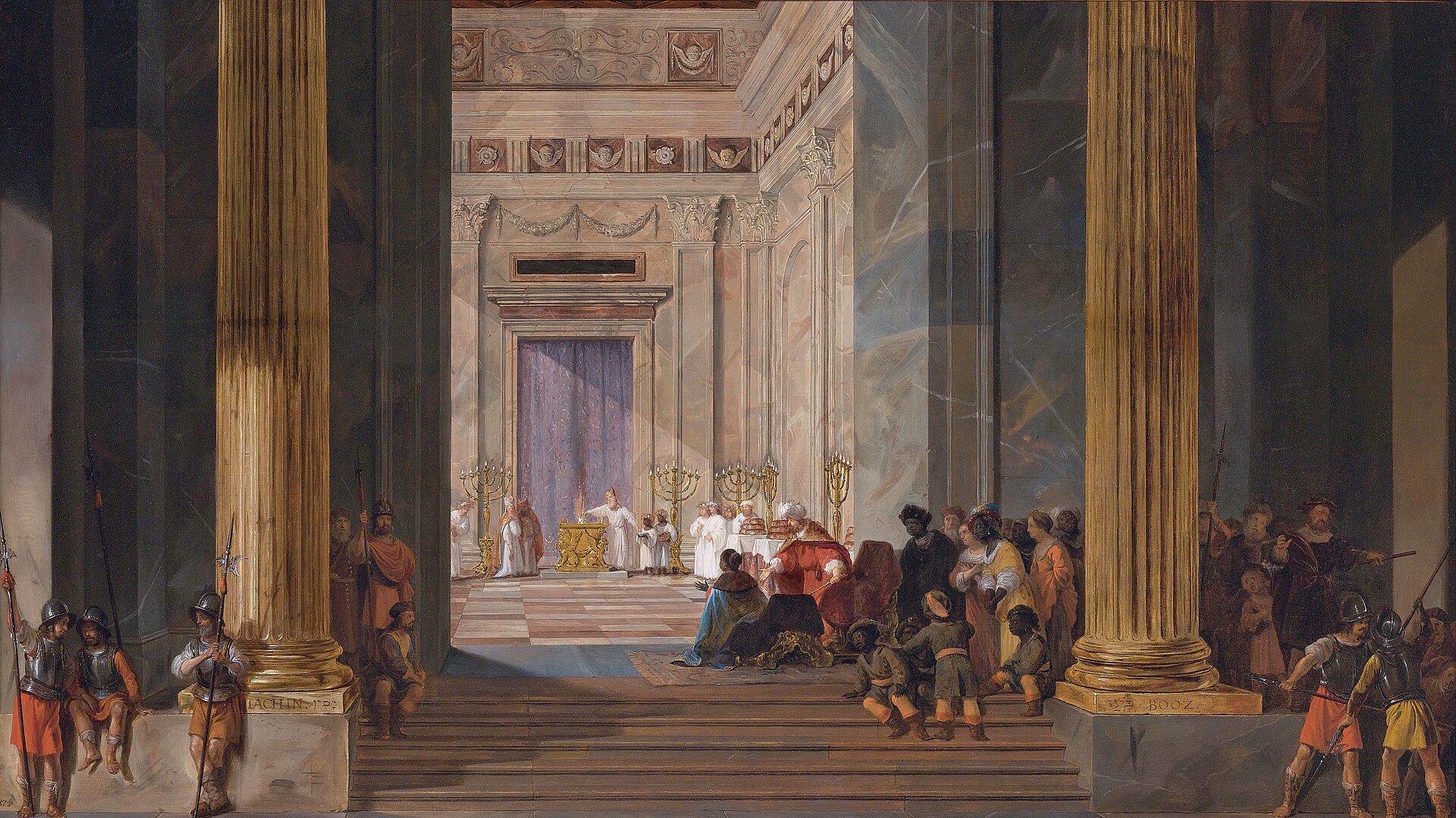
Solomon Hebrew is not really one search; it is three overlapping questions wearing a single phrase. People typing it want to know what the name Solomon actually means in Hebrew, whether the king was Jewish, and how Jewish tradition — the Talmud, the Midrash, later Kabbalah — actually remembers him, as opposed to the tame Sunday-school version most readers already know. The short answers: his name is שְׁלֹמֹה, Shlomo, built on the root for wholeness and peace; yes, he was king of Israel and a central figure in the scripture Judaism traces itself to; and the tradition remembers him as far stranger, and far more human, than "wisest king who ever lived" suggests.
Shlomo: The Hebrew Name Behind the English Solomon
Solomon comes into English through Greek and Latin transliteration of the Hebrew שְׁלֹמֹה, Shlomo. The name shares its root, sh-l-m, with shalem, whole or complete, and with the far more familiar shalom, peace. Rabbinic tradition does not treat this as coincidence. It reads the name as a program for the reign: a king whose defining task was completion rather than conquest — finishing the Temple his father was forbidden to build, consolidating the borders his father had fought to win, and giving Israel the one thing David's wars never could.
"Behold, a son shall be born to thee, who shall be a man of rest; and I will give him rest from all his enemies round about: for his name shall be Solomon, and I will give peace and quietness unto Israel in his days." — 1 Chronicles 22:9, KJV
The same passage gives the reason David himself could not build the Temple: his hands had shed blood in battle. Peace was written into Solomon's name before he was born, and Jewish tradition treats that naming as prophecy rather than flattery. For the fuller etymology, including the second name scripture gives him at birth, see our essay on the biblical meaning of Solomon.
The Talmud's Strange Coda: How Solomon Lost His Throne to Ashmedai
The Hebrew Bible leaves Solomon on his throne. The Talmud does not leave him there so easily. Tractate Gittin tells a story that has no biblical basis but has shaped Jewish folklore for two thousand years: to build the Temple without cutting its stones with an iron tool, forbidden since the altar law in Exodus, Solomon needed the shamir, a legendary substance said to split stone on contact. To find it, the tradition holds, he first had to master Ashmedai, king of demons, binding him with a ring engraved with the divine Name and forcing him to reveal where the shamir could be found.
The story does not end with a triumphant king. Later in the same account, Ashmedai tricks Solomon into surrendering the ring, hurls him hundreds of miles from Jerusalem, and takes his throne and his likeness, ruling in his place while the real Solomon wanders the land as an unrecognized beggar, insisting to anyone who will listen that he was once king. Only after a long humbling does he recover the ring, return to Jerusalem, and reclaim what was his. Rabbinic commentators have long used this fall from glory to explain the weary, disillusioned voice of Ecclesiastes — as though its author had actually tasted exile and humiliation before he wrote of vanity.
Kohelet and Shir HaShirim: Solomon's Voice in the Hebrew Wisdom Books
Jewish tradition assigns Solomon three books, and reads each as the product of a different stage of his life. The Midrash on Song of Songs holds that he composed Shir HaShirim, the Song of Songs, in the ardor of youth; Proverbs in the settled judgment of maturity; and Kohelet — Ecclesiastes, from the Hebrew word for one who assembles or addresses a congregation — in the disillusion of old age. Read this way, the three books are not separate compositions so much as a single man's life told in three registers: desire, order, and finally the weariness that comes from having tested both and found their limits.
This life-stage reading matters because it makes Kohelet's famous bleakness — "vanity of vanities, all is vanity" — a Hebrew tradition's answer to a real question: how does the wisest king in scripture end up sounding like this? The Talmudic exile story above gives one answer. Our companion essay on the wisdom of Solomon traces how the same books are read across the wider mystery tradition.
How Kabbalah Reads the Hebrew Solomon: Wisdom Enthroned in Malkuth
Later Jewish sources describe Solomon's throne in extravagant detail — golden lions and eagles rising in tiers, mechanisms that moved as he climbed to sit — and Kabbalistic readers have long treated that image as more than royal decoration. On the Tree of Life, Chokmah is wisdom in its pure, undifferentiated form; Malkuth is the Kingdom, the sphere where anything actually becomes physical, governed, and lived. A king famous above all for wisdom, sitting on an actual throne, ruling an actual kingdom, reads to the mystery tradition as wisdom successfully descended all the way down the Tree — not wisdom kept as an abstraction, but wisdom made to govern matter, politics, and daily life without losing itself in the process. That is a harder feat than it sounds, and the tradition holds it is exactly what made Solomon's reign, and his eventual failures, worth remembering in such detail.
The Seal of Solomon: Legend, Not Instruction
The ring at the center of the Ashmedai story became, in later folklore, the Seal of Solomon — a signet said to grant its bearer command over spirits and even over animals. The first-century Jewish historian Josephus records, in his Antiquities of the Jews, that techniques attributed to Solomon for dealing with troubling spirits were still known and reportedly used in his own day, centuries after the king's death. Whatever the historical truth of that claim, it shows how quickly a wise administrator became, in the popular imagination, something closer to a magician-king — a transformation that fed directly into later grimoire literature built around his name. That later material belongs to the history of legend, not to teaching here; the point worth keeping is how far Solomon's Hebrew reputation had already traveled from a king who, in the Bible's own account, simply asked God for an understanding heart.
What the Hebrew Solomon Still Represents
Put the pieces together and the Hebrew Solomon is a more complicated figure than the wisest-king cliché allows: a name that means peace, a throne built on a father's forbidden war, three books that trace a single soul from desire through order to disillusionment, and a legend in which even the wisest man alive loses everything before he is allowed to keep it. Initiates in the mystery tradition tend to recognize the shape of that arc — gift, fall, humbling, return — because it is the shape initiation itself so often takes. The Hebrew record does not let Solomon stay untouched on his throne, and that, more than any claim to unbroken wisdom, is what makes him worth studying closely rather than admiring from a distance.
Walk the Path of the Initiate
These teachings come alive in The Initiated — Paul Schulz's introduction to the living mystery school tradition.
Get the BookFrequently Asked Questions
What does the name Solomon mean in Hebrew?
Solomon is the English form of the Hebrew Shlomo, built on the root shalem, meaning whole or complete. Jewish tradition reads it as his peace, tying the name directly to shalom.
Was Solomon Jewish, or is that a modern label applied to him?
Solomon was king of Israel, son of David of the tribe of Judah, and a central figure in the Hebrew Bible. The word Jewish is later terminology, but he belongs to the same Israelite lineage and scripture that Judaism traces itself to.
What is the Talmudic legend about Solomon losing his throne?
Tractate Gittin in the Babylonian Talmud tells how the demon-king Ashmedai tricked Solomon, cast him far from Jerusalem, and ruled in his likeness while Solomon wandered as a beggar until he proved his identity and reclaimed the throne.
Did Solomon really write the Song of Songs and Ecclesiastes?
Jewish tradition traditionally attributes all three wisdom books to Solomon at different ages: Song of Songs in youth, Proverbs in maturity, and Ecclesiastes in old age. Modern scholarship treats the attribution as a literary convention rather than settled authorship.
What does Kabbalah say Solomon represents?
Kabbalistic and mystery-school readings treat Solomon as an image of wisdom, Chokmah, fully descended into Malkuth, the sphere of the physical kingdom, making him a symbol of wisdom actually governing the material world rather than staying abstract.