Wisdom of Solomon Meaning: What the Phrase Actually Signals
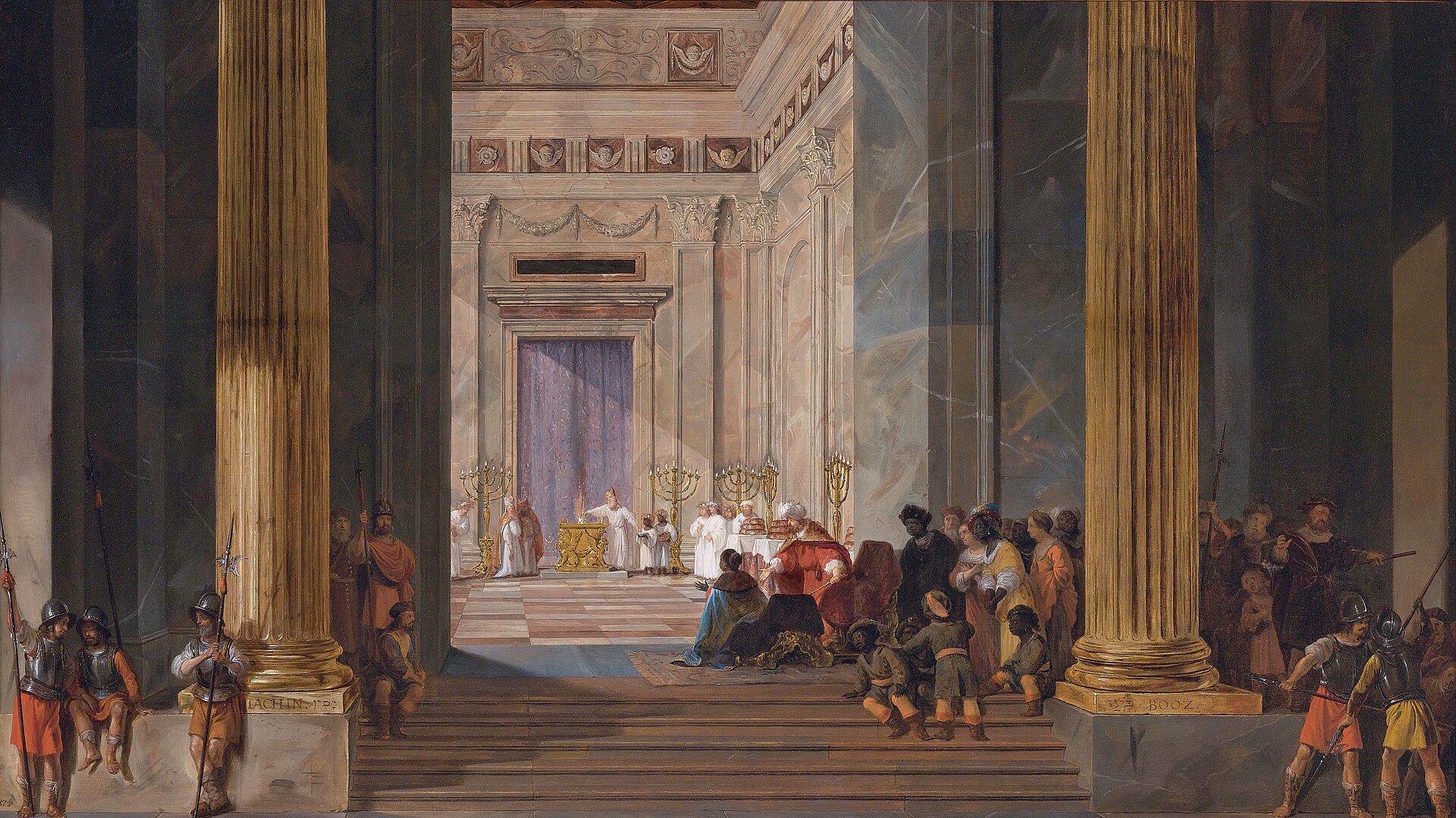
The wisdom of Solomon meaning, as most people use the phrase today, has nothing to do with a biblical dream or a deuterocanonical book. It has become an idiom: a shorthand for a decision so shrewd it resolves a dispute that looked unsolvable, made by seeing past two parties' competing claims to what is actually true underneath them. That everyday usage traces to one specific scene in 1 Kings 3 — and understanding that scene correctly changes what the phrase should mean when you reach for it, because the popular version of "solomonic wisdom" gets the actual story backwards almost as often as it gets it right.
Where the Idiom "Wisdom of Solomon" Actually Comes From
Every idiom has a literal ancestor, and this one has an unusually specific birthplace. Two women, both recent mothers living in the same house, come before King Solomon. One infant has died in the night; both women claim the surviving child is hers. There are no witnesses, no records, no way to settle the matter by evidence. It is precisely the kind of dispute that ordinary judgment cannot resolve, because both claims are asserted with equal, unwavering conviction.
Solomon does not investigate. He orders a sword brought and proposes to cut the living child in half, giving each woman an equal share. One woman accepts the division rather than see the other win outright. The other begs the king to give the whole child to her rival rather than let it be harmed. Solomon awards the child to the second woman, on the reasoning that only the true mother would prefer to lose her claim entirely over seeing it destroyed. That is the entire mechanism behind the phrase — not compromise, but a proposal designed to make concealment impossible.
The Judgment of the Two Mothers: The Scene That Built the Idiom
What makes the story durable enough to generate a permanent figure of speech is how little Solomon actually knows going in. He has no evidence. What he has is an understanding of how a genuine claim and a false one behave differently under real pressure — and he engineers a situation where that difference becomes visible to everyone in the room.
"And all Israel heard of the judgment which the king had judged; and they feared the king: for they saw that the wisdom of God was in him, to do judgment." — 1 Kings 3:28
This is the verse that effectively minted the idiom. It does not describe Solomon as clever in the sense of quick-witted or well-informed. It describes a judgment that let reality expose itself — which is exactly what people mean, even now, when they praise a decision as having "the wisdom of Solomon" about it: not raw intelligence, but a design that makes the truth impossible to hide.
Three Meanings Bundled Into One Phrase
Part of why the wisdom of Solomon meaning gets muddled is that the phrase is actually doing triple duty. First, there is the idiom described above — a general compliment for judgment that cuts through a false dilemma. Second, there is the specific biblical claim: the discernment 1 Kings says God granted Solomon at Gibeon, on display across Proverbs, Ecclesiastes, and the Song of Songs. Third, there is a proper noun: the Wisdom of Solomon, a standalone deuterocanonical book written in Greek roughly a thousand years after Solomon's death, which personifies Wisdom — Sophia — as an active presence moving through history on behalf of the righteous. Readers who encounter "wisdom of Solomon" in a headline or a search result are often unsure which of the three they are actually being pointed toward, since all three share a name and a legendary root but describe genuinely different things — a personality trait, a biblical narrative, and a book with its own chapters and authorship debate.
How the Phrase Gets Used — and Misused — Today
In courtrooms, newsrooms, and boardrooms, "a solomonic decision" is common shorthand for any ruling that splits the difference between two sides. This is, ironically, close to the opposite of what the original story commends. Solomon never actually divided the child. The proposal to divide it was a diagnostic instrument, not the outcome — the thing he asked for so the truth would surface, then explicitly refused to carry out once it had. A modern "solomonic compromise" that gives each side half of what it wanted is often just conflict avoidance dressed in biblical language. The story's actual lesson points the other way: a good judgment does not average two claims together. It finds the test that reveals which claim was genuine, then rules on the basis of what that test shows.
The phrase also gets flattened into a synonym for "smart," stripped of its original content entirely. A decision made through raw intelligence — calculating odds, weighing precedent, outmaneuvering an opponent — is not automatically solomonic in the traditional sense unless it also does what the Gibeon judgment did: create a condition under which the truth cannot help but appear. Cleverness serves the ego's advantage. This form of wisdom serves the situation's clarity, even when that clarity costs the judge something, as it very nearly cost Solomon the appearance of decisiveness before the reveal.
What the Mystery Tradition Reads Into "Wisdom" Itself
Older wisdom literature outside the biblical canon draws a related distinction that sharpens the point further: the difference between accumulated knowledge and direct inner perception. One line of that older teaching puts it plainly — that a scholar knows only what he has been taught, while a genuinely wise person knows something that was not learned from anyone, but recognized from within through the clearing of one's own inner obstruction. That is a useful lens for the Gibeon story: Solomon's proposal to divide the child was not a fact he had memorized or a legal precedent he was citing. It was recognition, arrived at in the moment, of how a true claim and a false one would necessarily behave differently once tested. The mystery tradition treats that kind of recognition — not information retrieval, but a faculty of direct seeing — as the actual substance behind the word "wisdom" wherever it appears in scripture, and as something available to a disciplined mind now, not only to kings in stories.
Read this way, the wisdom of Solomon meaning is not really about Solomon's biography at all. It is a case study in a capacity the tradition holds every serious seeker is meant to cultivate: the ability to design a situation, a question, or a moment of stillness that lets what is actually true come forward on its own, rather than forcing an answer through argument or authority.
What the Meaning Asks of Anyone Who Invokes It
Used carelessly, "wisdom of Solomon" becomes empty praise — a phrase reached for whenever someone wants to sound impressed by a decision without examining it. Used precisely, it becomes a standard worth measuring against: did this judgment split the difference to avoid conflict, or did it construct a way for the truth to become visible? Did it flatter both sides, or did it risk looking harsh for a moment — ordering a sword brought — in order to see clearly before ruling? The biblical account and the idiom it produced both point to the same discipline: ask for discernment before you ask for an outcome, and trust a well-designed test over a confident guess. That discipline, more than the name attached to it, is what the phrase was always meant to preserve.
Walk the Path of the Initiate
These teachings come alive in The Initiated — Paul Schulz's introduction to the living mystery school tradition.
Get the BookFrequently Asked Questions
What does "the wisdom of Solomon" mean as an everyday phrase?
As an idiom, it describes a decision that resolves an apparently impossible dilemma through insight rather than force — typically by finding an angle that lets the truth of a situation reveal itself. It is invoked most often in law, parenting, and mediation, wherever two parties seem to have equally strong and irreconcilable claims.
Where does the phrase "wisdom of Solomon" actually come from?
It comes from 1 Kings 3, where King Solomon settles a custody dispute between two women claiming the same infant by ordering the child divided in two. The proposal exposes the true mother, who would rather surrender her claim than see the child harmed. The chapter itself states that "all Israel" recognized this as evidence of divinely granted wisdom, and the phrase spread from that single scene.
Is a "solomonic" decision the same thing as splitting a dispute down the middle?
No — this is the single most common misreading of the phrase. Solomon never actually divided the child; the order to divide it was a test, not a resolution. A true solomonic decision reveals which party is acting in good faith and rules accordingly. A literal fifty-fifty split, the kind popular speech sometimes calls "solomonic," is closer to the opposite of what the story commends.
Is the Wisdom of Solomon meaning the same when it refers to the deuterocanonical book?
No. As an idiom, "wisdom of Solomon" names a kind of shrewd, revealing judgment. As the title of a book, the Wisdom of Solomon refers to a first-century-BCE Greek text, canonical in Catholic and Orthodox Bibles, that personifies Wisdom as an active divine presence. The two uses share a name and a legendary source but describe different things — a trait versus a text.
Why did Solomon's name become shorthand for wisdom itself?
Three things converged: the Gibeon narrative in which he specifically requested discernment over wealth or power, the public test of the two mothers that proved the request had been granted, and the body of biblical wisdom literature — Proverbs, Ecclesiastes, Song of Songs — later attributed to him. Once a culture has a concrete story and a shelf of books pointing the same direction, the name becomes a category rather than just a person.